


Your healthy-eating plan starts strong on Monday, then Wednesday’s dinner invitation leaves you wondering whether you’ve already spoiled the week. A plan that demands perfect control every day can feel awkward when your calendar includes shared meals and evenings away from your kitchen.
Intermittent fasting, cycling between eating less and eating normally, offers a different weekly rhythm. The 5:2 pattern drew attention because it concentrates the effort into part of the week, and a newer version adjusts the original allowance. Before you rearrange your grocery list, though, you’ll want to understand what that newer approach actually asks of you each week.
What the New 5:2 Approach Actually Asks of You
The 5:2 approach is a weekly pattern, rather than a daily diet. You have lower-calorie fasting days twice a week, while the other five days involve normal eating. Here, fasting means eating less on designated days, rather than going without food altogether. You still plan meals, cook, and sit down to eat.
Those fasting days have a defined allowance. As the official guide to the 5:2 diet lays it out, you eat 800 calories twice a week and sensible portions on the other days. Calories are a measure of food energy, so that allowance covers your day’s food and drinks, rather than a single meal.
The ordinary days lean toward moderately low-carb eating, meaning fewer carbohydrate-rich foods, within a Mediterranean-style pattern: vegetables, olive oil, fish, beans, and whole grains. You choose which days to fast around your calendar. That leaves room to keep a family dinner on its usual evening or move a lower-calorie day away from a planned lunch out, without rewriting the rest of your week’s menu.
Why the Fasting-Day Allowance Moved to 800 Calories
The higher allowance responds to a practical difficulty: sticking with very small meals week after week. Research raised the possibility that allowing more food could help people continue with the pattern.
Where the Original Numbers Came From
Cleveland Clinic’s overview describes the original pattern as healthy eating for five days and limiting intake to 500–600 calories on two days. That lower allowance amounts to roughly a quarter of a usual day’s intake, leaving a tight budget for breakfast, dinner, and anything between.
The attraction was the simple weekly arrangement: separate restricted days, with no special food rules on the remaining days. You didn’t have to follow a different menu every morning.
Still, a simple rule isn’t necessarily an easy dinner to prepare, especially when you’re dividing a small allowance between meals. Choosing what to leave off your plate becomes a frequent part of cooking, from the oil in the pan to the dressing on your salad.
What a Year-Long Trial Suggested
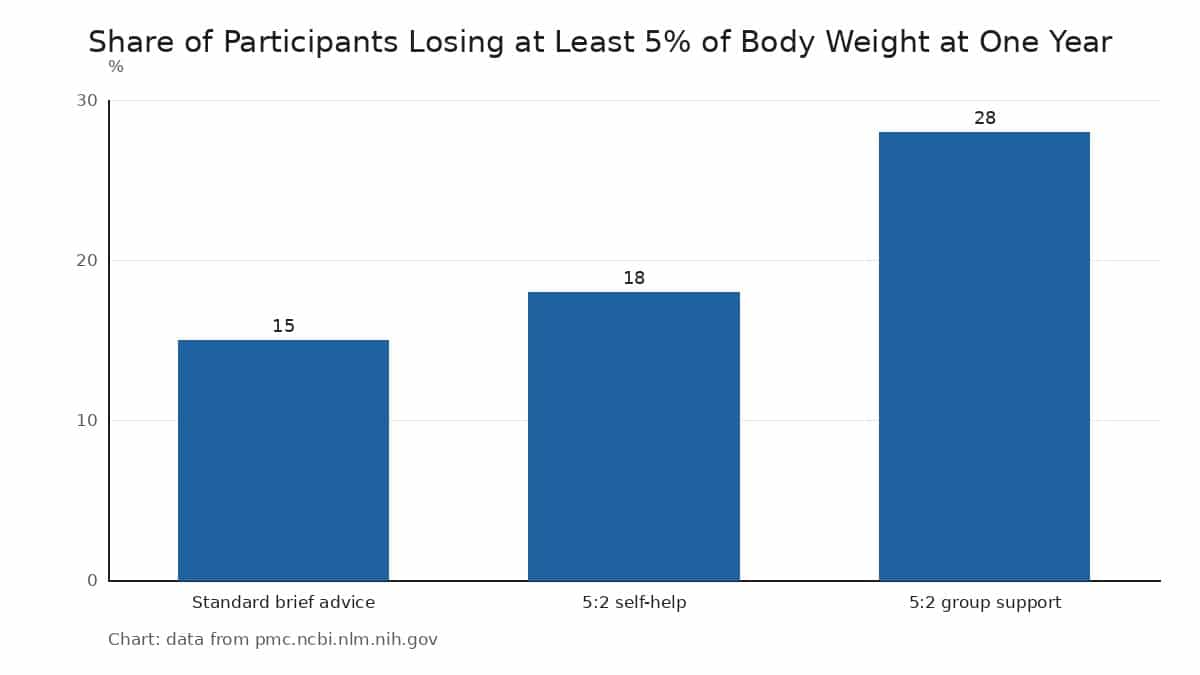
In a year-long randomized trial, which assigned participants to groups by chance, 15% receiving standard brief advice lost at least 5% of their body weight. The figures were 18% for people given 5:2 self-help instructions and 28% for those also offered group support. These were different levels of guidance, rather than different fasting-day calorie allowances.
The researchers noted that the approach doesn’t require relentless self-control and lets people stop worrying about food intake on five days a week. They suggested that increasing the allowance to about a third of daily intake, 800 calories for women and 1,000 for men, could improve adherence, meaning how well people stick with a plan.
That was a suggestion, not proof that a higher allowance produces better results. The trial didn’t directly compare the newer allowance with the original smaller meals.
Planning a Week of Meals Around Two Fasting Days
Flexibility helps when you give it a place on your calendar. A little weekly planning puts meals within reach, rather than leaving you to improvise when you open the refrigerator.
Picking Your Fasting Days
Choose non-consecutive days, meaning days that aren’t back-to-back. Busy weekdays often work better than weekends filled with family meals or dinners out, but your own schedule should guide the choice. A workday with a predictable dinner break is different from an evening spent traveling.
If plans change, swap the fasting day rather than abandon the week. Mark the replacement on your calendar and move the planned meal with it. You won’t need to invent another dinner while you’re unpacking groceries.
Building an 800-Calorie Day
Build meals around protein foods and fiber-rich vegetables, so the allowance goes toward recognizable meals. A vegetable omelet for breakfast, followed by baked salmon or chicken with a big salad and roasted vegetables for dinner, gives you a concrete menu to plan around.
Drink plenty of water, plain tea, or black coffee. Batch-cook fasting-day meals on the weekend, and include cooking oil, dressings, and drinks when planning your allowance. Portioning the finished food before putting it away leaves you with a ready meal rather than an unmeasured tray.
Eating Well on the Other Five Days
The remaining days aren’t free-for-alls. Continue with sensible portions in the Mediterranean-style pattern, and don’t try to make up for a fasting day by overeating the next morning. Return to an ordinary breakfast and the meals you’ve planned.
Cutting back on added sugar also belongs here; swapping in sugar-free sweets is an option if candy is something you regularly enjoy. It doesn’t replace planning dinner or choosing a portion. Keep the focus on the whole meal, with vegetables and beans alongside fish or another protein food.
Making a Flexible Fasting Week Stick
The new 5:2 approach concentrates the extra planning on days you choose, rather than demanding the same restriction daily. The higher allowance leaves more room for meals, while ordinary days keep sensible portions at the table.
What helps the pattern become a habit is the preparation around it: choosing your days and having dinner ready when you need it. Start with your calendar and a short grocery list, rather than an entirely new recipe collection. If you have a health condition, check with your doctor before starting.