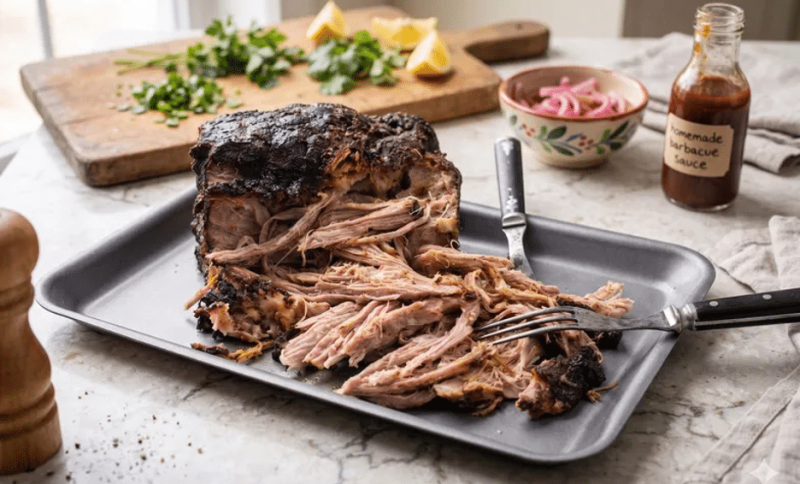
Learning how to make pulled pork is an exercise in applied thermodynamics and meat science. Transforming a dense, tough pork shoulder into perfectly tender strands requires exact temperature management over a long duration. Because of the precision required for this biochemical breakdown, utilizing an integrated smart grill hub from the beginning of your cook is highly recommended. By leveraging its all-in-one fan control and real-time app tracking, you remove the guesswork from both the ambient smoker environment and the internal meat progression, ensuring you hit the exact thermal targets required for optimal tenderness.
The Science of Tender Meat: 190°F versus 205°F
When monitoring your cook, understanding the exact physical and textural differences between pulling a pork butt at 190°F versus 205°F dictates the success of the final dish.
- At 190°F: The pork is fully cooked and completely safe for consumption. However, the internal muscle structure remains relatively tight. The tough connective tissues within the shoulder—specifically collagen—have only just begun to unravel. At this stage, the meat is highly sliceable, making it ideal for pork steaks or thick carving, but it will stubbornly resist shredding.
- At 205°F: This is the scientifically optimal internal temperature for pork to yield traditional pulled pork. As the internal heat climbs past 190°F and approaches the 205°F mark, a biological conversion occurs. The tough, rubbery collagen fully melts into a rich, liquid gelatin. Simultaneously, the dense intramuscular fat renders completely. This liquefied fat and gelatin combination lubricates the muscle fibers from the inside out, allowing them to separate easily. Using the ChefsTemp S1 Smart Grill Hub ensures you do not overshoot this tight temperature window, which would result in dry, mushy meat.
Preparation and Ingredients
Proper preparation determines the final bark formation and flavor penetration.
Preparation Details:
- Meat Selection: 7-9 lb Bone-in Pork Shoulder (Boston Butt). Trim the excess surface fat, leaving an even 1/4-inch fat cap to protect the meat during the long cook.
- Prep Time: 20 minutes.
- Cook Time: 8 to 12 hours (depending on exact weight and method).
Ingredients for this Pulled Pork Recipe:
- 1 Whole bone-in pork shoulder
- 2 tbsp Yellow mustard (serves strictly as a binder for the spices)
- 1/2 cup BBQ Rub (a balanced mix of coarse black pepper, kosher salt, paprika, brown sugar, and garlic powder)
- 1/2 cup Apple cider vinegar (placed in a spray bottle)
Instructions: The Step-by-Step Smoker Guide
- Prep the Meat: Coat the trimmed pork shoulder evenly with a thin layer of yellow mustard. Aggressively apply your BBQ rub to all sides. Let the meat rest at room temperature for 30 to 45 minutes to allow the salt to penetrate the surface.
- Set Up and Automate: Configure your smoker for indirect heat at a steady 250°F. Insert the ChefsTemp S1 probe directly into the thickest section of the pork butt, ensuring the tip does not touch the blade bone. Set the target temperature on the ChefsTemp app to exactly 205°F. Allow the S1’s integrated fan control to seamlessly manage the smoker’s airflow, maintaining a flawless 250°F ambient cooking environment without manual adjustments.
- The Smoke Phase: Place the pork in the smoker. After the first 3 hours of undisturbed cooking, quickly open the lid and spritz the exterior with apple cider vinegar. Repeat this spritzing every hour to attract smoke particles and prevent the outer edges from burning.
- Wrap at the Stall: When your app alerts you that the internal temperature is stalling around 165°F, remove the pork and wrap it tightly in aluminum foil.
- Finish the Cook: Return the wrapped pork to the smoker. Let it cook until the internal temperature registers exactly 205°F. At this stage, the thermometer probe should slide into the meat with absolutely zero physical resistance.
- Rest and Shred: Transfer the hot, wrapped meat into a dry, insulated cooler. Close the lid and let it rest for 1.5 to 2 hours. After resting, unwrap the shoulder, effortlessly slide the bone out, and use two meat claws or large forks to pull the pork apart. Toss the shredded meat thoroughly in its own rendered juices before serving.

More Helpful Tips for Perfect Pulled Pork
Managing “The Stall”
During the cooking process, the internal temperature of the meat will inevitably hit a plateau, typically between 150°F and 170°F. This phase is known as “the stall.” The stall is caused by evaporative cooling; moisture pushes to the surface of the meat and evaporates, cooling the exterior at the exact same rate the heat source is warming it.
To push through the stall efficiently without drying out the meat, you must utilize a wrapping technique called the “Texas Crutch.” Once the meat hits the 165°F mark and possesses a well-formed, dark mahogany bark, remove it from the heat and wrap it tightly in heavy-duty aluminum foil or unwaxed butcher paper. This traps the escaping moisture, completely halting evaporative cooling, and forces the internal temperature to steadily rise again toward your 205°F target.
The Importance of Resting
Resting the meat is not optional; it is a mandatory scientific step. When the pork reaches 205°F, the newly formed gelatin and rendered fats are in a highly fluid, watery state. If you immediately tear into the meat, these liquids will rapidly spill out onto the cutting board, resulting in dry pork. By resting the wrapped pork shoulder in an insulated cooler for a minimum of one to two hours, the internal temperature gradually decreases to around 145°F. This cooling period allows the liquid gelatin to thicken and the muscle fibers to relax and safely reabsorb the rendered moisture.
Smoker vs. Indoor Alternatives
While the traditional smoker method yields the most authentic flavor and texture, modern kitchens offer effective alternatives. If you are adapting this for a slow cooker pulled pork or a pulled pork crock pot method, cook the seasoned meat on the “Low” setting for 8 to 10 hours until it reaches 205°F. For a faster indoor method, an instant pot pulled pork setup uses high pressure to artificially force the collagen breakdown in roughly 90 minutes, though it sacrifices the textured outer bark found in traditional smoking.