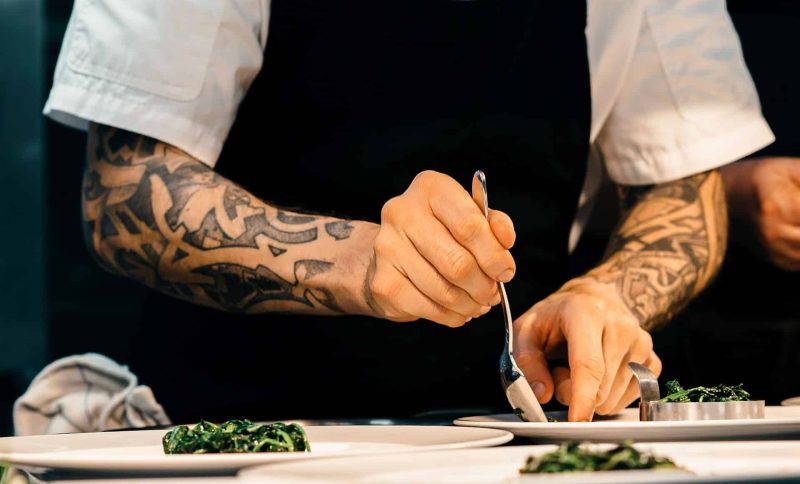
Walk into the workspace of any serious recipe developer, and you will inevitably find the journal. It is usually a thick, leather-bound notebook, its pages permanently warped by accidental water spills, dusted with fine semolina flour, and stained with drops of aged balsamic.
There is an undeniable romance to the analog chef’s journal. It captures the frantic, immediate inspiration of the kitchen. However, as any culinary creator transitioning from casual cooking to rigorous recipe testing quickly realizes, food development is fundamentally an exercise in chemistry and mathematics.
When you are obsessively trying to perfect the crumb structure of a sourdough loaf, or balancing the exact acidity needed to cut through the richness of a braised pork belly, a static piece of paper becomes a severe limitation. If you adjust the hydration ratio of a dough by a mere three percent, you must sit down with a calculator and manually recalculate the weight of the yeast, the salt, and the starter. The romantic notebook is mathematically dead; it cannot compute, it cannot cross-reference past failures, and it cannot scale a recipe for publication.
To elevate culinary experimentation, the modern test kitchen requires a dynamic digital environment—a system that processes the rigid mathematics of food science while remaining fluid enough to capture the spontaneous artistry of flavor pairing.
The Evolution of the Digital Sous-Chef
For years, culinary creators assumed that establishing a bespoke digital workspace required understanding complex database architecture or hiring a software engineer. The alternative was forcing their unique testing methodologies into rigid, pre-existing commercial templates that never quite fit.
Today, the intersection of gastronomy and technology has birthed a much more elegant solution. Instead of wrestling with code or compromising on formatting, forward-thinking recipe developers are articulating their exact laboratory requirements to macaron ai.
This platform operates as a conversational deployment engine. It allows a chef to use plain, descriptive language to forge a highly sophisticated, web-native utility. You do not draft code; you dictate your culinary logic. By simply explaining how your brain organizes ingredients, ratios, and sensory feedback, the intelligent agent synthesizes those parameters and manifests a personalized “Pro Recipe Finder” and R&D hub. It is the exact translation of your chaotic, flour-covered notebook into an interactive, computational laboratory.
Engineering the Ratio Engine
The foundation of professional recipe development, particularly in baking and pastry, is the ratio. A recipe is rarely just a list of ingredients; it is a delicate algebraic equation where every element is anchored to the weight of the primary flour or fat.
When you shape your R&D hub conversationally, you can command the system to think in these exact proportional terms. You strip away the concept of static measurements like “cups” or “teaspoons” and establish a tool driven purely by mass and percentage.
To manifest this, you might instruct your digital assistant: “Formulate a dynamic recipe testing interface based strictly on baker’s percentages. I require an input module where I can define the ‘Hero Ingredient’—such as 1000 grams of bread flour. Below this, provide fields for water, salt, and levain, but format them as percentage sliders rather than fixed weights. If I slide the water hydration from 65% to 75%, the engine must instantly recalculate the precise gram measurements for every other ingredient in the formula in real-time.”
By deploying this logic, you eliminate the mathematical friction of iteration. You can tweak the moisture content of a brioche dough mid-bake, and your custom interface handles the scaling calculus instantly, ensuring your published recipe remains flawlessly accurate.
Cultivating the Flavor Matrix
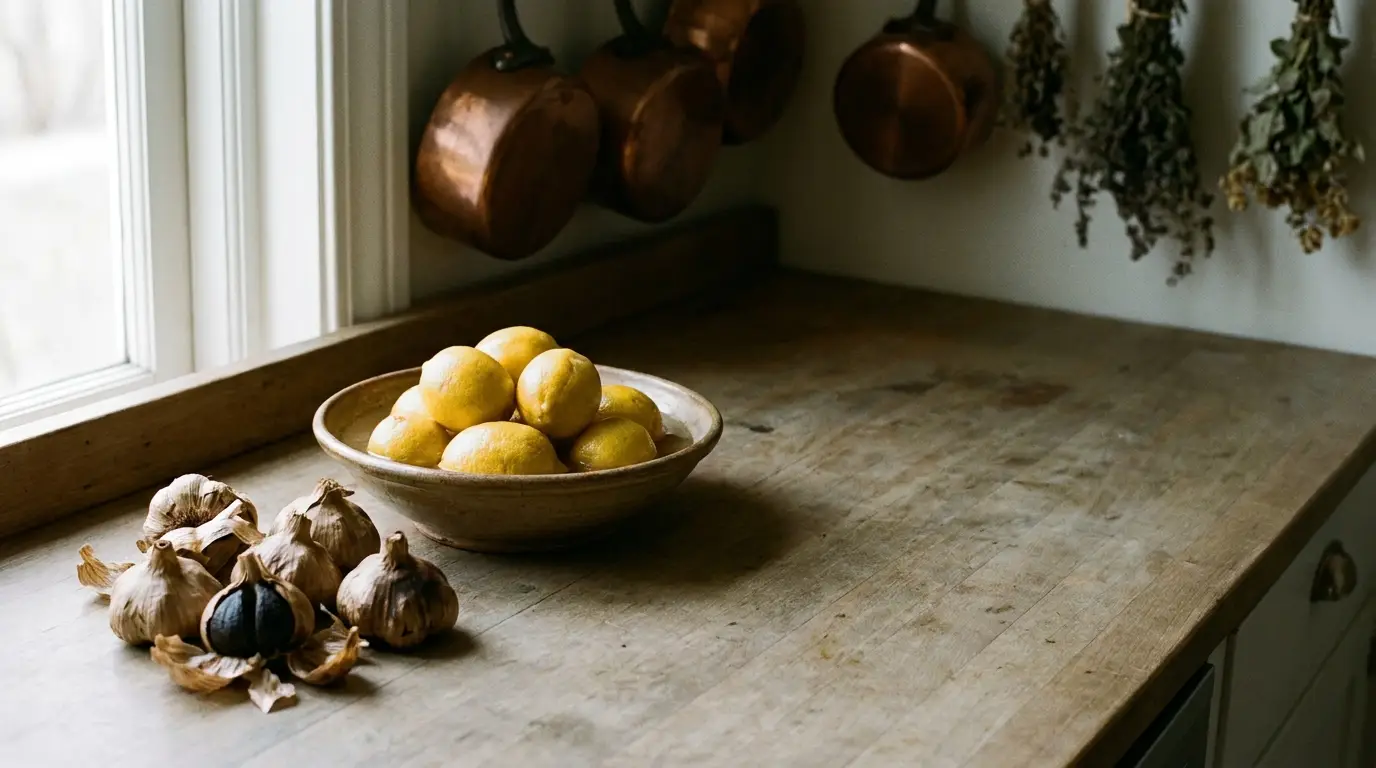
Beyond the mathematics of baking, recipe development is an exploration of volatile compounds and flavor affinities. Often, the genesis of a groundbreaking dish begins with a single, obscure ingredient left over in the pantry.
A traditional notebook cannot tell you what pairs well with preserved lemons or black garlic paste. But a conversational utility can be shaped to act as an active brainstorming partner.
You can expand your digital hub by dictating a new requirement: “Integrate a ‘Flavor Matrix’ module into my dashboard. I need a single text field where I can input an unconventional ingredient. Upon entry, the system should not just list standard recipes; it must generate a cross-referenced web of complementary flavor profiles—highlighting potential acid pairings, fat contrasts, and textural counterpoints. It should actively suggest a foundational technique, such as confit or emulsion, that best extracts the flavor of the inputted ingredient.”
This transforms your digital space from a passive recording tool into an active culinary synthesizer. It takes the abstract concept of a flavor pairing and provides an immediate, actionable starting point for your next day in the kitchen.
Documenting the Ephemeral: The Sensory Archive
The most difficult aspect of culinary documentation is capturing the ephemeral nature of food. Numbers dictate the structure of a dish, but the success of a recipe is entirely defined by sensory experience—the sound of a crust shattering, the specific shade of a Maillard reaction on a seared scallop, or the lingering mouthfeel of a velvet sauce.
Standard digital notes treat these sensory details as afterthoughts. When you curate your own R&D environment, you can elevate sensory feedback to a primary data point.
You simply instruct your conversational agent to weave a qualitative tracking system into your recipe logs: “Expand the testing module to include a ‘Sensory Archive’. Every time I log a completed recipe version, mandate the completion of a qualitative feedback form. Include a dropdown for ‘Maillard Browning Level’ (ranging from Blonde to Deep Char). Provide a specific text area to document the ‘Mouthfeel and Emulsion Stability’ after thirty minutes of resting. Finally, embed an image capture button linked directly to the specific version number, so I have a visual record of the crumb structure before I tweak the hydration again.”
The Mastery of the Test Kitchen
True culinary innovation occurs when a chef is fully present at the cutting board, entirely focused on the scent, texture, and taste of the ingredients before them. Every minute spent wiping flour off a calculator or trying to decipher smeared ink in a notebook is a minute disconnected from the craft.
By utilizing conversational technology to shape a bespoke culinary R&D hub, you effectively digitize your intuition. You establish a frictionless environment that automatically scales your complex ratios, suggests brilliant flavor affinities, and meticulously archives your sensory experiments.
Leave the romantic, messy journals on the shelf where they belong. Speak to your intelligent agent, tailor your definitive digital test kitchen, and transform your brilliant, chaotic culinary experiments into perfectly documented masterpieces.