A kitchen can smell amazing while dinner is cooking. Garlic in a pan, roasted vegetables in the oven, fresh herbs on the cutting board, or a pot of soup simmering on the stove can make the whole house feel warmer.
But when the meal is over and the kitchen sink starts to smell less like dinner and more like something hiding in the drain, it can ruin the mood quickly. A lingering kitchen sink smell is one of those small household problems that feels especially annoying because it sits right in the middle of the room where food is prepared.
Whether someone is searching for a plumber in Toronto or simply trying to understand why their kitchen sink smells after cooking, the first step is knowing which odors are normal after cleanup and which ones may point to a deeper issue.
Why Kitchen Sink Smells Often Start After Cooking
Kitchen sink smells often begin with food residue. Even when the sink looks clean, tiny bits of food, grease, sauce, and cooking oil can collect inside the drain, garbage disposal, or pipe connections.
The smell may not appear right away. It can show up later, especially after warm water, dish soap, or the dishwasher moves old residue around. That is why the sink may smell worse after dinner, after a baking day, or after washing greasy pans.
Grease Can Leave a Sticky Layer
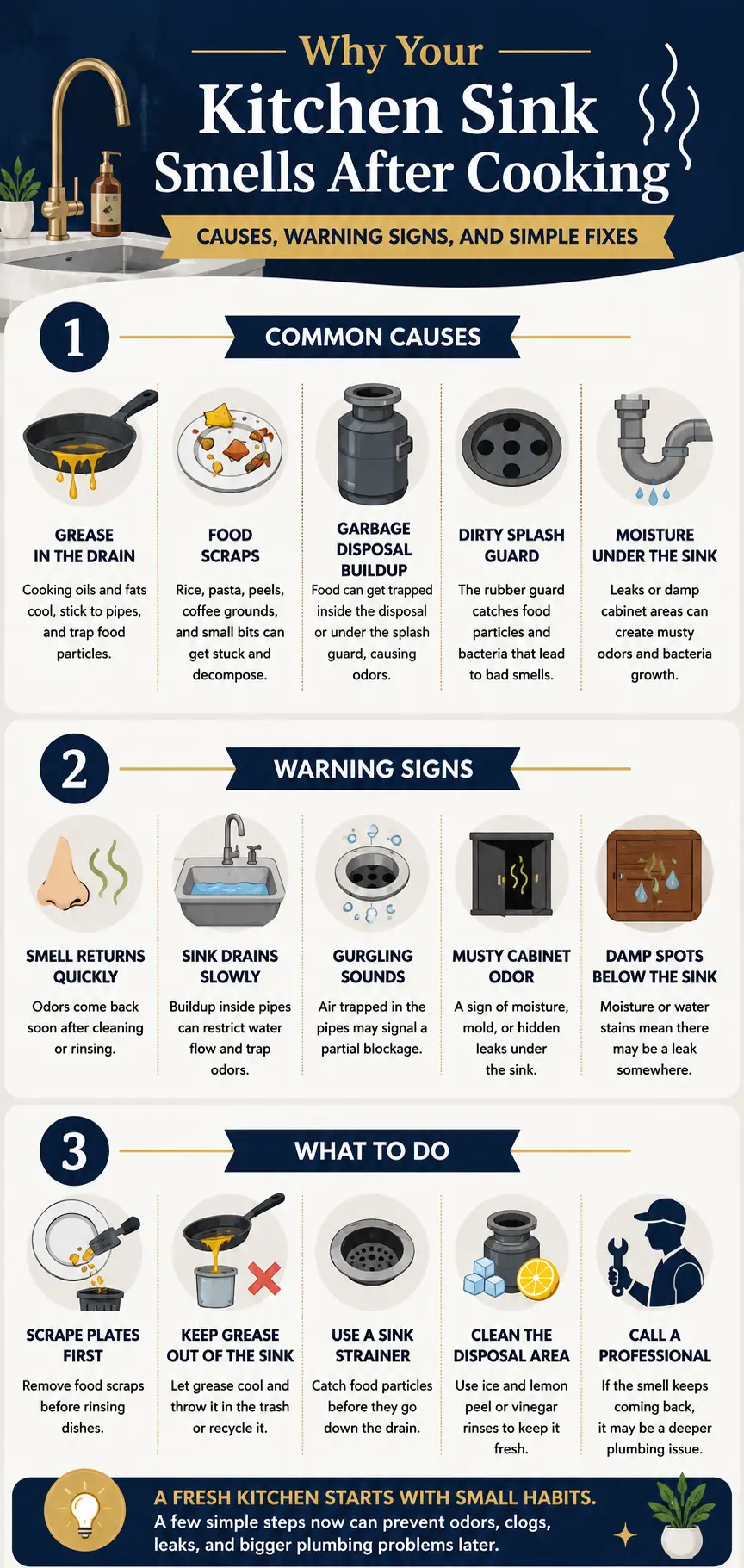
Grease is one of the biggest reasons a kitchen drain starts to smell. When cooking oil, butter, bacon fat, or pan drippings go down the sink, they may look harmless because they are liquid at first. Once they cool, they can stick to the inside of the drain.
That sticky coating can catch crumbs, sauce, coffee grounds, and small scraps. Over time, grease buildup can create both odor and a slow drain.
A better habit is to let grease cool in a container, scrape it into the trash, or wipe greasy pans with a paper towel before washing them.
Food Scraps Can Hide Where You Cannot See Them
Even small food scraps can cause odor if they collect in the drain or disposal. Rice, pasta, vegetable peels, eggshell bits, and coffee grounds are easy to rinse away without thinking, but they do not always move cleanly through the plumbing.
Some foods expand with water. Others settle into low spots or mix with grease. The sink may look clean from above, while the smell is coming from residue below the surface.
Using a sink strainer is one of the simplest ways to reduce this problem. It catches small pieces before they disappear into the drain.
The Garbage Disposal May Need More Than a Rinse
A garbage disposal can be useful, but it can also hold onto odor. Food particles can stick under the rubber splash guard, inside the grinding chamber, or along the disposal walls.
If the garbage disposal odor gets worse after cooking, it may be because soft foods, grease, or small scraps are sitting inside the unit. Running water for a few seconds is not always enough to clear it.
Cold water is usually best when using the disposal because it helps keep fats more solid so they can move through more cleanly. The disposal should also be fed slowly, not packed with food all at once.
Simple Things to Check Before You Worry
A smelly sink does not always mean there is a major plumbing problem. Sometimes the cause is simple and easy to address.
Before assuming the worst, try a few basic checks.
Clean the Visible Drain Area
Start with the area you can see. Remove the strainer, clean around the drain opening, and scrub the underside of the sink stopper if you have one. Food residue can collect in small grooves and create a smell even when the basin looks spotless.
If you have a garbage disposal, gently clean the rubber splash guard. This area often traps bits of food and can be one of the hidden sources of odor.
Flush the Drain Carefully
For ordinary kitchen residue, warm water and dish soap can help move light buildup. Let the water run for a little while after washing greasy dishes.
Avoid relying on harsh chemical cleaners as a regular solution. They may not remove the real cause of the smell, and repeated use can be hard on some plumbing parts.
If the sink is already draining poorly, do not keep pouring products into it. A smell combined with slow drainage usually needs closer attention.
Look Under the Sink
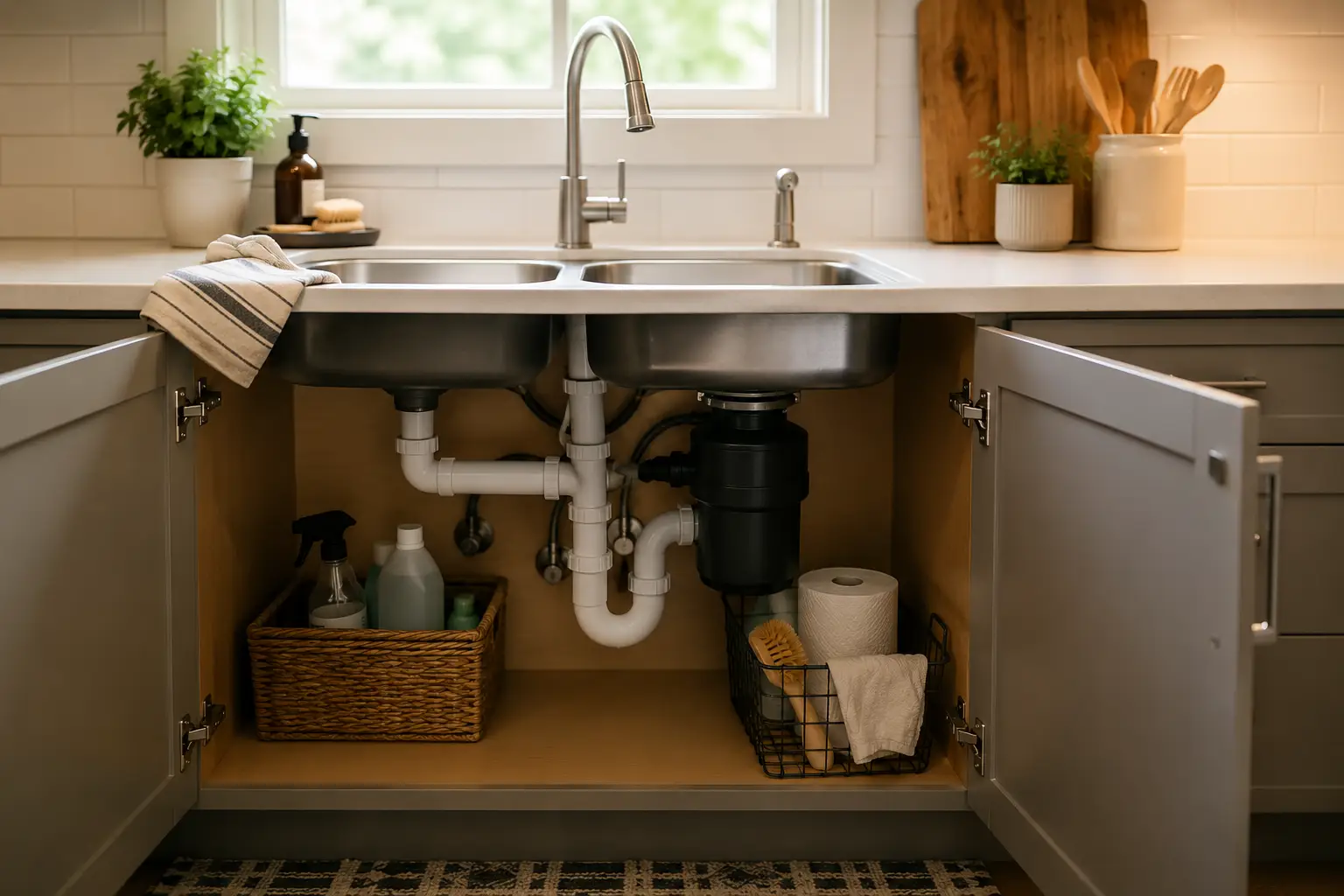
The cabinet under the sink is easy to ignore, especially if it is filled with cleaning supplies, bags, or storage bins. Take a moment to check it.
Look for:
- damp spots
- musty smells
- soft cabinet flooring
- water stains
- loose pipe connections
- dripping after the faucet or dishwasher runs
An under-sink leak may start small, but it can lead to water damage if moisture sits unnoticed. A fresh towel placed under the pipes for a short time can help you spot a slow drip.
When a Bad Smell Points to a Deeper Problem
Some kitchen sink smells are more than leftover food. If the odor keeps returning quickly, appears with other symptoms, or smells like sewage, the issue may be deeper in the drain system.
The Smell Comes Back After Cleaning
If you clean the sink, freshen the disposal, rinse the drain, and the smell returns within a day or two, the source may be farther down the line. This can happen when buildup sits beyond the visible drain opening or inside a section you cannot reach easily.
Recurring smells are important because they usually mean the cause has not been fully removed.
The Sink Drains Slowly Too
A bad smell plus a slow drain is a common sign of buildup. Water may still go down, but it may move through a narrowed opening created by grease, food residue, or trapped debris.
This is where drain cleaning may be needed. Not every clog is dramatic. Some begin as partial blockages that create odor before they create a full backup.
The P-Trap May Be Involved
The P-trap is the curved pipe under the sink. It holds a small amount of water that helps block sewer gases from coming back into the kitchen.
If something is wrong with the P-trap, if it is dirty, loose, dry, or poorly installed, smells can become more noticeable. Homeowners can sometimes clean a trap carefully, but if the pipes look fragile, corroded, or confusing, it is better not to force anything apart.
Moisture Under the Cabinet Is a Warning Sign
A smell that comes with moisture under the sink should not be ignored. A small leak around a drain connection, supply line, dishwasher hose, or disposal can create a damp environment where odors linger.
This is also where pipe repair may be needed. Tightening something once may help, but if the leak returns, there may be a worn seal, damaged fitting, or poorly aligned connection.
Kitchen Habits That Help Prevent Sink Odors
Most kitchen sink smells are easier to prevent than fix. A few small habits can make a big difference, especially in a busy kitchen.
Try these simple routines:
- Scrape plates before rinsing them.
- Keep grease, oil, and fat out of the sink.
- Use a sink strainer during cleanup.
- Run cold water while using the garbage disposal.
- Feed the disposal slowly.
- Clean the splash guard regularly.
- Do not leave wet food scraps sitting in the sink overnight.
- Check under the sink once in a while.
These habits are not complicated, but they help keep everyday cooking from turning into recurring kitchen plumbing problems.
When It Is Time to Call a Professional
It may be time to call a professional if the smell keeps coming back, the sink drains slowly, the disposal jams, water appears under the cabinet, or more than one fixture acts strange.
A professional can check whether the issue is food buildup, a clogged drain, a faulty disposal, a leaking connection, venting trouble, or something deeper in the plumbing system.
For example, local specialists like Cheap Plumber focus on careful diagnosis, clear explanations, and practical plumbing solutions that help homeowners understand whether a recurring sink smell comes from buildup, a clogged drain, a leaking connection, or a deeper issue.
A proper plumbing inspection can also help prevent guessing. Instead of treating the smell over and over, the homeowner can find out what is actually causing it.
Keep the Kitchen Smelling Like Food, Not the Drain
A kitchen should smell like the good parts of cooking: toasted bread, fresh herbs, roasted vegetables, coffee, soup, or dessert cooling on the counter. It should not smell like old food hiding somewhere in the sink.
When a kitchen sink smell appears after cooking, start with the simple things. Clean the visible drain area, check the disposal, avoid grease in the sink, use a strainer, and look under the cabinet for leaks.
If the smell keeps coming back or appears with slow drainage, moisture, or gurgling, it is worth taking seriously. Small kitchen problems are much easier to handle before they interrupt the heart of the home.