Every home eventually asks something of you. A wobbly shelf, a squeaky door, a picture that needs hanging before guests arrive. The trouble is that most of us only discover we do not have the right tool at the exact moment we need it, and then the small job turns into a bigger one because it gets put off for another week.
A good home maintenance kit solves this. Not the enormous tool chest gathering dust in the garage, but a small, sensible collection you can reach for without thinking twice. The goal is not to own everything. It is to own the right things, and to know where they are.
Start With What You Actually Do
Before buying anything, think about the repairs and small jobs that come up most often in your home. A flat with modern fittings will need different things to an older house with wooden doors, skirting boards and a garden fence. There is no point building a kit around jobs you will never do.
A helpful exercise is to look back over the last year. What have you borrowed from a neighbour? What have you searched for online at ten o’clock at night because something broke? Those answers usually point straight to the gaps in your current setup.
The Core Tools Worth Having
A few basics cover most household jobs. A good screwdriver set with interchangeable heads will handle far more than a single fixed screwdriver ever could. A claw hammer earns its place too, for anything from putting up a shelf to gently coaxing a stuck window frame back into shape.
A tape measure sounds obvious, yet it is one of the most reached for items in any kit. Add a spirit level if you enjoy hanging things straight the first time rather than the third, and a set of pliers for anything that needs gripping, bending or pulling.
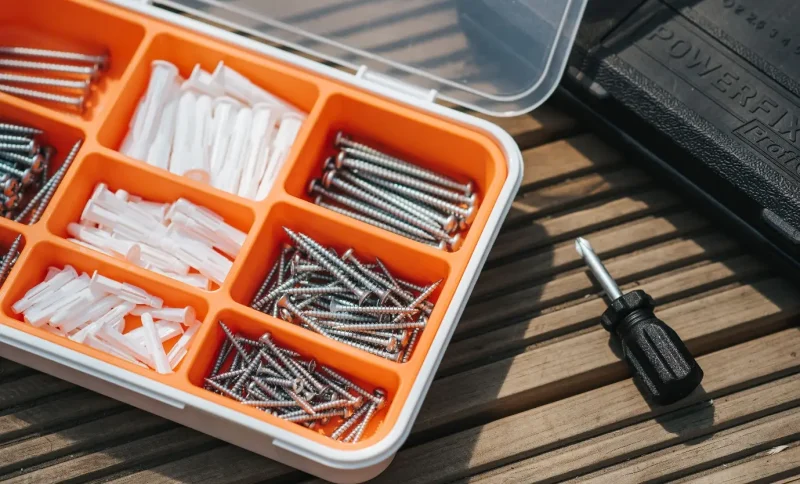
It is also worth setting aside a proper mix of nails and screws in different sizes, along with wall plugs for hanging heavier items securely. Having a small, organised supply on hand means you are never left mid job, standing in an aisle trying to remember exactly what size you needed.
Keep the Small Things Together
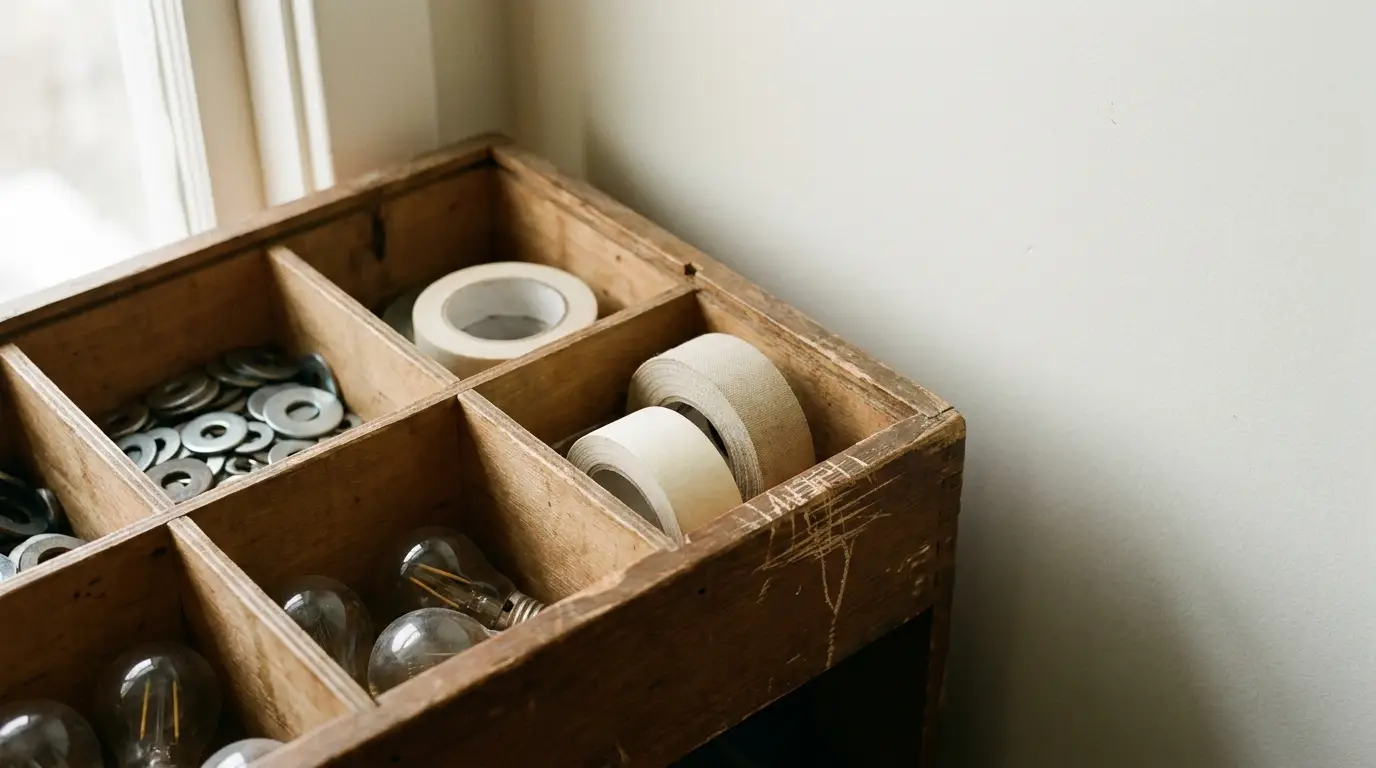
The tools tend to get the attention, but it is the small consumables that actually get used week to week. Batteries in a few common sizes, spare light bulbs, a torch that works, some strong tape and a tube of multipurpose adhesive will quietly save you more trips to the shop than any power tool.
A tidy way to store these is in a divided box or a set of labelled tins, so you are not tipping everything onto the kitchen table to find one small washer. It is worth applying the same thinking to the rest of the house too. A simple weekly tidying habit keeps clutter from building up in the first place, and a home that is generally kept in order makes it far easier to spot when something actually needs fixing.
Think About Safety Too
A maintenance kit is not only about fixing things. It is also about being ready for the unexpected. A basic first aid kit belongs alongside your tools, not tucked away in a different cupboard entirely. Work gloves are worth having too, particularly for anything involving glass, metal edges or garden work.
If your home has a fuse box that is not entirely modern, a torch and a note of where the trip switches are can save a lot of fumbling in the dark during a power cut. None of this needs to be elaborate. It simply needs to be there when you need it.
Where to Keep It
The best kit in the world is useless if it lives at the back of a cupboard behind the ironing board. Choose a spot that is easy to get to, ideally somewhere near the front door, the garage, or a utility space. A sturdy toolbox with a handle works well, as it means the whole kit can travel with you to wherever the job actually is, rather than making several trips back and forth for one missing item.
If space is tight, a smaller kit kept in a drawer is perfectly fine too. The size matters far less than the habit of always putting things back where they belong once a job is finished.
Build It Gradually
You do not need to buy everything in one go. In fact, building the kit slowly, adding a tool as a genuine need arises, tends to produce a far more useful collection than one bought all at once from a list. Over a few months, you will end up with exactly what your home requires, no more and no less.
Keep a small notebook or a note on your phone of anything you had to borrow or go without. That simple habit will guide your next purchase far better than any generic checklist.
A home maintenance kit is not about becoming an expert with power tools overnight. It is about removing the small friction that turns an easy five minute fix into a job you avoid for months. With a sensible set of tools, a well stocked box of fixings, and a proper place to keep it all, most household repairs stop being a chore and start being something you can simply get on with.