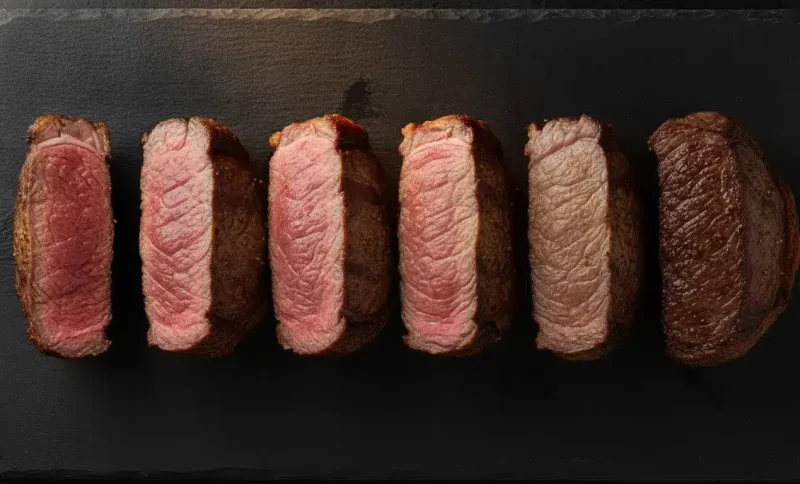
Steak doneness is a temperature choice, yet many diners treat it as a vague preference. Those menu terms point to visible color, internal heat, muscle firmness, rendered fat, and retained moisture. A cook reads those shifts as physical changes inside the meat. Once that basic map is clear, ordering becomes simpler, and the final plate is more likely to match the diner’s appetite, texture preference, and tolerance for pinkness.
Order Terms
Menu language can sound familiar, yet the labels often blur together during service. At a steakhouse in St. Louis, guests usually choose their preferred doneness before the cut reaches the grill. Each term signals a center color, a temperature range, and a mouthfeel. That shared vocabulary helps the kitchen cook accurately and helps diners describe what they actually want.
Rare
Rare steak receives a hard exterior sear while the center stays red, soft, and only gently warmed. Muscle fibers have tightened very little at this stage. As a result, the interior keeps more moisture, and the bite feels tender. Lean cuts can taste especially clean at this doneness because prolonged heat has not yet pushed much moisture outward or firmed the protein structure.
Medium-Rare
Medium rare sits slightly higher on the heat scale, with a warm red center and a more elastic texture. Many cooks favor this point because it preserves moisture while improving surface contrast. Fat begins to soften more fully, which changes the release of flavor and the mouth-coating richness. The steak still cuts easily, yet the interior offers more structure than a truly rare preparation.
Medium
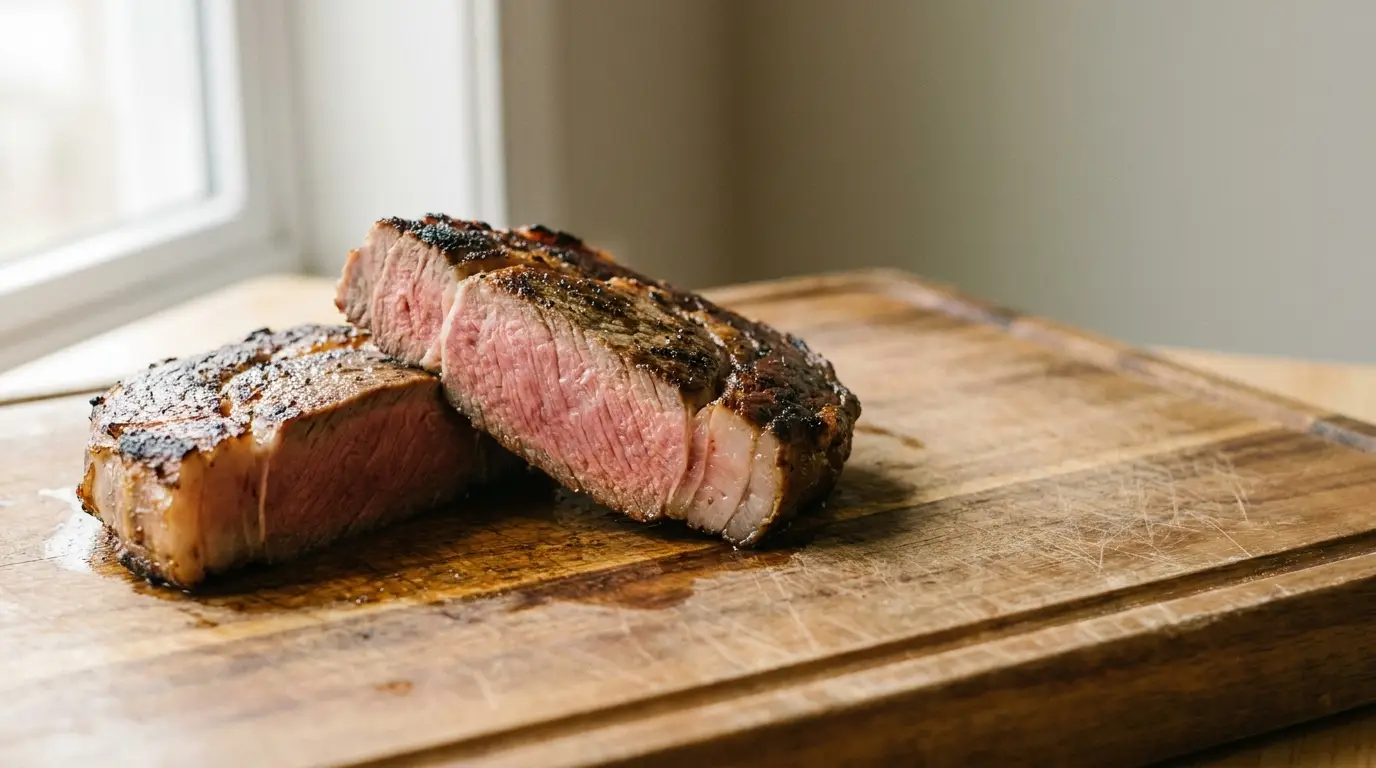
A medium steak shows a pink center, with browned bands moving inward from the surface. That extra heat causes more protein contraction, so juices become less free-flowing. The texture grows firmer, though a well-marbled cut can still feel pleasant and full. Diners who want less redness often choose this level, especially when they still expect tenderness rather than a dry or dense chew.
Medium-Well
Medium-well leaves only a faint strip of pink at the center, sometimes none in thinner cuts. Moisture loss becomes more noticeable at this stage. Fibers tighten, and the bite turns compact. This level can still work for fattier steaks, yet the cooking window narrows. A few extra moments on the grill may push the meat past the diner’s preference, particularly in cuts with limited internal fat.
Well-Done
A well-done steak is cooked until the interior shows almost no pink coloration. At that temperature, muscle bundles have tightened substantially, and much of the free moisture has already moved out. The result is a firmer, denser bite. Preference still governs the order, of course, but the kitchen has less margin for error, so timing, resting, and slicing direction matter much more.
What Heat Changes
Doneness is not just a color scale. Heat changes protein shape, fluid retention, and fat behavior. As temperature rises, muscle fibers contract and squeeze out moisture.
Texture and Juice
Rendered fat can improve richness, yet excess cooking reduces tenderness. That is why a ribeye may stay satisfying at medium, while a filet often feels best cooked medium-rare.
Why Cut Matters
Each cut responds differently because fat content, fiber density, and connective tissue vary. Filet mignon has a fine, delicate texture, so prolonged cooking quickly removes its softness. Ribeye contains more internal fat, which helps cushion the effects of higher heat. New York strip steak sits between those poles, with a firmer chew and strong beef character. Doneness works best when matched to anatomy, not habit.
Why Resting Matters
A steak does not stop changing after it leaves the grill. Residual heat continues moving inward for a short period, raising the center slightly. Resting also slows fluid loss by allowing pressure inside the meat to settle. If slicing happens too early, the plate collects liquid that would otherwise stay in the steak. That loss changes texture more than many diners expect.
How to Order Clearly
Clear ordering saves guesswork on both sides of the table. Saying medium rare is useful, but adding a warm red center gives the cook a better target. Some diners care most about softness, while others want less visible pink or a stronger crust. Those details matter because one person’s medium may resemble another’s well, especially under dim dining-room lighting.
Common Misread Signals
Appearance can be misleading, particularly once lighting, thickness, carryover heat, and resting time come into play. A dark crust may suggest a higher internal temperature than the center actually reached. Thin steaks also pass through stages quickly, which makes timing less forgiving. For that reason, experienced cooks judge doneness through touch, temperature, and structure, not surface color alone.
Conclusion
Steak doneness is a practical shorthand for several physical changes happening inside the meat. Rare stays soft and red; medium rare balances warmth with moisture; medium firms up; and well done cooks through fully. Once diners understand those distinctions, the labels stop sounding abstract. Better orders follow, and the chosen cut has a stronger chance of arriving with the texture, juiciness, and finish expected.