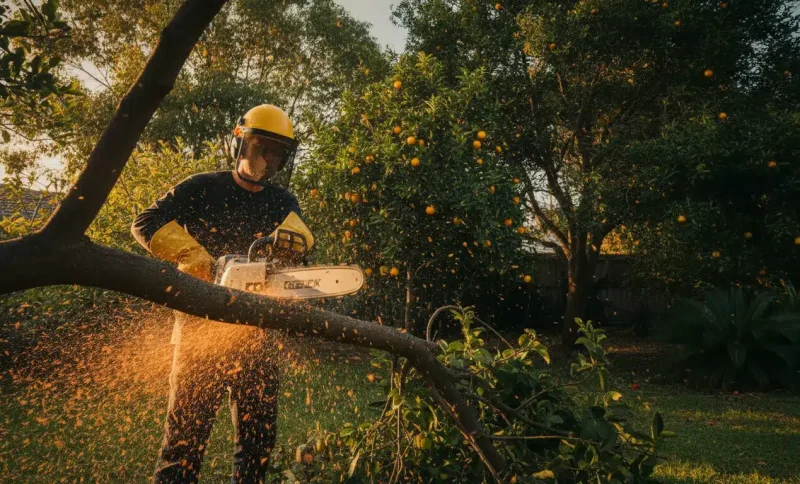
Most Australian gardeners hit a point where loppers and a hand saw just aren’t up to the job anymore. Maybe a storm dropped a branch across the lawn, your fruit trees have gotten out of hand, or you’ve got a stack of firewood to process before winter bites. For most home gardens, an electric chainsaw is the sensible answer, quieter than petrol, lighter in the hand, and no fussing with a pull cord. But there are a lot of options out there, and buying the wrong one means you’re either fighting a saw that can’t handle the work or lugging around more machine than your garden will ever demand. The good news is that the decision isn’t complicated once you know which four things actually matter: power source, bar length, motor output, and safety features. Nail those, and you’ll have a saw that earns its keep for years.
Corded vs Cordless: Getting the Power Source Right
The first real decision you face is whether to go corded or battery-powered, and it shapes everything else about how you use the saw. You can shop electric chainsaws online here and compare both types side by side, which helps you see the trade-offs before you spend. Corded saws draw from a standard 240V outlet and hold consistent power from the first cut to the last. Cordless models run on lithium-ion packs, typically 18V to 80V, and let you move freely around the garden without a lead trailing behind you. Neither format wins outright. Your block size, where your PowerPoints sit, and how long you typically work will push you toward one or the other. Most suburban Australian gardens are compact enough that a corded saw is genuinely practical, especially for shorter pruning and trimming sessions near the house.
Battery Voltage and What It Means for Runtime
Cordless electric chainsaws carry voltage ratings that signal how much grunt the battery pack delivers. Entry-level models sit at 18V to 40V and suit light pruning, small branches up to roughly 15 centimetres in diameter, and occasional use. Mid-range machines at 40V to 60V handle heavier work, storm cleanup, firewood rounds from medium logs, or a full afternoon session without the battery tapping out on you. Top-end 80V units genuinely rival petrol saws in output and suit larger rural-style gardens where thick timber is a regular headache. Battery runtime, though, depends on the amp-hour (Ah) rating of the pack, not just voltage. A 40V, 4Ah battery lasts roughly twice as long as a 40V, 2Ah pack doing the same job. So if you’re going cordless, always check whether a spare battery is included or available; running flat mid-job on a hot afternoon is exactly as annoying as it sounds.
Where Corded Models Have the Edge
Corded electric chainsaws have one obvious limitation: the power cord. You’re tethered to roughly 10 to 20 metres from your outlet, depending on your extension lead. But within that range, a corded saw never runs flat and skips the whole charge-management routine between sessions. For gardens where most cutting happens near the house or shed, that’s actually a point in their favour. Corded models also tend to cost noticeably less than comparable cordless units, since there’s no battery pack built into the price. A solid corded saw with a 35 to 40cm bar can run $80 to $200 cheaper than a cordless model with similar specs. So if your garden is compact and your powerpoints are accessible, a corded model is an honest, budget-friendly choice that performs consistently without any of the battery headaches that come with cordless ownership.
Bar Length and Motor Power: Matching the Saw to the Work
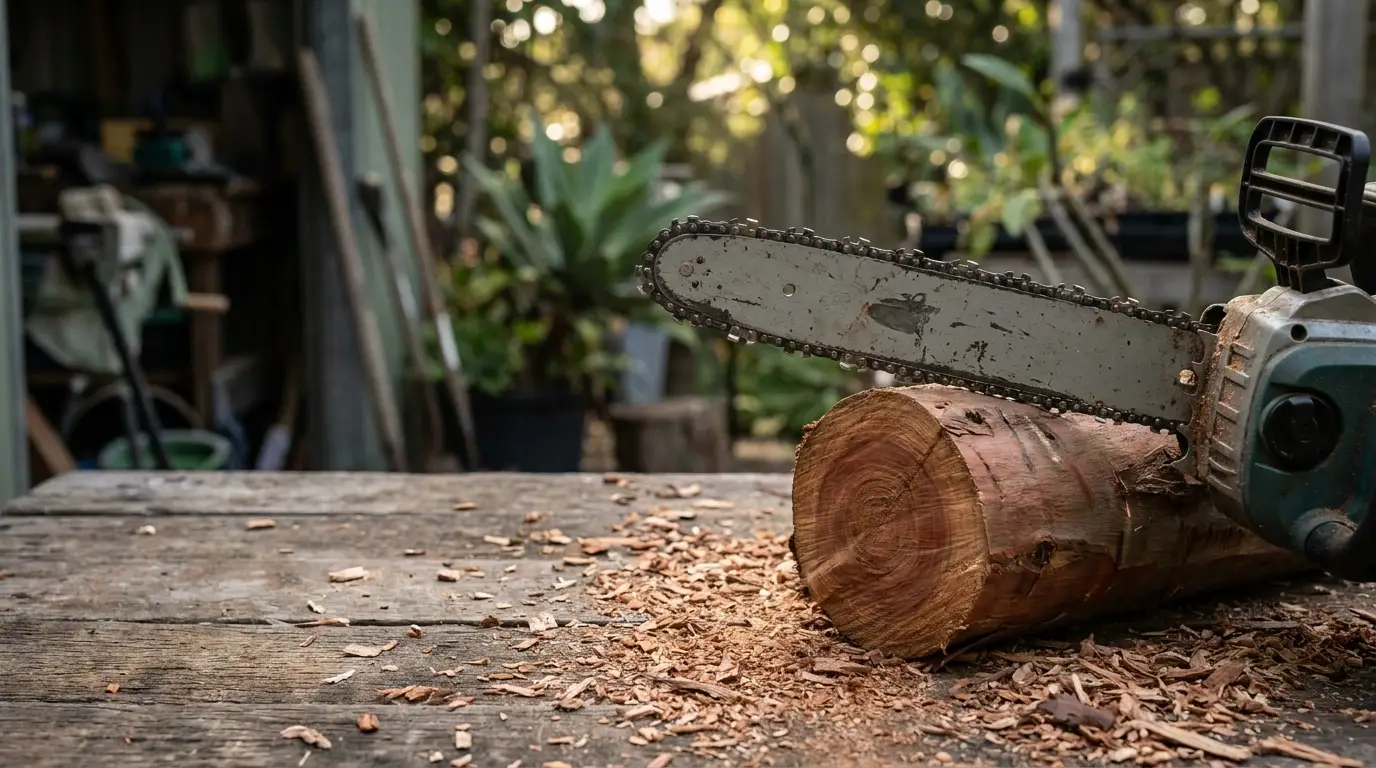
Bar length and motor wattage work together. A long bar backed by a weak motor is a frustrating combination, and a powerful motor paired with a short bar leaves you short-changed on bigger tasks. Most home garden jobs fall into two broad categories: light pruning and branch trimming at one end, cutting fallen trees or thick firewood at the other. Knowing how to choose the right electric chainsaw for garden work really comes down to being honest about which category your tasks sit in, then picking accordingly. A 25 to 30cm bar suits pruning, general tidying, and branches up to about 20cm across. Step up to a 35 to 40cm bar for anything heavier. Beyond 40cm, you’re into overkill territory for most residential gardens; the saw gets noticeably heavier to manage overhead or in tight spots.
Choosing Bar Length for Your Garden
A 25cm bar is light, easy to control, and perfectly fine for seasonal pruning of fruit trees, cutting back shrubs, or dealing with the occasional windfall branch. Honestly, most residential gardens in Australian suburbs never need more than a 30cm bar for regular maintenance. If you regularly encounter timber over 20cm across, a 35cm bar gives you the reach and clearance to cut cleanly without pinching the chain in the kerf. The trick is simple: the bar should be at least as long as the diameter of the material you cut most often, ideally a few centimetres longer. Go past that and you’re adding weight, cost, and handling difficulty for no practical gain. It’s also the case that longer bars demand more from the motor to keep the chain at effective cutting speed; bar length and motor output need to be chosen together rather than treated as separate decisions.
Motor Wattage and Cutting Performance
Electric chainsaw motors are rated in watts (W) for corded models and in voltage for cordless. For corded saws, look for at least 1,800W for any serious garden work. Models in the 1,200W to 1,500W range handle light pruning well enough, but they bog down on dense hardwood or larger cuts. At 2,000W and above, a corded electric saw manages most residential jobs comfortably, green wood, seasoned hardwood rounds, and storm cleanup. For cordless, a 40V system with a 4Ah battery delivers broadly similar performance to a 1,800W corded model on most garden tasks. But motor quality matters too, not just the headline wattage. A well-built motor at 1,800W will outperform a cheap one rated identically, because the internal components transfer power to the chain more efficiently. Read user reviews that specifically mention cutting through hardwood; that’s where quality differences actually show up.
Safety Features You Shouldn’t Compromise On
Safety isn’t optional on a chainsaw, even a light electric one. A chain moving at speed causes serious injury in a fraction of a second. Knowing how to choose the right electric chainsaw for garden work means checking the safety spec sheet as carefully as you’d check the motor rating. The non-negotiables are a chain brake, low-kickback chain, and a rear handguard. Beyond those, look for tool-free chain tensioning, an automatic oiler, and a trigger lockout that stops accidental starts. Electric chainsaws do have a meaningful safety edge over petrol: the chain stops the moment you release the trigger, with no throttle-lag or idle to worry about. Still, a chain brake that activates on kickback is a separate mechanical feature, genuinely different from a trigger cutoff. Check the product specifications explicitly, because not every budget model includes a properly rated chain brake alongside it.
Chain Brake and Kickback Protection
Kickback happens when the upper tip of the bar contacts a surface, and the saw snaps back toward the operator. It’s fast, unexpected, and a leading cause of serious chainsaw injuries. A chain brake, triggered either by your wrist contacting the front handguard or by inertia sensors built into the saw, stops the chain within fractions of a second. For garden use, always choose a saw with a clear chain brake specification. Low-kickback chain design reduces the risk further by limiting how aggressively the chain bites at the bar tip. Most electric chainsaws sold in Australia come with low-kickback chain fitted as standard, but double-check before you buy. And regardless of what safety features your saw has, wear chainsaw chaps, a helmet with face shield, cut-resistant gloves, and steel-capped boots every single time. No safety feature on the saw replaces proper personal protective equipment, full stop.
Conclusion
Picking the right electric chainsaw for your garden comes down to four honest questions: how far from a powerpoint will you be working, how thick is the timber you cut most often, how long are your typical work sessions, and how serious are you about not skimping on safety? Match your answers to bar length, motor output, corded or cordless format, and a confirmed chain brake spec; you’ll end up with a saw that fits your actual garden rather than an imaginary one. Electric models have come a long way in the past few years; they’re quieter, cleaner, and capable enough that most Australian home gardeners will never need to reach for petrol.