A home that raised a Family can keep serving daily needs for decades, and the kitchen layout often determines how safely it does so. When an aging Parent experiences changes in grip strength or finds stairs require a slower pace, structural modifications influence how easily they move through daily life. Modifying an environment does not require a large remodeling budget, as the most effective updates rely on reorganizing immediate living spaces, adjusting meal preparation habits, and knowing when to bring in an extra pair of hands.
Start With the Kitchen, Because Everything Happens There
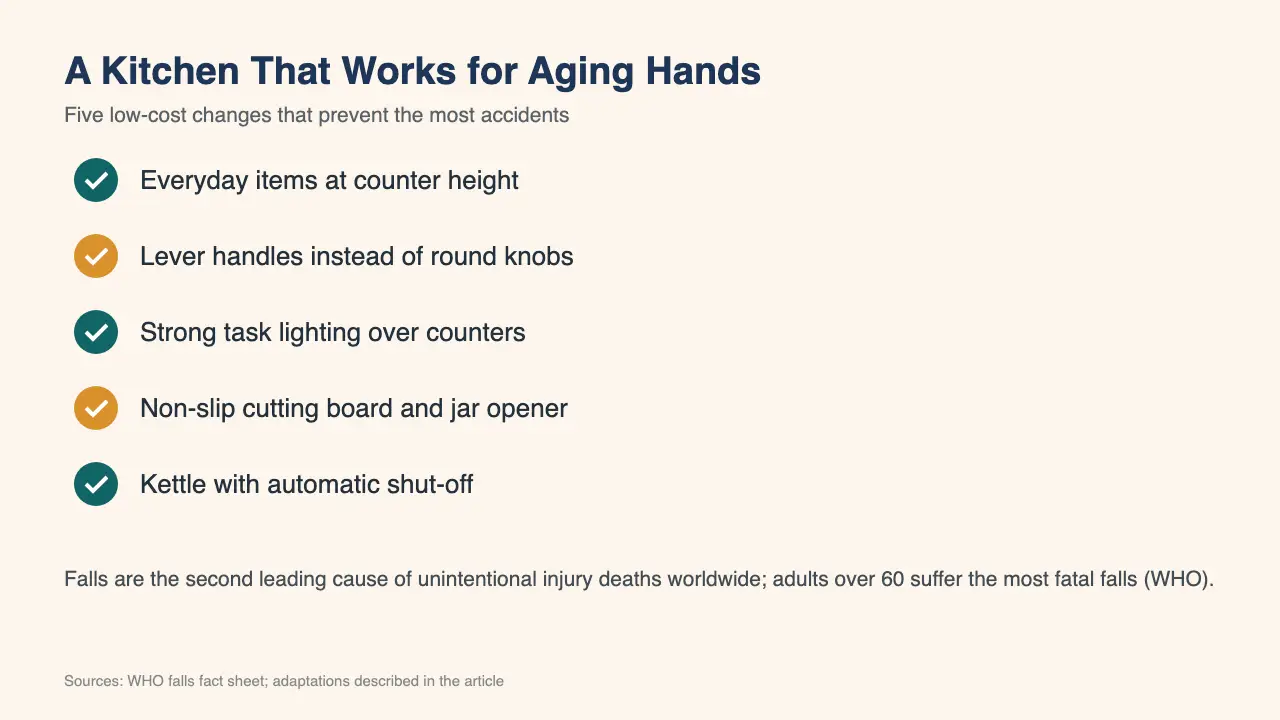
The signs usually show up in the kitchen first. A Family might notice a Senior reaching unsteadily for the high cabinets, taking longer to rise or bend when something lives on a low shelf, or straining to turn round door knobs that never used to resist. Each of these reflects normal changes in joint mobility, grip strength, and comfortable reach, and the fix is to bring the kitchen to the person rather than the other way around. Move the everyday dishes, the kettle, and the favourite pans strictly to counter height so nothing important lives above the shoulders or below the knees, and swap round knobs for accessible lever handles that a stiff hand manages easily. Put the best lighting in the house over the counter, where knives and stovetops do their work. A rubber jar opener, a non-slip cutting board, and a kettle that shuts itself off will quietly prevent more accidents than any drawer of specialty gadgets.
Cook Once, Feed the Week
Batch cooking is the single best gift an adult child can set up for aging Parents. Double your own Family dinners and deliver the extras in single portions, labelled and freezer-ready, so a good meal is never more than ten minutes away. Familiar recipes matter more than fancy ones here, because appetite follows memory. The stew they have eaten for forty years gets finished, while a novel grain bowl gets pushed around the plate. Keep a standing grocery list on the fridge that anyone visiting can top up, and mealtimes stay something the Family shares rather than something anyone monitors.
Make the Rest of the House Earn Its Keep
Walk the main floor the way a tired person would at night. Clear the walking paths, tape or remove the scatter rugs, add a second handrail where stairs are unavoidable, and put motion-sensor nightlights between bedroom and bathroom. The effort is worth it, since falls are the second leading cause of unintentional injury deaths worldwide, and adults over 60 suffer the greatest number of fatal falls. Research on healthy aging keeps landing on the same point: the World Health Organization defines the goal as functional ability, which means being able to keep doing the things that matter in the place you have chosen. A house arranged around that idea keeps abilities in use instead of storing them away.
Know When to Add Help, and Add It Gently
There usually comes a point where Family visits and frozen dinners cover most of the week but not all of it, and that gap is easier to fill than most Families expect. In the National Institute on Ageing’s 2024 survey, 80% of older adults said they want to stay home as they age. Professional resources centered on helping seniors stay at home in Ottawa begin by reinforcing these practical, baseline household adjustments. When balancing housekeeping and meal preparation requires more continuous management than a Family can provide alone, incorporating dedicated private care fills the remaining structural gaps. Choosing an approach that includes clinical oversight from a Registered Nursing Coordinator helps ensure that home environments adapt predictably to changing health needs while preserving a Senior’s independent routines.
Keep the Home Feeling Like Theirs
Every change lands better when it is framed as convenience rather than concession, so involve your Parents in each decision and let them veto freely. The lever handles are nicer for everyone, the freezer meals save cooking on tired days, and the extra lighting flatters the kitchen as much as it protects it. A Family home that adapts this way keeps doing what it has always done, which is to hold the people in it, comfortably and on their own terms.