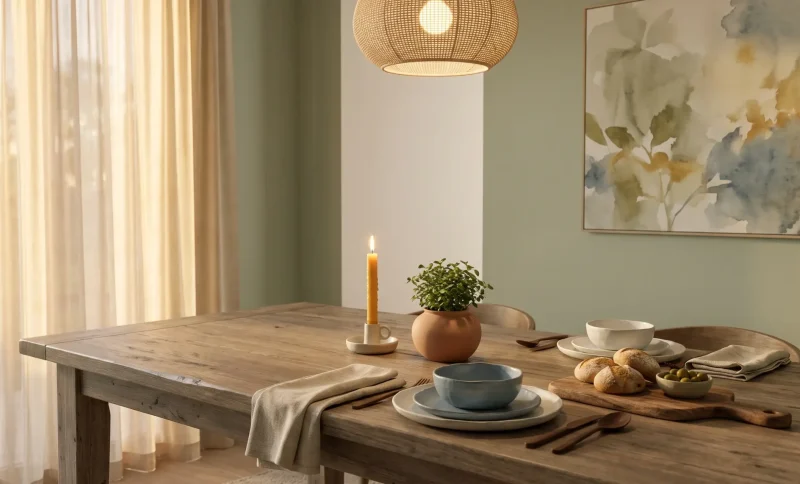
Your dining room is not just where you eat — it is where your nervous system decides how you eat. Research consistently shows that the environment surrounding your meals directly influences your eating pace, portion awareness, and even digestion. If your table feels chaotic, rushed, or visually overwhelming, your body responds in kind. Creating a calming dining space is one of the most powerful and underrated tools for building a healthier, more intentional relationship with food.
Why Your Dining Environment Shapes How (and How Fast) You Eat
Your surroundings send constant signals to your brain that either activate your stress response or invite relaxation — and those signals arrive before you take a single bite. Studies in environmental psychology confirm that people eat faster, consume more, and register less satisfaction in loud, bright, cluttered spaces. The body interprets visual chaos and noise as low-level threat, triggering cortisol release that suppresses the parasympathetic nervous system — the very system responsible for healthy digestion and satiety signaling.
Mindful eating, at its core, is about presence and awareness at the table. But presence is nearly impossible when your environment is competing for your attention. The room matters as much as the food on your plate.
1–2. Set the Mood With Lighting and Color
Warm, dim lighting is one of the fastest ways to slow down a meal and reduce mealtime stress. Bright overhead fluorescent lights have been linked to faster eating speeds and elevated cortisol — the opposite of what a mindful mealtime requires. Soft, warm-toned bulbs (2700K–3000K range) signal the brain that it is time to unwind.
- Layer your lighting: Combine a dimmable pendant light with candles on the table for depth and warmth.
- Use a dimmer switch if possible — adjusting brightness by even 30% creates a noticeably more relaxed atmosphere.
- Avoid bright red, orange, or high-contrast color schemes in your dining room. These are stimulating hues that have been shown to accelerate eating pace in food psychology research.
For color palettes, the most effective choices for a peaceful dining area include soft sage green, warm whites, muted terracotta, and dusty blue. These tones lower visual stimulation and create a sense of grounded calm. Natural, earthy neutrals are particularly effective because they echo the outdoors — an environment humans are neurologically wired to find restorative.
3–4. Declutter Your Table and Choose Intentional Decor
A cluttered table creates mental noise that makes it nearly impossible to be present during a meal. Every object competing for your visual attention is a small cognitive load — and those loads add up, keeping your mind busy when it should be focused on the experience of eating.
Minimalist table styling does not mean sterile or cold. It means keeping only what serves the meal and the mood:
- Remove laptops, mail, random objects, and anything unrelated to eating.
- Keep a simple centerpiece: a small plant, a candle, or a single ceramic bowl.
- Choose natural materials — linen, wood, stone, unglazed ceramics — which add warmth without visual noise.
Beyond the table itself, the walls of your dining room play a surprisingly significant role in setting the room’s energy. A single, well-chosen piece of artwork can anchor the entire space and create a visual focal point that draws the eye and quiets the mind. This is where zen dining room decor becomes genuinely functional rather than merely aesthetic. Browsing options like serene wall art for a mindful dining atmosphere can help you find pieces rooted in nature, simplicity, and stillness — exactly the visual language your nervous system responds to during meals.
Place calming artwork at eye level on the wall you face most naturally while seated. A nature-inspired print, an abstract wash of muted color, or a minimalist botanical illustration all work beautifully to create that sense of intentional calm.
5–6. Engage the Senses: Sound, Scent, and Texture
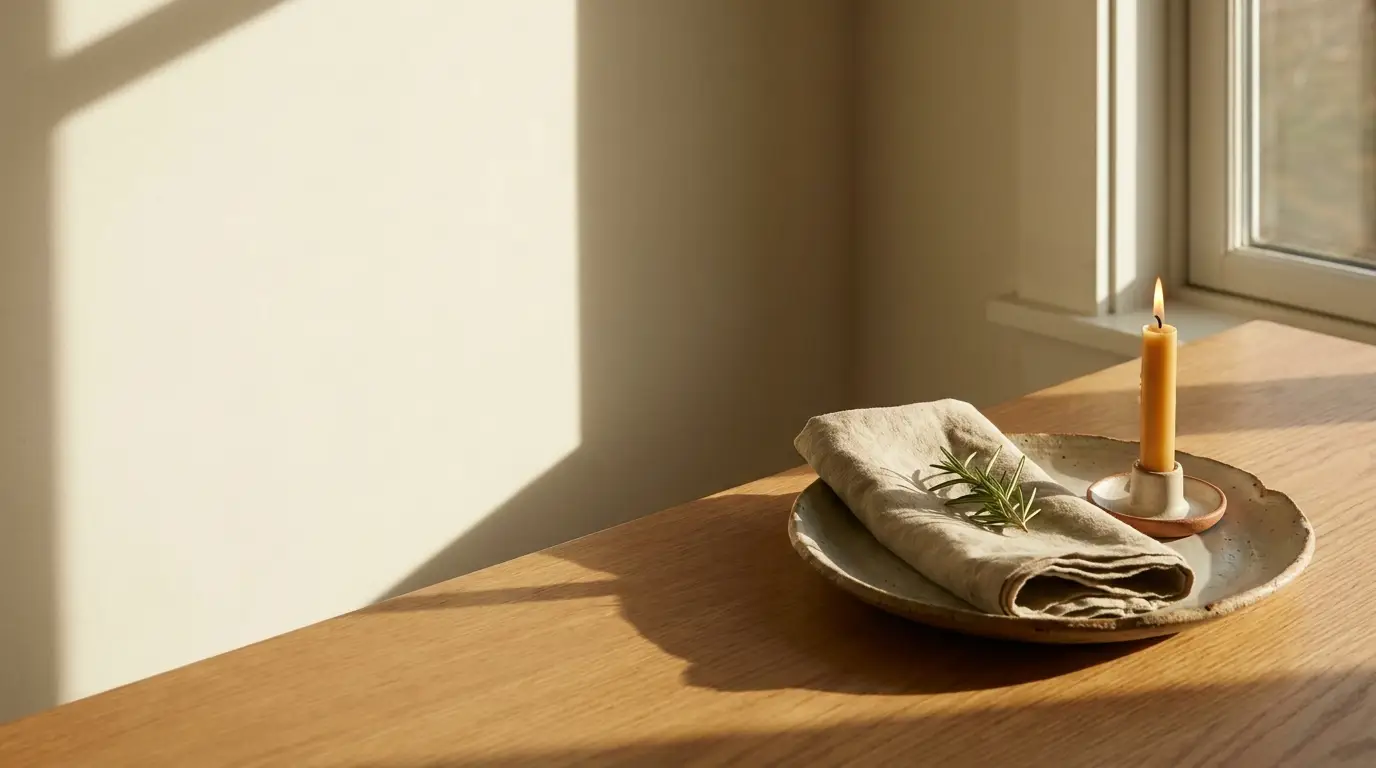
A truly calming dining environment speaks to all the senses — not just sight. Each sensory layer either deepens relaxation or disrupts it.
Sound: Silence is underrated, but if complete quiet feels uncomfortable, opt for soft instrumental music or low-volume nature sounds (rainfall, birdsong, gentle streams). Avoid television, news podcasts, or anything with speech — language processing keeps the analytical brain active and pulls you out of the present moment.
Scent: Aromatherapy is a legitimate tool for mealtime calm. Lavender, chamomile, and sandalwood are well-documented for their ability to lower cortisol. Light a scented candle 15–20 minutes before you sit down, or place a small diffuser nearby. Fresh herbs like rosemary or thyme on the table add a natural, grounding fragrance that also connects you to the food itself.
Texture and touch: The physical objects you handle during a meal shape the pace of it. Consider:
- Linen napkins instead of paper — the texture slows the unconscious rush.
- Handmade or ceramic tableware that feels substantial and intentional in your hands.
- Wooden serving boards or bowls that add warmth and encourage a slower, more deliberate serving ritual.
And perhaps most critically: remove screens from the dining space entirely. Phones, tablets, and televisions are the single greatest disruptors of mindful eating. Even having a phone face-down on the table has been shown to reduce meal satisfaction and increase distracted consumption.
7. Build a Pre-Meal Ritual That Signals Your Brain to Slow Down
A consistent pre-meal ritual is one of the most scientifically grounded strategies for activating the parasympathetic nervous system — your body’s rest-and-digest mode — before you take a single bite. Rituals work because repetition creates neurological shortcuts: over time, the act itself becomes a trigger for the calm state you want to inhabit.
Your ritual does not need to be elaborate. Some effective options:
- Light a candle as a deliberate signal that mealtime has begun.
- Take three slow, deep breaths before picking up your fork.
- Set the table with care — even for a solo weeknight dinner.
- Spend a moment gazing at a calming piece of wall art or a natural focal point in the room, allowing your eyes to soften and your shoulders to drop.
This last practice is more powerful than it sounds. Soft visual focus — as opposed to the sharp, scanning attention we use with screens — activates the parasympathetic branch of the nervous system. It is the same principle behind nature gazing and meditation. A piece of zen wall art positioned in your sightline becomes a functional tool, not just decor.
Over weeks and months, these rituals compound. People who practice intentional pre-meal transitions report better digestion, reduced overeating, and significantly greater satisfaction from meals — without changing a single ingredient on their plate.
FAQ: Creating a Calming Dining Space for Mindful Eating
How Does Your Dining Environment Affect How You Eat?
Your dining environment directly influences your eating pace, stress levels, and digestion. Cluttered, noisy, or brightly lit spaces activate the sympathetic nervous system, leading to faster eating, reduced satiety awareness, and poorer digestion. A calm, intentional environment does the opposite — it activates rest-and-digest mode, helping you eat slower and feel more satisfied.
What Is the Best Wall Art for a Zen Dining Room?
Nature-inspired, minimalist artwork is most effective for a zen dining room. Think soft botanical prints, abstract washes of muted color, or landscape imagery that evokes stillness. The key is visual simplicity — one meaningful piece at eye level creates a calming focal point without adding visual noise.
What Colors Make a Dining Room Feel Calm?
The most calming color choices for a dining room are soft sage green, warm white, muted terracotta, dusty blue, and earthy neutrals. These tones reduce visual stimulation and create a grounded, restorative atmosphere. Avoid bright reds, oranges, or high-contrast combinations, which are known to accelerate eating pace.
Do I Need to Completely Redecorate to Eat More Mindfully?
No. Small, intentional changes have an immediate impact. Dimming your lights, removing clutter from the table, adding one piece of calming wall art, and leaving your phone in another room can meaningfully shift the energy of your dining space — and your eating habits — without a full renovation.