

Oct 23, 2026, marks the start of CAF’s Champions League return-leg weekend, which runs to Oct 25, 2026. The occasion offers a reason to gather around a match, but not yet a reliable timetable for a two-game dinner. Published round dates do not establish that two chosen fixtures will run consecutively on the same evening.
Build the menu around that uncertainty. Prepare components that can wait safely, serve small portions and leave the final assembly for a genuine break in play.
Sidama Bunna against Al-Hilal Omdurman is among the confirmed pairings; the kickoff and authorized viewing arrangements need checking nearer the game.
A useful match-night meal should not require the cook to leave the room for the entire second half. Nor should it sit on the coffee table from the first whistle until the last result arrives.
Confirm the Evening Before Buying for a Doubleheader
Choose the match first. Check the final fixture notice, your local time and the service carrying it before planning a second broadcast. Two return legs on the same weekend may overlap, and a listed broadcast start can include studio coverage before kickoff.
Once the schedule is clear, decide which food will be ready before play. The meal needs a serving window, not a promise that the referee will stop at a convenient moment. Stoppage time can push an anticipated break later.
Keep the first serving simple: something already prepared, easy to portion and comfortable to eat while looking up. Save chopping, hot pans and slippery serving dishes for the kitchen.
One Tray, Several Ways to Build a Plate
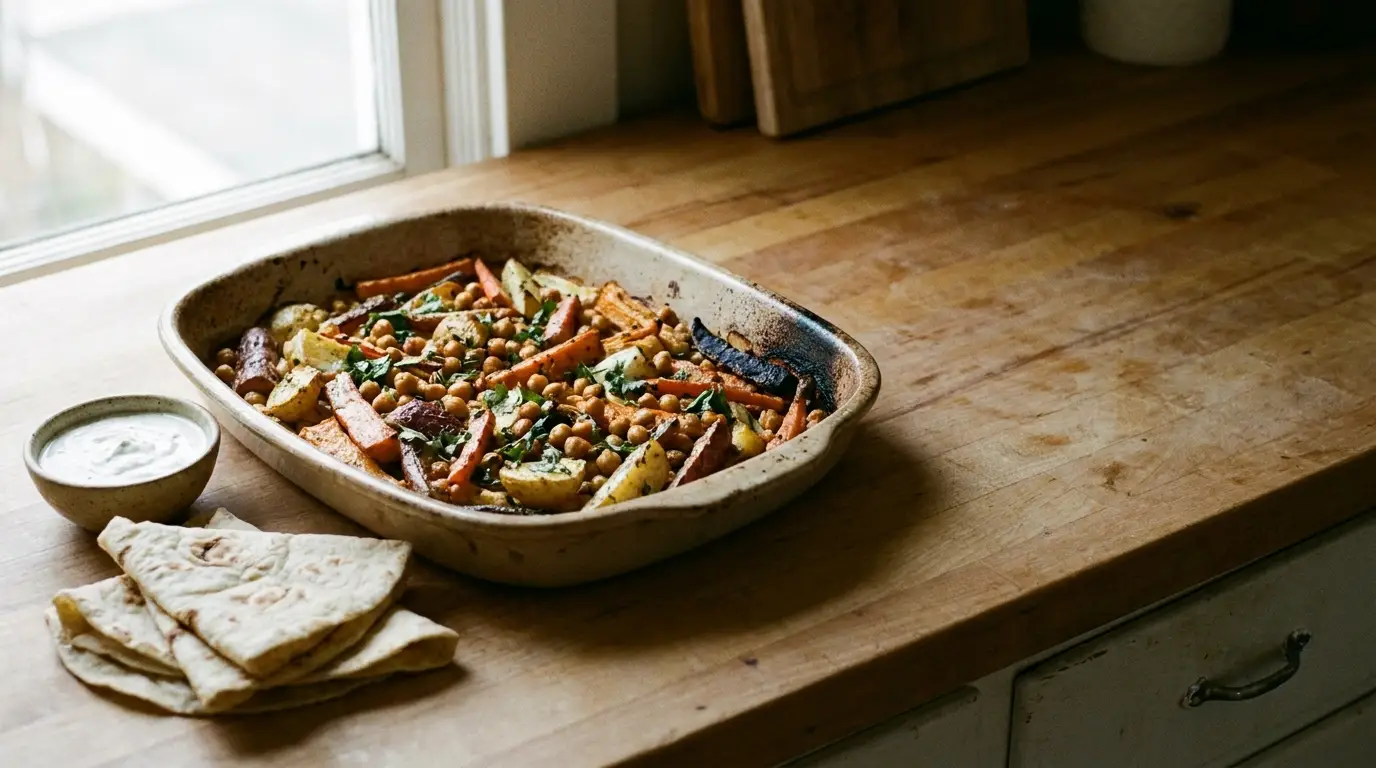
A roasted-vegetable and chickpea plate offers a flexible starting point.
Use drained canned chickpeas, vegetables cut to similar sizes, a little oil and seasonings suited to the guests. Follow the cooking instructions for the ingredients and equipment; the point is a menu format, not a claim that an untested universal oven time will work.
Serve flatbread separately. Put yogurt sauce in a small chilled bowl and offer lemon, herbs or a dry spice mix as optional finishes. People can build different plates without requiring several main dishes.
For an Ethiopian-inspired addition, choose a bought injera or a dish from a trusted recipe source rather than improvising fermentation for match night. Name the preparation honestly. A chickpea tray with a spice mixture is not automatically a traditional Ethiopian stew.
Keep Crisp and Wet Components Apart
Tomatoes and dressing can soften bread before anyone eats it. Assemble one plate at a time, leaving sauce off the shared tray. A spoon for each topping also keeps serving less messy when attention drifts toward the screen.
Taste Before the Match Starts
Salt, acidity and heat are easier to adjust in the kitchen than with six finished plates moving around a sofa.
A Sweet Theme Does Not Tell You the Rules
Food imagery appears in digital entertainment as well as on the table. Pragmatic Play’s Sweet Bonanza 1000 uses a 6×5 grid, with fruit and candy symbols paying when at least eight matching symbols appear. Its published maximum is 25,000 times the bet, a ceiling rather than the expected result of a session.
The artwork can suggest a dessert menu while the underlying game remains a numerical system.
Stakes, qualifying combinations and bonus triggers belong in the decision before a round begins. Reading the play casino Ethiopia game catalog means checking each title’s provider and paytable before allocating an adult entertainment budget. A bright food theme does not establish how frequently a prize will arrive.
The provider says four or more lollipop scatters trigger ten free spins in Sweet Bonanza 1000. That rule describes this title, not every candy-themed game. Availability and the exact configuration still require checking on the selected platform.
Halftime Is a Temperature Check, Not a Storage Method
USDA guidance sets a clear limit for perishable food at room temperature: two hours, reduced to one hour above 90°F/32°C. Count from when food leaves temperature control. A new half or a second match does not restart that clock.
Keep the arrangement manageable:
- Put out a small serving of chilled sauce and retain the rest in the refrigerator.
- Replace a finished bowl with a fresh portion instead of topping it up indefinitely.
- Portion leftovers into shallow containers for prompt refrigeration.
- Use a food thermometer to verify that reheated leftovers reach 165°F/74°C.
Extra time is precisely why a large platter should not remain out for the whole evening. Deal with storage during an available pause. The match can continue while the unused food returns to the refrigerator.
Keep the Football Decision Off the Dinner Timer
A hurried serving break is a poor moment to assess a live football price.
The match situation may change while someone carries plates or misses a restart. Before selecting a football bet at Melbet, read the current score, remaining time and market terms on the screen rather than acting on the last commentary heard from the kitchen.
Set the stake from the session budget instead of from an urge to catch up with the action.
For a return leg, note whether the selection covers that match or progress from the tie. A club can lose the evening’s game and still advance. Dinner interruptions make it especially easy to overlook which proposition is open on the phone.
Leave One Clean Surface for the Next Serving
Clear empty plates before preparing anything else. Bring out a small fresh portion only if people still want food, rather than treating a second broadcast as an obligation to eat again. Keep cups away from charging cables and the viewing remote.
Label stored portions with the dish and storage date so the next meal begins with identifiable leftovers. A final kitchen check should find chilled ingredients back in the refrigerator, covered containers in place and no forgotten sauce bowl beside the television.