


Most budgets don’t fall apart because of one big mistake. They slowly wear thin as small, everyday purchases add up, until there’s very little left over when something unexpected comes along. And unexpected bills have terrible timing. They don’t wait for a good month, and they rarely give any warning.
The good news is that food is one of the few parts of a budget you can change quickly.
Rent and insurance stay the same from month to month, but what you spend on meals depends on your habits, your schedule and how much planning you do. Meal prep gives you a simple way to bring that number down and keep it down.
This article walks through how to plan and cook on a budget, how to put the money you save to work, and what to do when a bill is bigger than the cushion you’ve built.
Why Food Spending Is the Easiest Leak to Fix
Before changing how you cook, it helps to understand where your food money actually goes. Most of it slips away in amounts too small to notice.
Small Purchases Add Up Quietly
A morning coffee, a quick lunch near the office and a delivery order on a busy weeknight don’t feel like much on their own. Each one seems like an exception. Put them together over a month, though, and the total can be surprisingly large.
Look back through your last two bank statements and add up every food purchase. For many people, that number is a wake-up call.
Planning Works Better Than Willpower
Trying to spend less by simply resisting temptation rarely lasts. You get hungry, you run short on time, and the easy option wins. Meal prep works because it takes the decision off the table. If lunch is already waiting in the fridge, there’s nothing to resist. You made the choice earlier in the week, when you had the time and energy to plan.
Building a Meal Prep Plan That Costs Less
Once you know what you’re spending, you can build a plan that lowers it without leaving you hungry or bored. The best plans are simple enough to repeat week after week.
Start With What You Already Have
Check your pantry, fridge and freezer before you write a shopping list. A half-used bag of rice, some frozen vegetables and a few cans of beans can easily become two or three meals. Planning around food you’ve already bought is one of the quickest ways to shrink your grocery bill, and it keeps those items from going to waste.
Build Meals Around a Few Cheap Staples
Choose two or three affordable ingredients to anchor your week. Rice, oats, lentils, potatoes, eggs, pasta and chicken thighs are inexpensive and work in all kinds of dishes.
If you’d like a simple way to round them out into balanced meals, the USDA’s MyPlate guidelines break down how much of each food group to aim for. Relying on fewer ingredients also keeps your list short, which means quicker trips to the store and fewer impulse buys.
Shop With a List and a Spending Limit
Write your list based on the meals you plan to make, so everything in your cart has a purpose.
Then decide how much you’ll spend before you walk through the door. Store brands, bulk dry goods and frozen produce usually cost less than name brands or fresh options, and the quality is often just as good. If something isn’t on the list, it can wait until next week.
Prep Habits That Stretch Every Dollar
A careful shopping trip only saves money if the food gets eaten. The way you cook and store your meals makes a big difference.
Cook Once and Change It Up
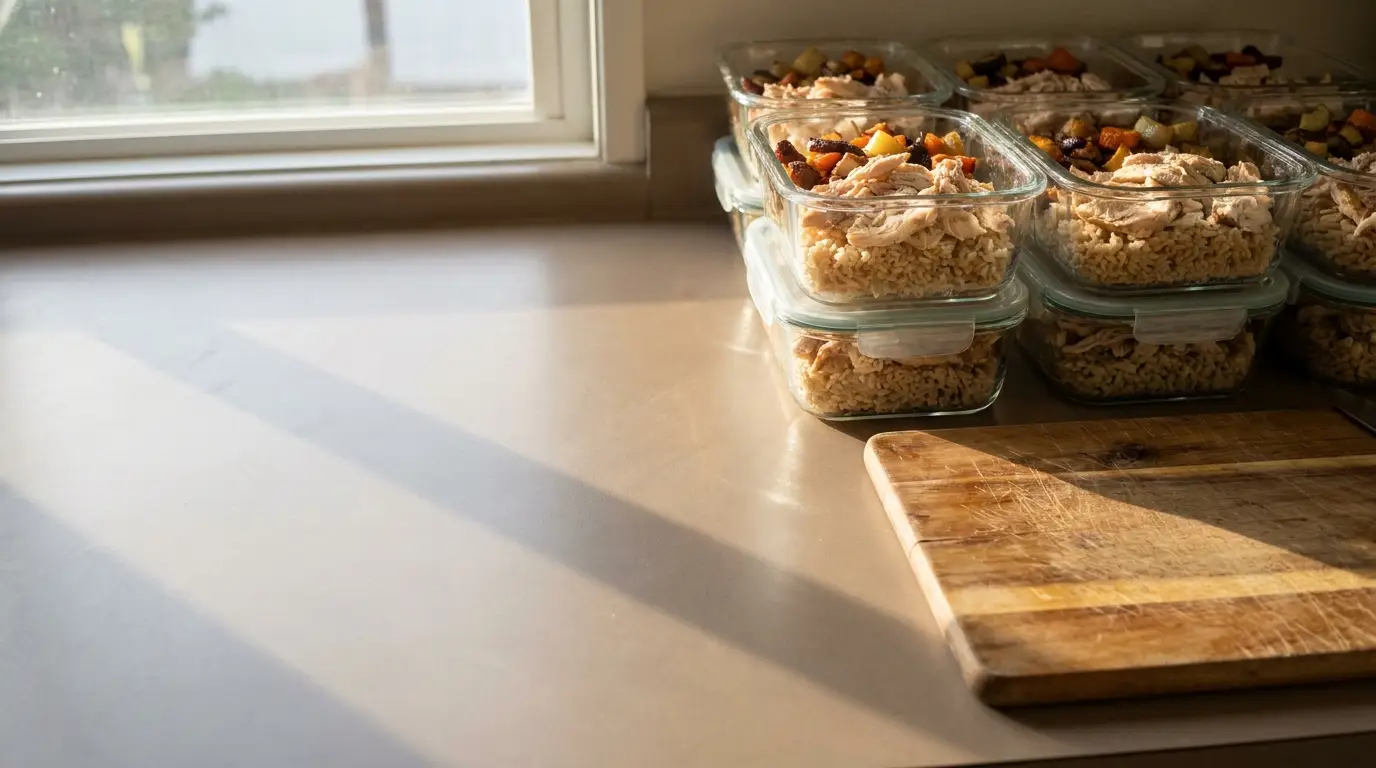
Cooking in large batches saves time, but eating the same meal every day gets old quickly. A better approach is to cook a simple base and use it in different ways.
A big batch of shredded chicken can go into tacos one night, a rice bowl a few days later and a pot of soup by the end of the week. You get variety without extra shopping, and you’re far less likely to give up and order takeout.
Store Food So It Lasts
Food that spoils is money thrown away. Let cooked meals cool quickly, pack them into sealed containers and write the date on each one. Anything you won’t eat within a few days should go straight into the freezer.
If you’re not sure how long something will keep, FoodSafety.gov’s cold storage chart lists safe storage times for common foods, which makes it easier to decide what to eat first.
Plan for Leftovers on Purpose
Leftovers work best when you plan for them. Make a little extra at dinner and pack it for lunch the next day. Save vegetable scraps in the freezer for homemade stock. Turn stale bread into breadcrumbs or croutons. None of these habits takes much effort, but together they help you get more meals out of every grocery run.
Turning Grocery Savings Into a Real Cushion
Spending less on food is only half the job. If the money you save stays in your checking account, it tends to get spent on something else.
Move the Money Right Away
After each grocery trip, compare what you spent with what you used to spend in a typical week. Transfer the difference into a separate savings account that same day. Waiting even a few days makes it easy to forget. Once the money is out of your everyday account, it has a much better chance of growing.
Give Your Savings a Clear Purpose
Savings are easier to protect when they’re set aside for something specific. Name the account for emergencies and treat it as off-limits for everyday spending. The Consumer Financial Protection Bureau’s guide to building an emergency fund explains how to choose a savings goal and keep adding to it over time. Small weekly transfers may not seem like much at first, but within a few months they can grow into a real safety net.
When a Vet Bill Is Bigger Than Your Savings
Even a healthy emergency fund has its limits. Some expenses show up before your savings have had time to grow, and few are as sudden or stressful as a pet who needs care right away.
How Financing Can Help
Vet bills can climb quickly, especially for emergency visits, surgery or ongoing treatment. When the cost is more than you have saved, borrowing can let you get your pet the care they need without emptying every account at once.
A personal loan gives you the full amount up front and a fixed monthly payment, so you always know what you owe.
That kind of predictability makes it easier to stay on top of your other bills, including your grocery budget, while you pay it back.
What to Look For Before You Borrow
The right loan should come with a fixed interest rate, clear terms, no hidden fees and a monthly payment that fits comfortably in your budget.
Financing with those features can cover the cost of care quickly and spread it out over time, so a single trip to the vet doesn’t wipe out the savings you’ve worked to build. If you’re comparing options, a pet loan with straightforward terms may be easier to manage than carrying a large balance on a high-interest credit card.
Take time to compare rates, read the fine print and borrow only what you need. Once the loan is in place, the money you save through meal prep can help you pay it off sooner.
Small Habits, Steadier Finances
Surprise bills are a normal part of life, but they don’t have to knock your finances off course.
Planning your meals, shopping with a purpose and cooking in batches give you more control over one of the most flexible parts of your budget.
Moving those savings into a dedicated fund turns simple routines into real protection. And when a cost goes beyond what you’ve saved, careful borrowing can bridge the gap without undoing your progress. With these habits in place, you can face the unexpected with a plan rather than panic.