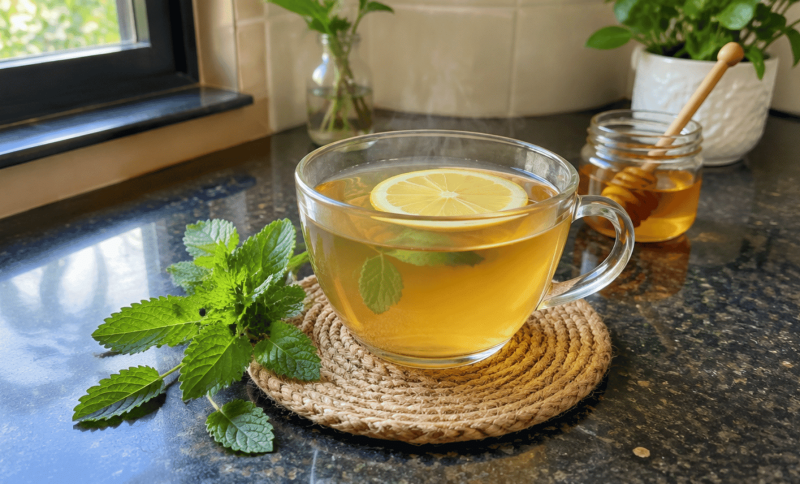
Does your day need a little less noise and a little more breathing room?
Lemon balm tea offers a warm, lemon-and-mint-scented pause. No complicated equipment, no caffeine, and no need to turn relaxation into another project (there’s enough on that list)!
This herb has a centuries-old reputation for calming nerves and comforting digestion. That doesn’t make every cup a sleep solution; the ritual itself has something going for it…
Warm mug. Gentle fragrance. A few minutes without answering anything that beeps. I like its delicate citrus taste for everyday sipping, whether you’re unwinding or simply enjoying something warm.
What is This Herbal Drink?
Melissa officinalis is a perennial herb from the mint family, native to Europe, North Africa, and West Asia.
For centuries, people have cultivated it for its medicinal properties, especially to calm the nerves and support gut health.
The leaves emit a delicate citrus-mint fragrance when crushed, making them perfect for brewing. The flavor profile is mild and citrusy, with subtle minty undertones, making it refreshing yet gentle enough to drink daily.
You can brew this beverage using fresh leaves picked from your garden, high-quality dried leaves, or convenient pre-packaged bags available at health stores and online retailers.
Types of Melissa Officinalis
The variety affects fragrance, flavor, and garden appeal. They’re not all wearing the SAME leafy outfit
|
Variety |
Characteristics |
Best For |
|---|---|---|
|
Common Lemon Balm |
Green leaves with a fresh lemon scent |
Everyday herbal tea |
|
Aurea |
Green leaves with golden markings |
Decorative gardens and tea |
|
All Gold |
Yellow leaves with a lemon fragrance |
Ornamental gardens and brewing |
|
Quedlinburger Niederliegende |
Compact growth in its first year |
Home gardens and leaf harvesting |
|
Lime |
Leaves with a lime-like aroma |
Citrus-flavored herbal infusions |
I’d probably start with a container-grown Common plant. Purchased organic dried leaves are another option (no gardening relationship required)
Health Benefits of This Herbal Infusion
This calming herbal tea is rich in natural compounds that nurture both body and mind, offering a natural path to wellness in every sip.
-
May Help With Mild Stress: Lemon balm has traditionally been used to ease mild stress and promote relaxation. Some clinical studies have reported possible benefits, mainly from specific lemon balm preparations rather than homemade tea.
-
May Support Better Sleep: Drinking lemon balm tea before bed may be a pleasant way to wind down. However, research has not confirmed that homemade tea consistently improves sleep quality or duration.
-
Traditionally Used for Digestion: Lemon balm has been used for mild digestive complaints, including bloating and gas. More research is needed to confirm how well brewed tea works.
-
Contains Natural Plant Compounds: Lemon balm leaves contain compounds such as rosmarinic acid, which has shown antioxidant activity in laboratory studies. Their effects when consumed as tea are not fully understood.
Ingredients and Tools You’ll Need
A soothing cup begins with simple, fresh ingredients, basic tools, and accurate kitchen measurements, creating balance, aroma, and therapeutic calm in every sip.
|
Ingredients |
Amount |
Tools |
|---|---|---|
|
Fresh Lemon Balm (Melissa) Leaves |
2 tablespoons fresh or 1 tablespoon dried |
Kettle or Small Pot |
|
Filtered Water |
8 ounces (1 cup) |
Infuser or Strainer |
|
Raw Honey (optional) |
1 teaspoon for mild sweetness |
Teapot or Mug |
|
Fresh Citrus Slice (optional) |
1 slice for brightness and vitamin C |
Spoon |
|
Fresh Mint Sprig (optional) |
1 sprig for aroma and freshness |
Timer |
Prepare these essentials beforehand to brew effortlessly and fully enjoy the relaxing ritual and refreshing taste of lemon balm tea.
How to Make This Herbal Beverage
Creating the perfect lemon balm tea requires gentle care with temperature and timing to preserve its delicate flavor and calming qualities.
Good lemon balm tea depends on heat and time; too much of either can overwhelm its delicate flavor. The goal is a GENTLE infusion, not leaves boiled into submission.
Step 1: Boil and Cool Water
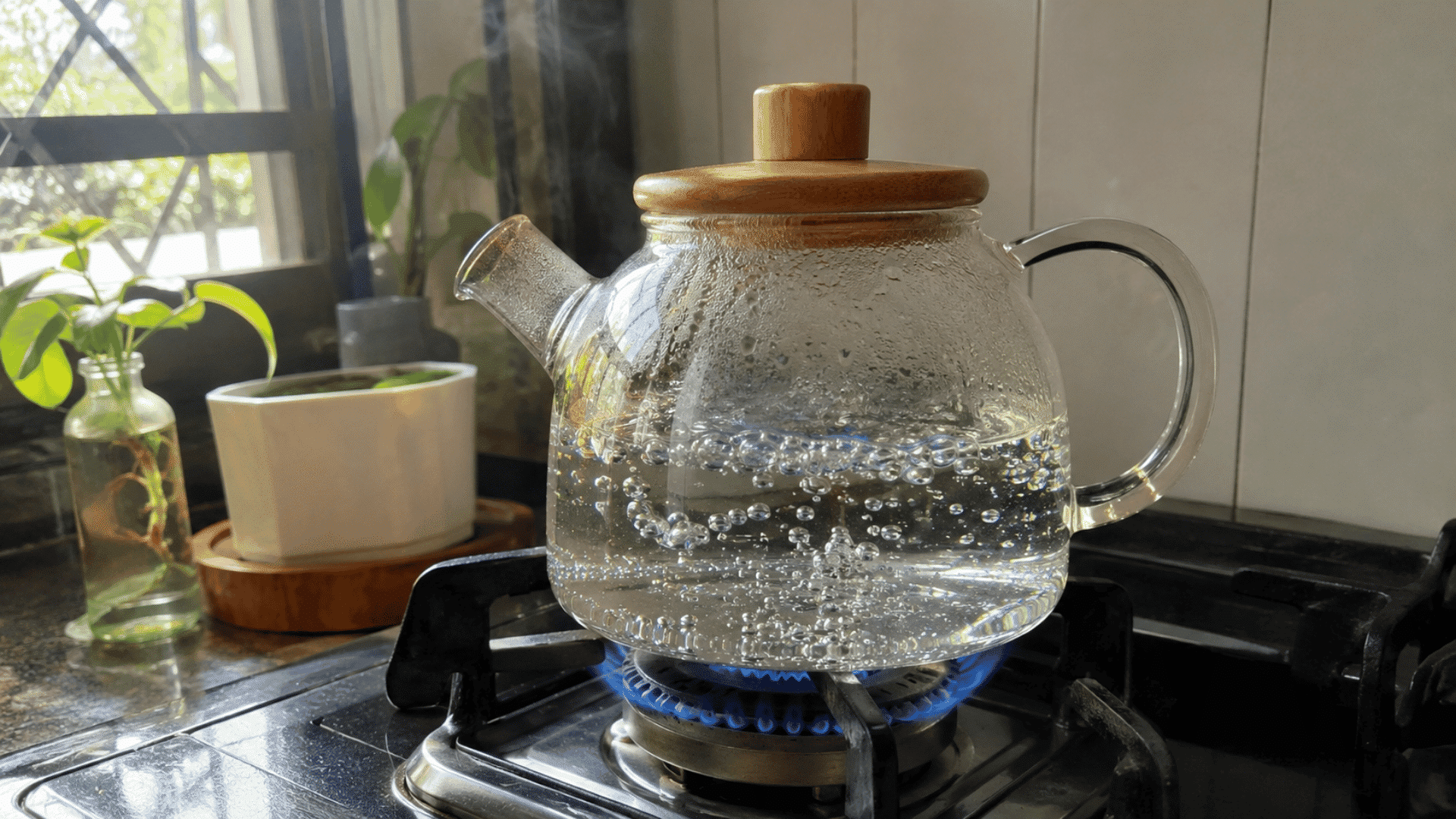
Bring 1 cup (8 ounces) of filtered water to a boil, then remove it from the heat. Let it rest for about one minute before pouring it over the lemon balm leaves.
This simple method works well for a homemade lemon balm tea recipe. Avoid boiling the leaves directly in the pot, as prolonged heating can affect their fresh, citrus-like flavor.
Step 2: Add Fresh or Dried Leaves
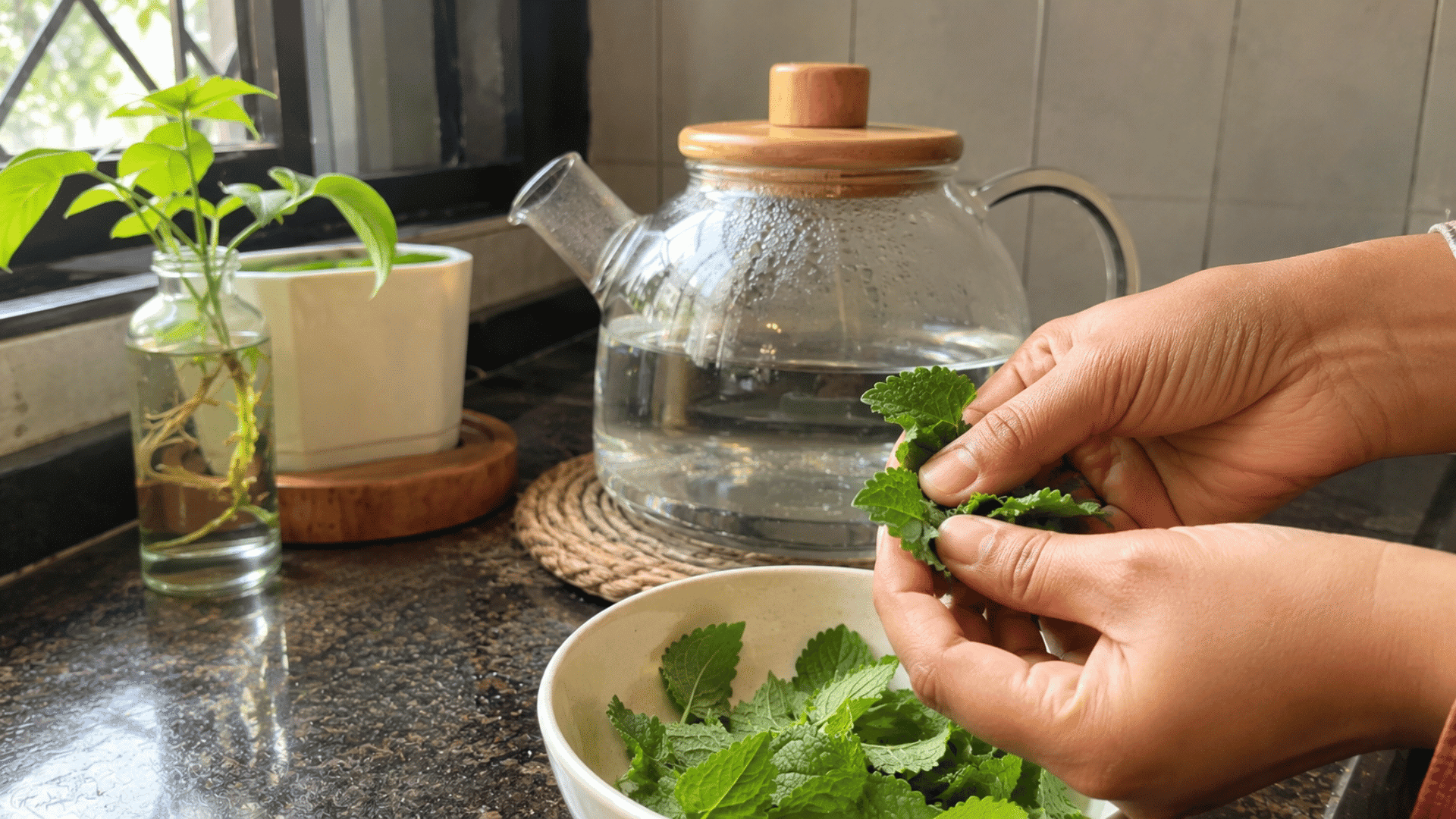
Your teapot or infuser needs 2 tablespoons of fresh leaves or 1 tablespoon of dried.
I’d lightly crush fresh leaves between my fingers first, as this releases fragrant oils for a fuller-tasting cup. A gentle squeeze does the job (they don’t need a wrestling match)!
Step 3: Pour and Let Rest (Steep)
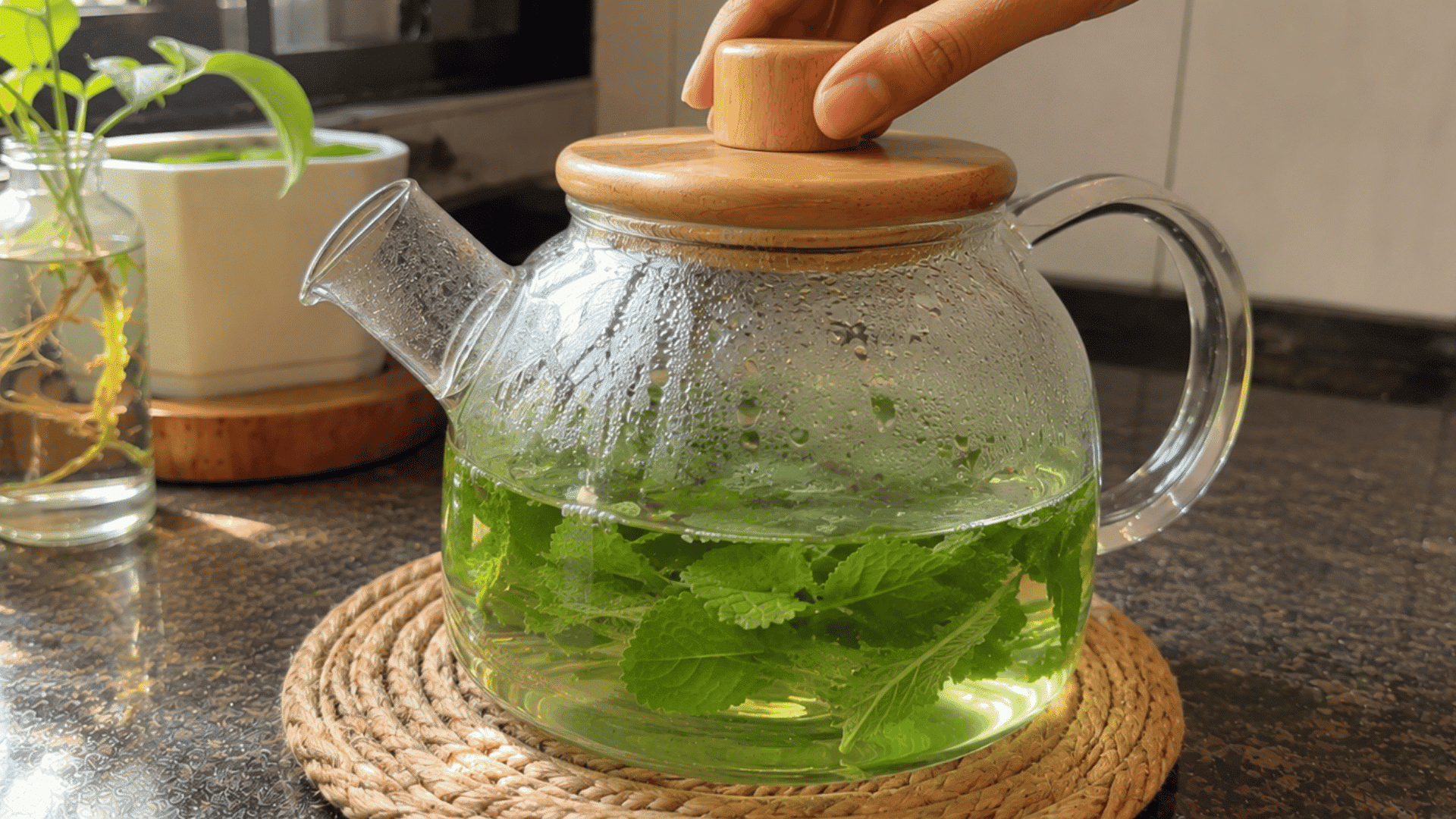
Pour the hot water gently over the leaves and cover the teapot. Allow it to steep for five to ten minutes, depending on desired strength.
Shorter steeping times yield a lighter flavor, while longer extraction times produce a deeper, more soothing herbal infusion.
Step 4: Strain the lemon balm tea
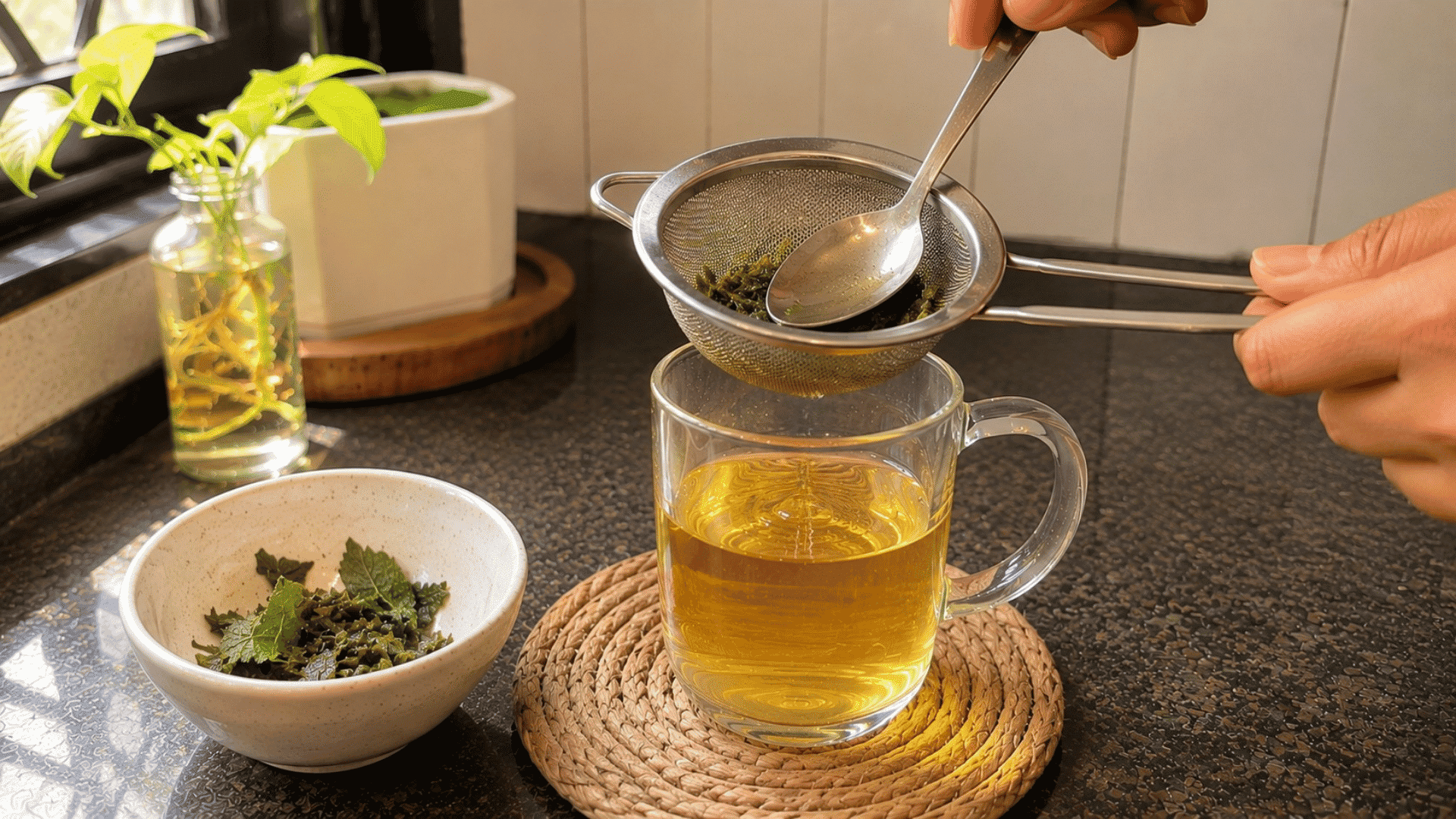
Remove the infuser or pour the tea through a fine-mesh strainer into a mug. Press the leaves lightly with a spoon to release any remaining liquid, but avoid squeezing them hard, as this may make the tea taste bitter.
Discard the used leaves or add them to your compost.
Step 5: Garnish and Enjoy
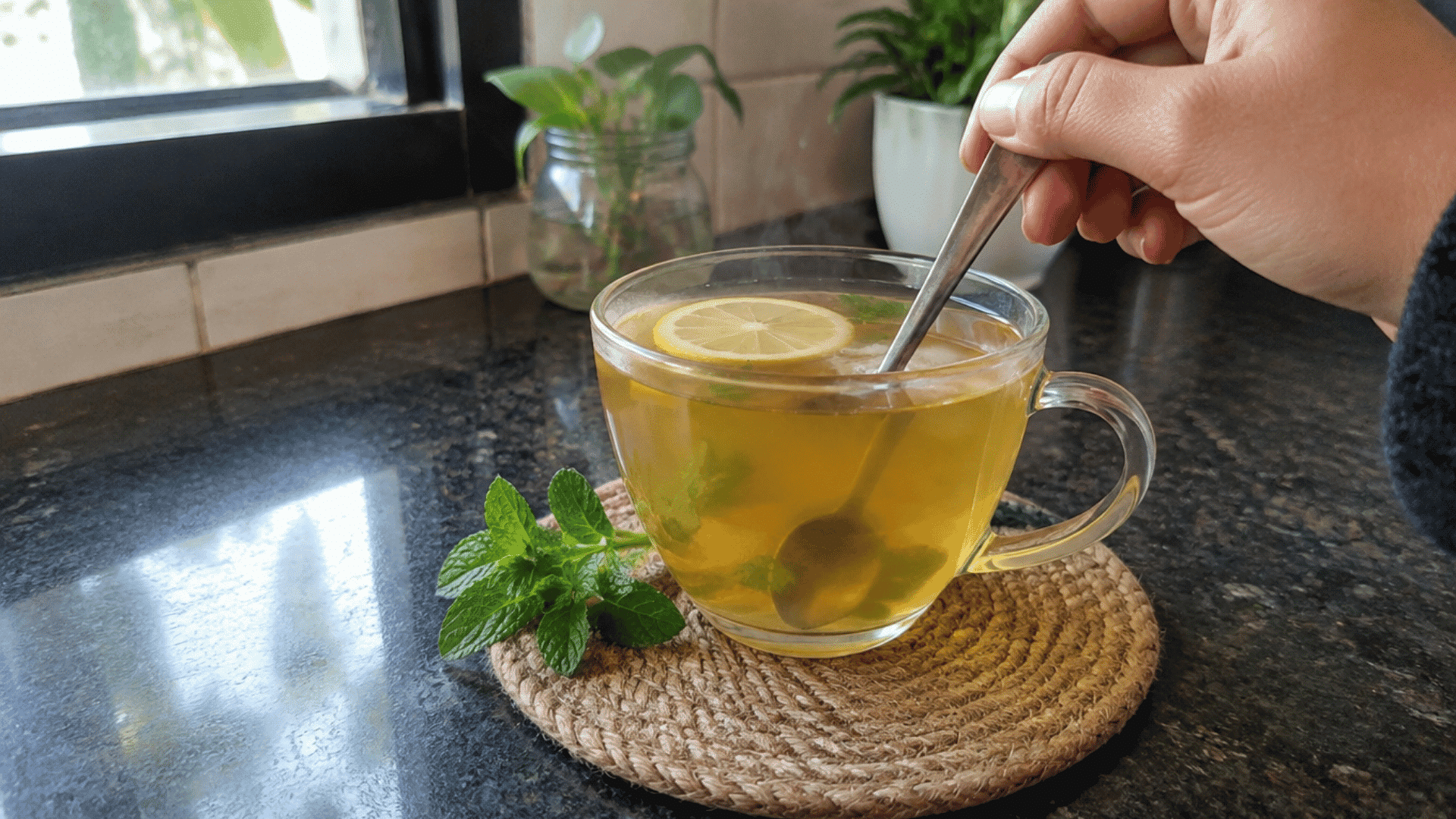
Transfer to a new cup, add honey, citrus, or mint to taste. Stir gently and inhale the calming aroma before sipping.
I like smelling it before sipping; that combination of lemony freshness and warmth really deserves a moment. And slowing down gives that small pleasure a chance to register, without scheduling serenity (or grading yourself on it).
Tip: To make iced lemon balm tea, brew a full-strength cup with the longer steep, because melting ice waters down a lighter brew. Let the tea cool to room temperature, then pour it over a tall glass of ice and add a sprig of mint.
Recipe Note
Here’s a quick overview of the recipe so you can prepare and enjoy your tea with ease.
|
Information |
Details |
|---|---|
|
Prep Time |
5 minutes |
|
Brew Time |
10 minutes |
|
Total Time |
15 minutes |
|
Category |
Herbal Beverage |
|
Method |
Steeping |
|
Yield |
1 cup |
Risks and Side Effects
It is generally safe, but certain precautions help ensure it’s enjoyed without unwanted effects.
-
May Cause Drowsiness: Excessive intake can lead to sleepiness or fatigue, especially when combined with alcohol or sedative medications.
-
Possible Medication Interactions: Can interfere with thyroid, anxiety, or sedative drugs, potentially altering their effects. Consult your healthcare provider before use.
-
Allergic or Digestive Reactions: Sensitive individuals may experience mild nausea, skin irritation, or discomfort when consuming large amounts.
When enjoyed in moderation, lemon balm tea offers gentle relaxation with minimal risk for most healthy adults.
How to Harvest and Dry This Herb
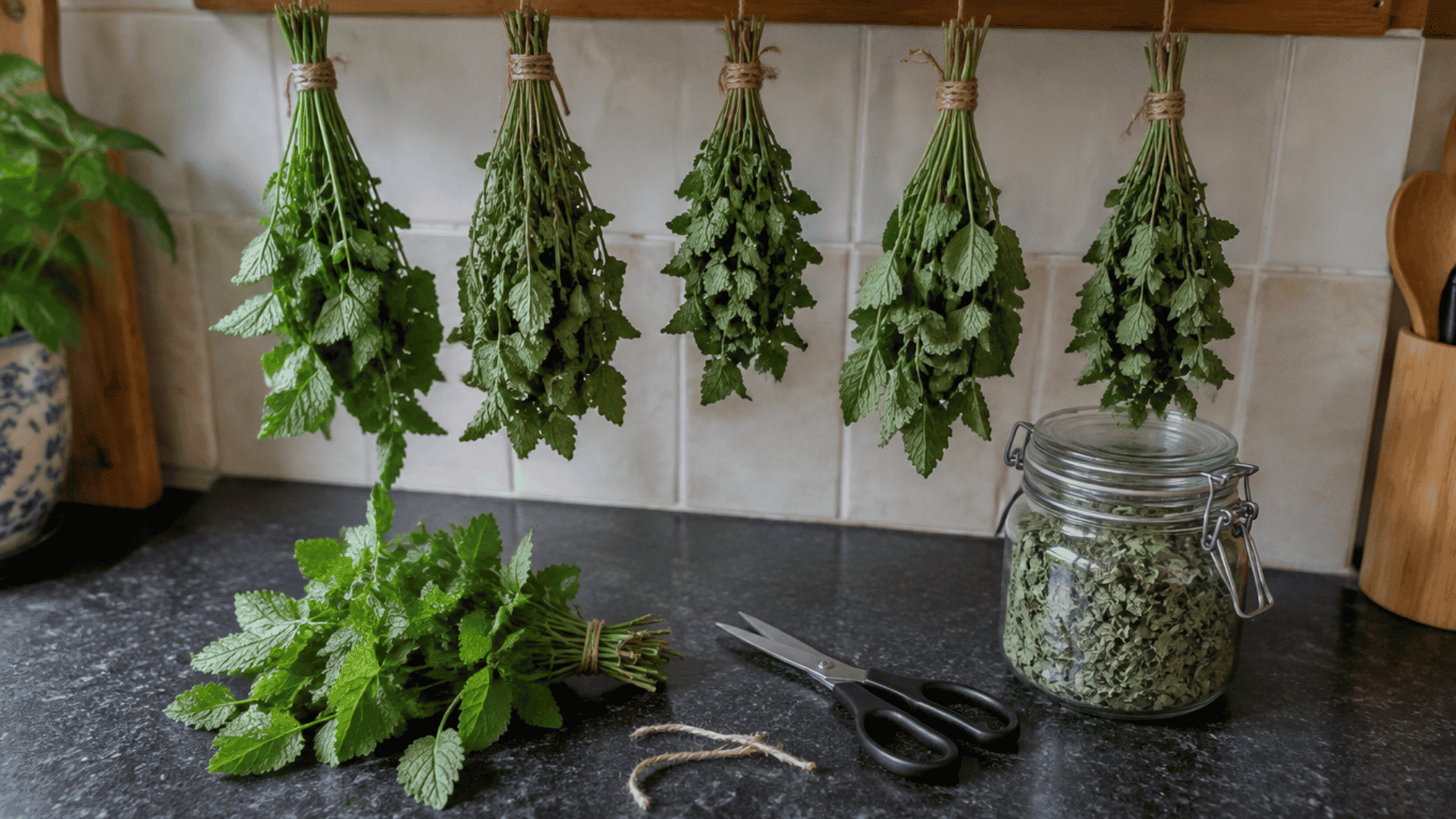
Fresh leaves offer the most potent flavor and the highest concentration of therapeutic compounds. Here’s how to properly harvest and preserve your leaves for year-round enjoyment.
-
Optimal Harvest Timing: Harvest leaves in the morning after dew has dried, just before flowering, by cutting stems 2–3 inches above the soil with clean scissors.
-
Proper Handling: Rinse leaves gently under cool water to remove dirt and insects. Pat dry with paper towels or use a salad spinner. Handle minimally to preserve essential oils.
-
Air-Drying Method: Bundle 5-7 stems together with twine and hang upside down in a warm, dark, well-ventilated area for 1-2 weeks. Leaves should crumble easily when fully dried.
-
Dehydrator Method: Spread leaves in single layers on dehydrator trays. Set the temperature to 95-105°F and dry for 2-4 hours until crispy.
Tip: Store completely dried leaves in airtight glass jars away from light and moisture. Properly stored herbs retain potency for up to one year.
Nutrition Facts
Light and naturally soothing, lemon balm tea offers gentle nourishment with minimal calories, perfect for mindful, everyday sipping.
|
Nutrition Information |
Per Serving (Approx. 1 Cup) |
|---|---|
|
Calories |
2 kcal |
|
Sugar |
0 g |
|
Sodium |
2 mg |
|
Carbohydrates |
0.5 g |
Values are approximate, based on plain brewed herbal tea in USDA FoodData Central, and change with optional additions like honey, citrus, or mint. Plain lemon balm tea is virtually calorie-free and naturally caffeine-free; honey still counts as ADDED sugar (even when it arrives looking wholesome).
Best Time to Drink This Herbal Infusion
-
Morning: Enjoy a warm, caffeine-free drink with breakfast or during a quiet morning. People who feel sleepy after drinking it may prefer another time.
-
Afternoon: Take a short break with a cup of lemon balm tea. Its light citrus flavor makes it a pleasant alternative to caffeinated drinks.
-
Evening: Sip a warm cup about 30–60 minutes before bedtime as part of a relaxing routine. Lemon balm has traditionally been used to aid sleep, although its effects in homemade tea are not well established.
Important Note: Avoid consuming this beverage before driving, operating heavy machinery, or activities requiring full alertness, as its mild sedative properties may impair reaction times
Tips for Best Flavor and Storage
Filtered or spring water lets the citrus-and-mint notes come through without competing tastes; I’d keep steeping to a maximum of 10 minutes to limit bitterness.
If your cup tastes a bit weak, you might adjust the leaf quantity next time rather than leaving it indefinitely; more waiting isn’t always more wonderful…
Chamomile makes a gentle relaxation blend, peppermint suits a digestion-focused cup, and lavender brings a bedtime-style fragrance. But blending doesn’t remove each herb’s precautions!
For another preservation option, washed leaves can freeze with water in ice-cube trays. The cubes are convenient for future infusions, although they won’t behave EXACTLY like freshly picked foliage.
Conclusion
Making lemon balm tea at home is simple, and you don’t need much beyond fresh or dried leaves and hot water. Its mild lemony flavor makes it a lovely caffeine-free drink for any time of day.
I prefer using fresh leaves when they’re available, but dried lemon balm works just as well. You can also adjust the steeping time depending on how strong you like your tea.
Although lemon balm has a long history of traditional use for relaxation and digestion, I think its pleasant flavor is reason enough to enjoy a cup. Add a little honey, fresh mint, or a slice of lemon if you like.
Ready to try this lemon balm tea recipe? Brew a cup today and see how you like it. And if you try adding your own ingredients, share your favorite combination in the comments below!
Frequently Asked Questions
Can I Drink Lemon Balm Tea Every Day?
Yes, healthy adults can generally drink it daily in moderation. Europe’s medicines regulator lists one to three servings a day for adults, though its long-term safety is not well studied.
Is Lemon Balm Tea Safe During Pregnancy?
It is not recommended because its safety during pregnancy has not been established. Anyone pregnant should ask a doctor or midwife before drinking lemon balm tea.
Who Should Not Drink Lemon Balm Tea?
Children under 12 should skip it, since its use at that age has not been established. Anyone with surgery scheduled should also stop lemon balm at least two weeks beforehand.