

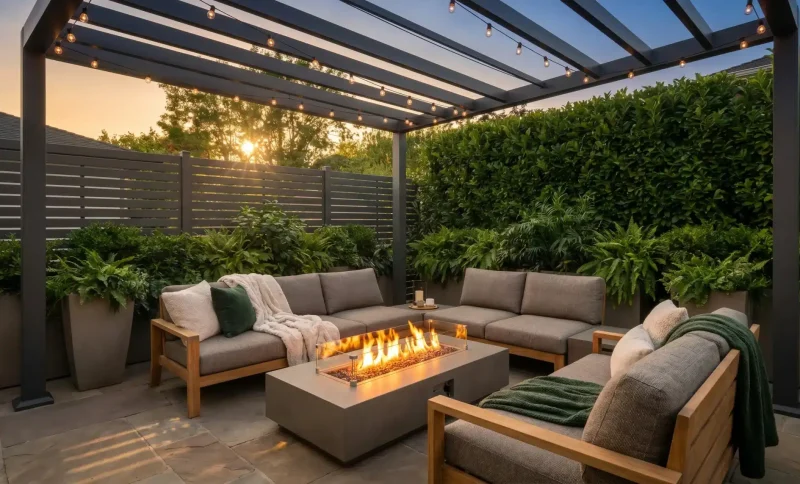
Most homeowners spend years fixing the inside of the house and treat the backyard as an afterthought. A patio chair here, string lights there, and then they wonder why no one ever goes outside. A backyard that actually gets used has a few specific things going for it, and none of them are expensive décor items from the clearance aisle.
Here’s what changes when you get it right.
Backyard Privacy: The Thing That Determines Whether You Use the Space at All
If your neighbors can see you from their deck, or passing cars have a clear line of sight into the yard, you’ll use that outdoor space less. Not because you consciously decide to — you’ll just notice yourself staying inside more. You stop bringing the coffee out in the morning. The patio furniture sits untouched for two weeks. Then three.
Privacy is the starting point.
Wood fencing is the default assumption, but it comes with a catch in Canadian climates. Cedar and pressure-treated wood starts cracking, warping, and turning grey within a season or two, regardless of how good the lumber was when installed. Most people who went with wood end up repainting constantly or living with something that looks progressively worse every year.
Aluminum privacy fencing has become a serious option for homeowners who want the coverage without the maintenance. A good privacy aluminum fence handles freeze-thaw cycles and UV exposure without warping, rotting, or peeling. The better ones are wind-load tested to 220 km/h and carry Class A fire ratings under ASTM E84 testing — specs that matter in regions where weather can be unpredictable. If you want to look at specific options, PrimeAlux makes a privacy aluminum fence line designed for exactly this kind of Canadian residential use:
primealux.ca/privacy-aluminum-fence
If a full fence isn’t the right move, lattice panels or solid privacy screens can do the same job for a defined seating corner without surrounding the entire property.
Shade for Your Outdoor Living Space: What Actually Works vs. What Looks Good on a Showroom Floor
Heat exposure is the most underestimated factor in how often people use their backyard. Without shade, you’re limited to early morning or after 6 PM — which eliminates most of the day in summer.
A pergola gives you partial shade and a structure to hang lights or plants. Aluminum pergolas are worth looking at if you want something that doesn’t need staining and won’t rot where the posts meet the ground. A sail shade is cheaper and more adjustable — you can angle it to block afternoon sun specifically and take it down for winter. Umbrellas work but need proper weighting and can’t stay out in high wind.
Pick something. Once you have real shade over a seating area, the number of hours the yard is usable changes significantly.
Outdoor Seating That Invites You to Actually Sit Down
The problem with most backyards is one of two things: chairs you don’t want to sit in for more than twenty minutes, or a furniture layout that makes the space feel like a waiting room.
Anchor the space with something solid. A defined seating area — whether it’s a rug on a patio surface, a pergola overhead, or furniture arranged around a fire pit — tells your brain this is a place to be, not just a patch of yard with chairs on it.
Get cushions that can handle weather. Bringing cushions in and out every time you want to sit outside is friction that means you won’t bother. Outdoor-rated foam with removable covers handles rain and won’t deteriorate from UV.
Think about the sightline from where people sit. If the main view is a blank fence or the side of a shed, a planter, a vertical garden, or a single interesting focal point makes the space feel intentional rather than assembled.
Backyard Lighting: What Gets You Outside After Dark
Without lighting, the yard closes at sunset. With it, you get four or five extra hours in summer.
String lights are the easiest starting point. They work well hung from a pergola, fence posts, or a couple of basic poles, and the warm light is good for dinner outside or just sitting after dark. In-ground path lights near steps are worth adding for safety as much as atmosphere. Solar options exist but corded LED path lights keep consistent brightness.
If you want to go further, landscape spotlights pointed at a tree or a plant grouping add depth to the yard at night. The space starts to feel designed rather than abandoned.
The Small Things That Kill Outdoor Spaces (Once the Big Stuff Is Done)
Once privacy, shade, seating, and lighting are in place, the difference between a backyard that gets used daily and one that doesn’t comes down to small friction points.
Storage near the seating area. If cushions, blankets, and speakers all live inside, you’ll stop bringing them out. A weatherproof storage box on the patio fixes this.
An outdoor speaker. Music changes the feel of a space. A decent portable speaker that lives outside is enough — doesn’t need to be a system.
A way to handle bugs. Citronella candles cover most situations. If mosquitoes are a real problem in your area, a plug-in repeller for the seating zone is worth it.
A fire feature. A propane fire table or wood-burning firepit extends the season into fall and gives people a reason to gather outside when it’s cooler. This one probably has more impact than almost anything else in this list.
None of these are expensive. Combined, they close the gap between a yard that functions and one that people actually use.
FAQ
What’s the Best Privacy Fence Material for Low Maintenance?
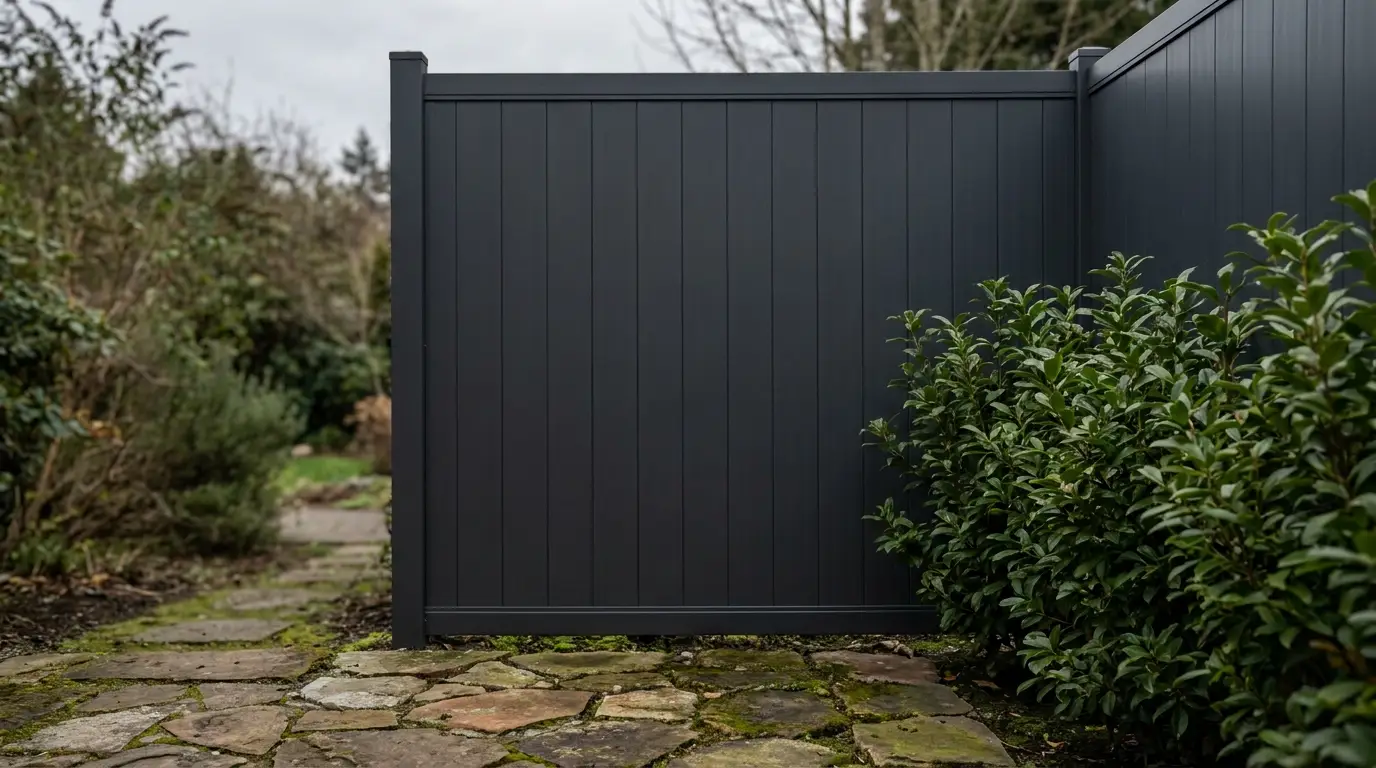
Aluminum is the top choice for long-term privacy without upkeep. It doesn’t warp, rot, or need annual painting. A quality aluminum privacy fence holds its finish for decades in Canadian climates and won’t deteriorate underground where posts are set.
How Much Does a Backyard Privacy Fence Cost?
For installed aluminum fencing in Canada, $80 to $120 per linear foot is a reasonable general reference. Get a quote specific to your property size for an accurate number —
configuration and site conditions vary quite a bit.
How Do I Add Backyard Privacy Without a Full Fence?
Privacy screens, lattice panels, tall planters with dense shrubs, and pergolas with climbing plants all offer varying degrees of coverage. Combining two or three of these can define a private seating zone within a larger open yard without a full fence install.
Does Shade Really Make That Much Difference?
Yes — it’s probably the highest-impact change you can make to usability. Direct sun limits when the yard is comfortable by several hours on either end of the day. Even one pergola or sail shade over the primary seating area changes things noticeably.
What’s the Easiest First Step for a Neglected Backyard?
Privacy and a defined seating zone. Those two things together do most of the work. Everything else — shade, lighting, storage — layers in on top once those are in place.


