

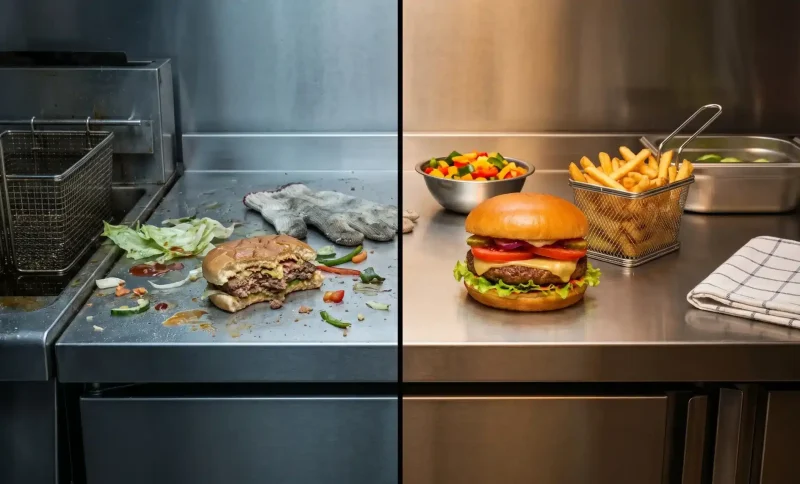
Running a fast food business is not as easy as it feels. It is full of challenges, and the stats show just how tough the restaurant industry can be. According to data from the U.S. Bureau of Labor Statistics, studies show that 17% of restaurants fail in their first year, and about 50% close within five years.
With these numbers, it is clear that it is really hard to achieve success. Many businesses struggle due to different reasons, such as inconsistent food quality, poor customer service, and failure to adapt to changing consumer demands.
Thankfully, these issues can be solved if you make the right strategies. Let us explore the most common reasons why fast food businesses fail and how you can address them.
Problem 1: Inconsistent Food Quality and Presentation
One of the main reasons fast food businesses fail is when you are unable to provide consistent food quality. If the food you make is overcooked, undercooked, or poorly presented, customers notice it and remember it when the quality does not meet their expectations.
According to TouchBistro’s 2022 Diner Trends Report, 60% of customers say food quality is the most important factor when people decide where to dine. If your food is not consistently good, customers are likely to stop coming back.
Solution: You can solve this issue by focusing on improving your kitchen operations. Implement strict quality control measures at each step of the food preparation process. From ingredient sourcing to cooking and plating, every detail matters in maintaining a consistently high standard.
Remember, a well-organized kitchen with clear protocols ensures that every meal is prepared the same way, with attention to both taste and presentation.
Also, pay close attention to the presentation of your food. Even fast food can be served in a visually appealing way. Invest in training your team to plate and serve food with care, so it looks appetizing and inviting when it reaches the customer.
Problem 2: Poor Customer Experience
Customer experience can make or break a fast food business. In any way your service turns out poorly, you will likely lose that customer. Long wait times, poorly trained staff, or indifferent service all result in negative reviews and customer loss. When customers feel neglected or frustrated, they will never come back again and also spread the word about their experience.
Solution: To improve the customer experience, focus on training your staff to be efficient and friendly. Make sure your team is well-equipped to handle customer queries and concerns.
Moreover, improving the overall environment through cleanliness and a welcoming atmosphere can upgrade the dining experience and turn first-time visitors into loyal customers.
Problem 3: Bad Delivery and Takeout Experience
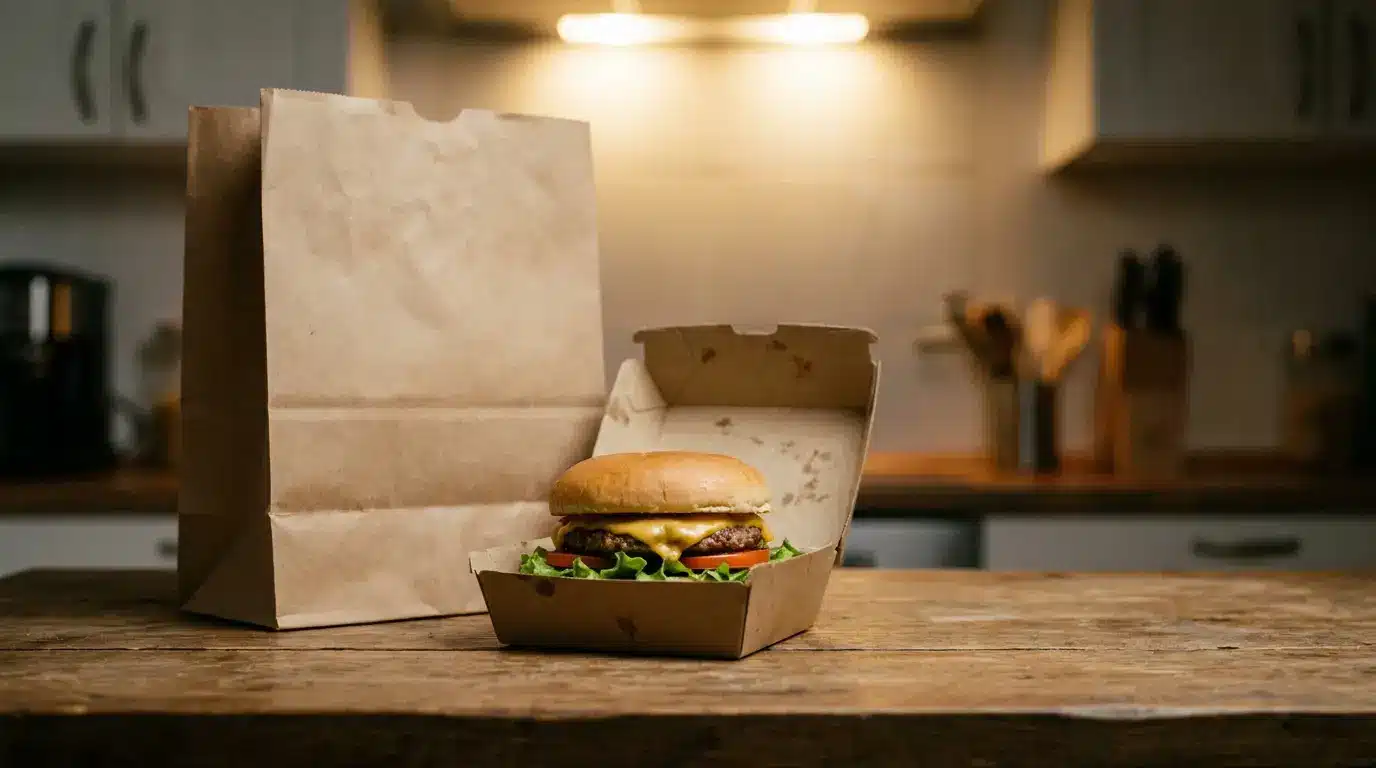
The trend of deliveries and takeout services has increased so much now. Many fast food restaurants are now offering food delivery services. However, this turns into a huge challenge when food quality degrades during transport. Poor packaging that does not maintain food temperature or integrity can lead to customer dissatisfaction.
Solution: Invest in custom packaging that makes sure that your fast food remains intact, warm, and fresh during delivery. From containers that preserve the crispiness of fries to boxes that prevent, e.g., burgers from getting soggy, the right packaging solution can make a world of difference. Many successful fast food brands choose custom burger boxes that are designed to protect the quality of their burgers during delivery and can help maintain customer satisfaction and boost repeat business.
Problem 4: Failing to Differentiate from Competitors
The fast food industry is overcrowded. If you fail to provide a unique selling point (USP), then there are huge chances for your business to get lost in the shuffle. Fast food lovers always look for new and different experiences. This simply means it is not enough to offer good food; you must give customers a reason to choose your brand over others.
Solution: The key to standing out is differentiation. Whether it is a signature menu item, unique flavors, or a specific dining experience, find what makes your brand unique.
Build a story around your restaurant that connects with your target audience. Creating a strong USP will help you not only attract new customers but also retain them for the long term.
Problem 5: Not Adapting to Consumer Demands for Sustainability
Sustainability has become a major consideration for customers, and fast food businesses that ignore this trend risk rejecting a growing portion of their market. A 2021 survey by Nielsen found that 73% of global consumers are willing to pay more for eco-friendly products, and this is important in the food industry, where packaging waste is a concern.
Solution: Switch to sustainable packaging and practices. Use biodegradable, recyclable, or compostable packaging to appeal to eco-conscious customers. Also, by minimizing waste and offering plant-based menu options, you can show your commitment to sustainability. It will also build trust with consumers who care about making sustainable choices. After all, sustainability is not just a trend but also is the future.
Problem 6: Failing to Follow Marketing Ideas and New Trends
Trends in the food industry change quickly. If you are stuck with outdated marketing strategies or not keeping up with the latest consumer preferences, then your fast food business feels disconnected from your target audience. Your marketing efforts need to be updated as the customers’ expectations are rising.
Solution: Stay ahead of the curve by embracing trends such as health-conscious menu options, eco-friendly packaging, and digital ordering systems. Always keep an eye on what your competitors are doing, and engage with what is trending in your city. Adapt your marketing strategies regularly to keep your restaurant fresh, relevant, and appealing to both new and returning customers.
Problem 7: High Food Pricing
Too high food costs can eat away at your restaurant’s profitability and long-term financial health. Food costs, the price you pay for ingredients, represent a significant portion of your expenses. When your menu items are wrongly priced or rarely ordered, it can hurt your profits.
Solution: Keeping track of your food costs is the key. Regularly calculate your pricing structure and identify areas where you can cut costs without compromising quality. Whether it is negotiating better deals with suppliers, revising your menu to eliminate low-performing items, or better managing food waste, these steps can help you control costs and improve profitability.
Conclusion
In conclusion, fast food businesses face several common challenges that can lead to failure, including inconsistent food quality, poor customer experience, lack of differentiation, failure to adapt to consumer demands for sustainability, poor delivery or takeout experiences, and inadequate marketing strategies.
By focusing on quality control, improving marketing approach, adapting to new trends, and optimizing pricing and packaging, fast food businesses can survive in an increasingly competitive market.
With the right approach and a little attention to detail, your fast food business can overcome these hurdles and enjoy long-term success.


