A few neighbors, a pot of chili each, and a handful of paper plates can turn into something people talk about for months. The trick is in the details. The best chili cook-offs feel like real events because someone took the time to plan the small stuff, not because they spent a fortune.
Whether you are hosting for a block party, a church group, a workplace fundraiser, or just a group of friends who like to argue about cumin, these chili cook-off ideas will help you put together a day that feels special. The goal is simple. Make the cooks feel like competitors, make the tasters feel like judges, and send everyone home already asking when the next one is.
Key Takeaways
- A clear theme and category structure give a casual cook-off the feel of a real competition.
- Fair judging rules, scorecards, and a neutral head judge keep things fun instead of tense.
- Memorable prizes matter more than expensive ones. The right trophy becomes a story people retell.
- Thoughtful setup, from cup size to ballot design, shapes how the day actually flows.
- A little marketing, even for a small neighborhood event, pulls in more cooks and better chili.
Why a Chili Cook-Off Is Still One of the Best Community Events
Chili has a few things going for it that most contest foods do not. It is cheap to make in bulk, it travels well in a slow cooker, and almost every family has some version they think is the best. That combination is why chili cook-offs have been a staple of fundraisers, tailgates, and neighborhood parties for decades.
According to the USDA guidance on safe food handling, hot foods held for serving should stay at or above 140 degrees Fahrenheit, which slow cookers handle easily. That makes chili one of the few dishes you can prep the night before, transport in the pot it cooks in, and serve for hours without stressing over food safety.
Beyond the logistics, chili cook-offs do something most potlucks do not. They create a little bit of healthy competition. People taste more carefully when they know they are judging. Cooks try harder when they know their name is on the pot. That shift in energy is what separates a cook-off from just another gathering with food.
Chili Cook-Off Theme Ideas
A theme is the first decision that shapes the rest of the event. It sets the tone for the invitations, the categories, and even how the cooks approach their chili recipes. Here are some themes that work for different crowds.
Regional Chili Showdown
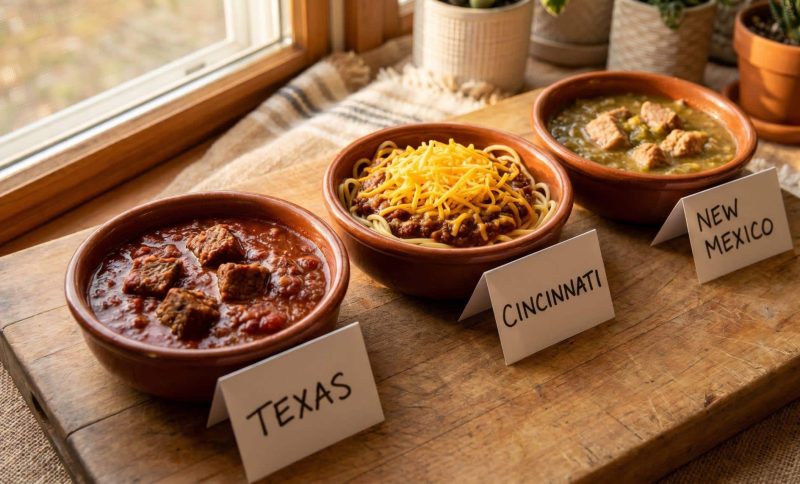
Give cooks a region to represent and watch the creativity happen. Texas red, Cincinnati five-way, New Mexico green chile, Kansas City style, and white chicken chili all have passionate defenders. Pinning each entry to a region makes the tasting feel educational and sparks the kind of debates that make cook-offs fun.
Heat Level Brackets
Separate entries into mild, medium, hot, and fire categories. This keeps guests who cannot handle heat from skipping half the pots, and it gives the spice lovers their own playground. You can even run separate winners for each bracket, which means more ribbons to hand out and more cooks who leave feeling proud.
Secret Ingredient Challenge
Announce a required ingredient a week before the event. Coffee, chocolate, bourbon, roasted poblanos, or smoked paprika all work. The constraint forces cooks off their usual recipe and produces chilis nobody expected. It also makes judging easier because everyone is solving the same puzzle.
Fire Department or First Responder Style
Firehouse chili is its own tradition, and themed events around it land well for charity cook-offs. If you can get a local fire crew or volunteer squad to enter a pot, the whole event gains a little gravity. This theme also pairs well with auctioning off the prizes for a cause.
Setting Up Fair Rules and Judging
Nothing kills the mood at a cook-off faster than a judging process that feels rigged. Even among friends, a little structure goes a long way. Here is what actually matters when you set the rules.
Decide Between Popular Vote and Judge Panel
Popular vote is simple. Every guest gets a ballot or three tokens and votes for their favorites. It is fast, fair, and inclusive. The downside is that the cook with the biggest family at the event tends to win.
A judge panel of three to five people tasting blind produces more credible results. Pick judges who are not competing and who represent different tastes. A mix of a serious foodie, a heat seeker, and someone who prefers comfort food gives balanced results.
Many cook-offs run both. The popular vote becomes a People’s Choice award and the judges pick the Grand Champion. That structure doubles the winners and satisfies both camps.
Use a Real Scorecard
The International Chili Society scores chili on five attributes: aroma, consistency, red color, taste, and aftertaste. You do not have to follow that exactly, but the principle matters. A scorecard forces judges to slow down and think, which produces better results than a gut reaction. Even a simple five-point scale on taste, heat balance, and overall appeal will work.
Set Ground Rules Early
- Chili must be cooked on-site or arrive in a warming vessel like a slow cooker.
- No beans or beans allowed. Pick one. This is the oldest argument in chili and you need a position.
- Entries should provide their own ladle and a recipe card with the name of the chili.
- Cooks cannot judge their own category.
- Minimum batch size that serves at least thirty tasting cups.
Prizes and Awards That Actually Mean Something

The prize is what cooks remember. A gift card gets spent and forgotten. A cheap plastic trophy ends up in a junk drawer. If you want the winner to show off the prize for years, put real thought into what they walk away with.
For a cook-off with any real stakes, award-worthy custom belt buckles are hard to beat. Belt buckles have a long tradition in cook-off culture, especially for barbecue and chili competitions, and a heavy metal buckle engraved with the event name and year carries weight that plastic hardware never will. A winner who goes home with a buckle is going to wear it, show it to people, and bring it to next year’s event to defend the title. That repeat energy is exactly what turns a one-time cook-off into a recurring tradition.
For smaller categories, think beyond the Grand Champion. Ribbons for People’s Choice, Best Presentation, Hottest Entry, and Best Vegetarian give more cooks a reason to feel proud of their pot. If the budget allows, custom pins for every cook who enters, win or lose, make the whole event feel more like a real competition.
One more thought on prizes. Announce them in advance. Cooks put more effort into a pot when they know what is on the line. A photo of the actual trophy on the event flyer does more to drive entries than any amount of descriptive copy.
Setup and Flow That Keep Things Moving
The setup choices you make in the morning are what the event feels like by afternoon. A few specifics are worth getting right.
Use Small Tasting Cups
Two-ounce souffle cups are the sweet spot. Guests can taste every entry without filling up on the first three. Provide spoons, a trash station near the tables, and water or milk for the heat recovery. Saltine crackers as palate cleansers are a classic touch that costs almost nothing.
Label Pots Clearly
Each pot needs a number, a chili name, and the cook’s name visible at the table. For blind judging, the judges get numbered ballots without names, but guests doing a popular vote should see everything. A simple tented card in front of each pot handles this.
Plan the Tasting Path
Set up the pots in a line or a loop, not scattered across the yard. Guests should move through them in a predictable order so nobody misses entries or doubles back. If you have more than ten pots, consider splitting them into flights and giving guests a few minutes between rounds.
Handle the Ballots
A printed ballot with numbered slots and a pencil beats asking people to remember which chili was which. Collect ballots in a sealed box at a specific cutoff time. Announce that cutoff clearly, because there is always someone who wants to taste one more pot before voting.
Getting the Word Out for Your Cook-Off
Even a small neighborhood event benefits from proper promotion. More cooks means better chili, and better chili means more guests, which means more cooks next year. The whole thing compounds.
Research from the Pew Research Center shows that a large majority of American adults use social media regularly, which makes a local Facebook event or Instagram post one of the easiest ways to reach people for a community cook-off. For workplace and church events, email and flyers still do most of the work.
A few specifics that move the needle:
- Post the prize photo in the invitation, not just a description.
- Share last year’s winners and their chili names if this is a recurring event.
- Give cooks a signup form so you know how many pots to expect.
- Include a clear date, start time, judging time, and awards time. Guests plan around specifics, not general windows.
What Chili Veterans Say About Running a Good Cook-Off
“Chili cook-offs are where personality shows up in a pot. Everyone brings their own story, and that’s what makes them fun.” – Guy Fieri
The takeaway from anyone who has run these events long enough is consistent. Structure and recognition matter more than production value. A cook-off in a backyard with printed ballots, clear rules, and a real trophy will feel more legitimate than an expensive event that skips the fundamentals.
Putting It All Together
A chili cook-off is one of the few events where the food, the competition, and the community all reinforce each other. Cooks bring their best because they are being judged. Guests pay attention because they have a vote. The prize gives it stakes. The theme gives it personality. Do the small things well, and the day takes care of itself.
Pick a theme that fits your crowd. Write real rules. Get scorecards into the hands of your judges. Invest in a prize the winner will actually show off. Promote it like you mean it. That is the whole playbook, and it works for five pots on a driveway or fifty pots at a fundraiser. The only thing left is to pick a date and start telling people to bring a ladle.