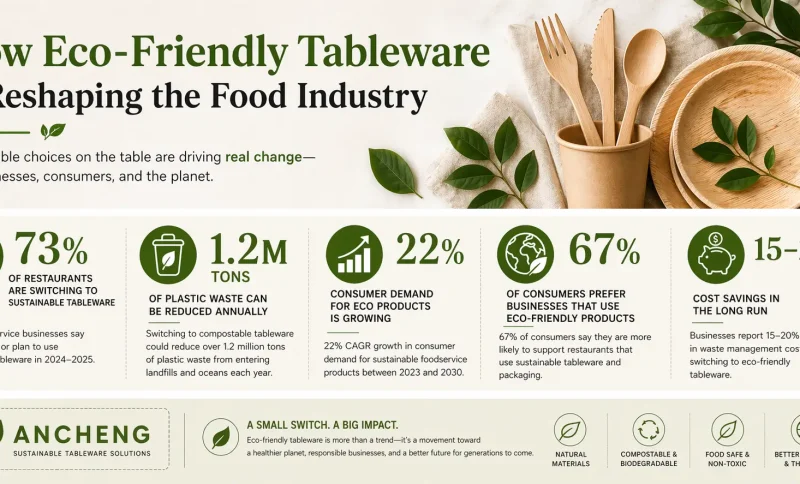
The food industry is going through a major shift. Sustainability is no longer a niche idea. It is now a core business strategy. Restaurants, catering companies, and food delivery brands are rethinking how they serve food. One of the biggest changes is the move toward eco-friendly tableware. Traditional plastic and foam products are being replaced with biodegradable and compostable alternatives. This transition is not just about environmental responsibility. It is also about meeting customer expectations and staying competitive. Eco-friendly tableware is actively reshaping how the food industry operates in 2025.
What Is Eco-Friendly Tableware?
Eco-friendly tableware includes plates, cups, bowls, and utensils made from sustainable materials. These materials are designed to reduce environmental impact during production and disposal.
Common materials include:
- Sugarcane bagasse
- Bamboo
- Palm leaves
- Recycled paper
- Plant-based bioplastics
These materials break down naturally without leaving toxic residue. This makes them far better than plastic or foam alternatives.
The Environmental Pressure Driving Change
Plastic waste has become a global crisis. The food industry is one of the largest contributors due to single-use items.
Traditional tableware takes hundreds of years to decompose. It often ends up in oceans, harming wildlife and ecosystems.
Eco-friendly tableware offers a clear solution. It reduces landfill waste and supports a circular system. Many biodegradable options decompose in weeks instead of centuries.
This shift is not optional anymore. It is being driven by environmental urgency.
Consumer Demand Is Reshaping Business Decisions
Modern consumers care about sustainability. They prefer brands that align with eco-conscious values.
Restaurants that use eco-friendly tableware are seen as responsible and forward-thinking. This improves brand image and customer loyalty.
Customers are also more willing to support businesses that reduce plastic use. This directly impacts revenue and long-term growth.
Ignoring this trend is a mistake. Businesses that adapt early gain a competitive advantage.
Government Regulations Are Forcing Action
Governments worldwide are introducing bans on single-use plastics. These policies are accelerating the adoption of sustainable alternatives.
Many regions now require businesses to reduce plastic waste. Eco-friendly tableware helps companies stay compliant.
Policies are expected to become stricter in the coming years. Businesses that switch now avoid future disruptions.
Health and Safety Benefits

Eco-friendly tableware is not just better for the environment. It is also safer for consumers.
Many plastic products contain harmful chemicals. These can transfer to food under certain conditions.
In contrast, eco-friendly materials are typically free from toxic substances like BPA.
This makes them a safer choice for both hot and cold foods.
Cost vs Long-Term Value
Some businesses hesitate due to higher upfront costs. Eco-friendly tableware can be slightly more expensive than plastic.
However, focusing only on price is short-sighted.
Long-term benefits include:
- Stronger brand reputation
- Increased customer trust
- Compliance with regulations
- Reduced environmental impact
These advantages often outweigh the initial investment.
Innovation Is Accelerating Adoption
The market for eco-friendly tableware is evolving quickly. New materials and designs are improving performance and affordability.
For example:
- Bagasse products offer high durability and heat resistance
- Bamboo options are lightweight and strong
- PLA-based items provide a plastic-like feel with compostability
Some innovations even include edible tableware made from natural ingredients. These products aim to eliminate waste completely.
This constant innovation is making sustainable options more practical for businesses.
Real Impact on Food Service Operations
Eco-friendly tableware is already transforming how businesses operate.
Key changes include:
- Reduced waste management costs
- Simplified compliance with regulations
- Improved customer perception
- Alignment with sustainability goals
Manufacturers like Ancheng eco-friendly tableware are helping food businesses transition smoothly by offering scalable, reliable solutions designed for modern operations.
Challenges Businesses Must Address
Despite its benefits, eco-friendly tableware comes with challenges:
- Requires proper composting systems
- Quality varies between suppliers
- Some materials need specific storage conditions
Businesses must choose reliable suppliers and educate customers on proper disposal.
These challenges are manageable with the right strategy.
The Bigger Picture: A Sustainable Food Industry
Eco-friendly tableware is part of a larger movement. The entire food industry is moving toward sustainability.
This includes:
- Sustainable packaging
- Ethical sourcing
- Waste reduction strategies
- Energy-efficient operations
Tableware may seem like a small part, but it plays a major role in overall impact.
Each sustainable choice contributes to a larger environmental solution.
Conclusion
Eco-friendly tableware is no longer a trend. It is a necessity for the modern food industry. Businesses that adopt it are not only reducing their environmental footprint but also strengthening their market position. The shift is being driven by consumers, regulations, and innovation. While challenges exist, the long-term benefits are clear. As sustainability becomes the standard, eco-friendly tableware will continue to reshape how food is served, consumed, and valued.