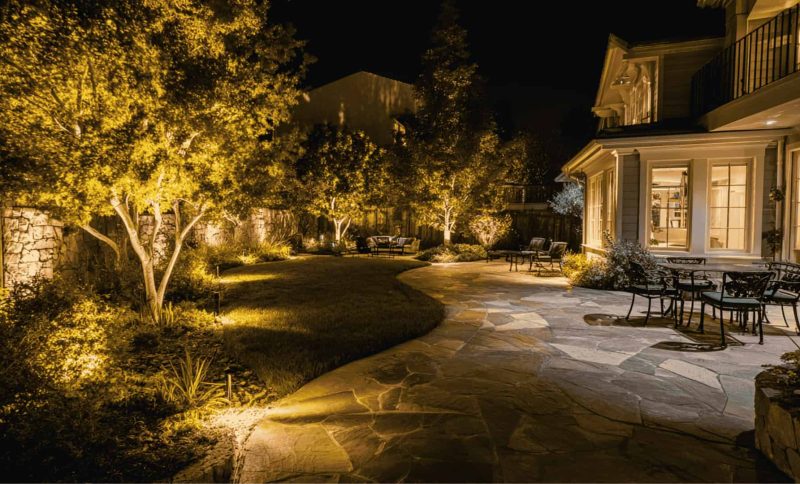
Have you ever stepped outside at night and wished your yard felt a little more inviting? The right lighting can completely change the mood of an outdoor space. That’s where landscape lighting design comes in.
Instead of simply adding lights, it’s about placing them thoughtfully to highlight trees, pathways, patios, and architectural details. When done well, lighting adds beauty while also making outdoor areas safer and easier to use after dark.
I’ve always found that even a few well-placed lights can make a yard feel. A softly glowing walkway or a lit tree in the corner of a garden can create a warm, welcoming atmosphere.
If the goal is better curb appeal, improved security, or more enjoyable evenings outside, thoughtful landscape lighting design can make a big difference in how a space looks and feels at night.
What Is Landscape Lighting Design?
Landscape lighting design is the process of planning and installing outdoor lighting to enhance the look and function of your space. It is not just about making a yard brighter.
It is about highlighting important features like pathways, patios, trees, and architectural details while creating depth and atmosphere.
From my perspective, good outdoor lighting can completely change how a space feels after sunset. A softly lit walkway feels more welcoming, and carefully placed lighting can make gardens and seating areas more enjoyable in the evening.
It also adds practical value. Proper lighting improves visibility around steps, entryways, and walkways, helping make outdoor areas safer for family and guests.
It can also reduce dark corners around the property and support a greater sense of security. When done well, landscape lighting design brings together beauty, comfort, and function, making outdoor spaces more inviting and easier to use at night.
Step-by-Step Guide for Designing and Installing
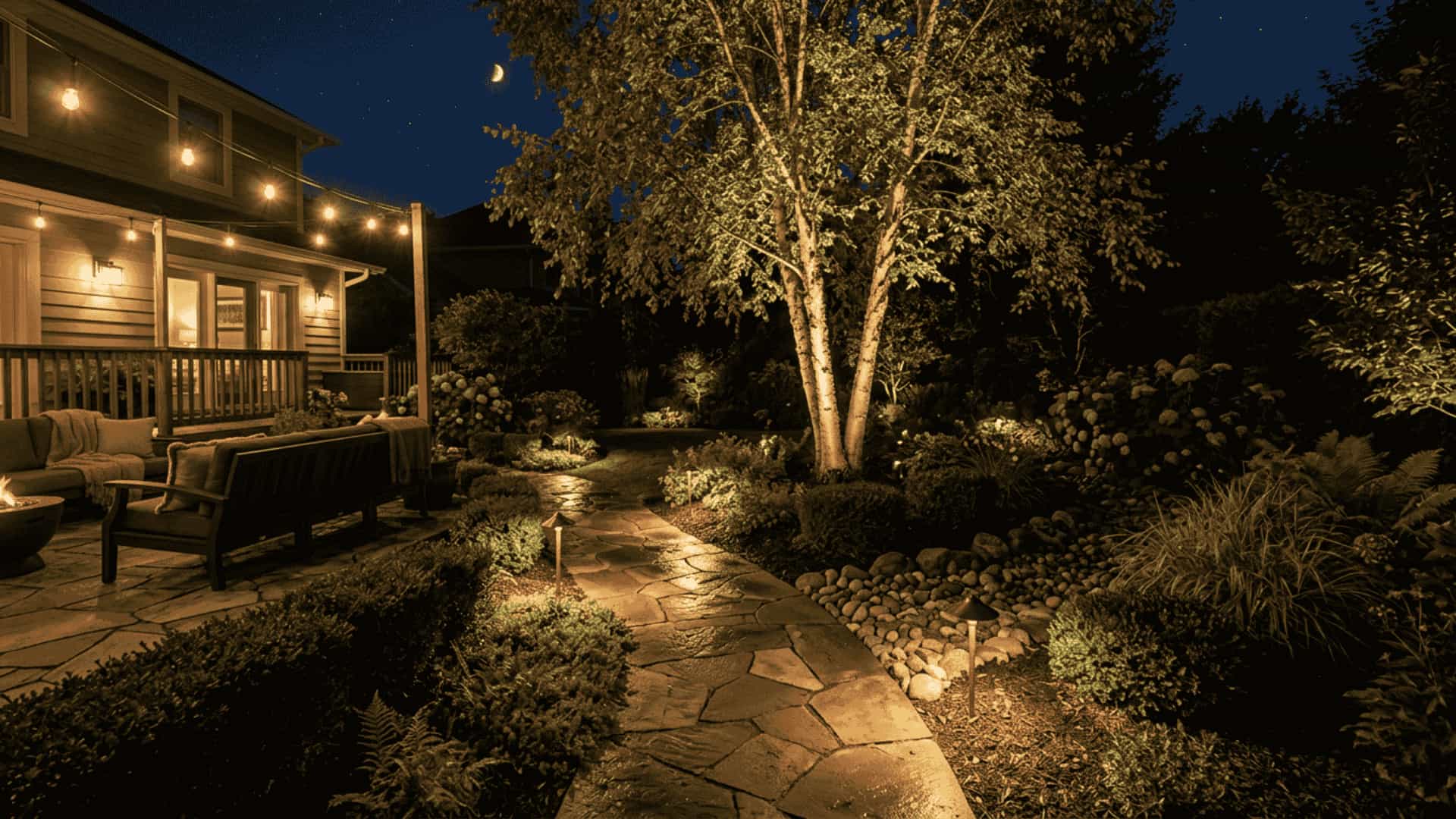
Alt text: Outdoor patio with landscape lighting design and warm ambient lights
A thoughtful landscape lighting plan starts with the right design choices and ends with careful outdoor lighting installation. When done step by step, it becomes much easier to create an outdoor setup that looks balanced, safe, and inviting.
1. Assess Your Yard and Identify What Needs Lighting
Start by walking through your yard and deciding what you want to highlight and what needs functional lighting. Focus on key features such as trees, shrubs, patios, and architectural corners, then note practical areas like pathways, walkways, and driveways.
This first step helps you build a lighting plan that is both attractive and useful.
2. Choose the Right Lighting Style for Each Area
The transcript focuses on two main styles: uplighting and downlighting. Downlighting is best for walkways and pedestrian areas that require visibility, while uplighting accentuates landscape features.
Spotlights work well for larger objects, such as tall trees or house corners, while wash lights are better suited for smaller plants and medium-sized shrubs.
3. Create a Balanced Lighting Layout
Quality landscape lighting is all about balance. Instead of filling the yard with too much brightness, the goal is to accent certain objects and create even visual distribution. A balanced layout makes the property feel polished and welcoming.
For larger trees, using two or three lights instead of one can reduce shadows and create a fuller, more natural effect.
4. Plan Your Lighting Zones and Transformer Setup
Think of your lighting system in zones, such as separate sections for the front yard and backyard. Each zone can connect to a transformer that converts standard household power to low-voltage electricity, the same principle behind most low-voltage landscape lighting systems available today.
Place the transformer near a working outdoor outlet and always test the outlet before proceeding with installation.
5. Calculate Wattage and Choose the Proper Wire
Before running wires, check the transformer’s capacity and follow the 80 percent rule to keep the total lighting load within a safe range. The transcript also emphasizes the importance of wire gauge, as thicker wire can carry more power and reduce voltage drop.
This helps keep the lights looking consistent across the entire system.
6. Run the Wiring and Install the Fixtures
Once the transformer is ready, lay the wire carefully through flower beds or along hidden trenches rather than across open turf. This keeps the setup neat and protects the wiring from damage.
After that, place the fixture holders in the ground and install the lights at the correct distance based on the size of the tree, plant, or feature you are highlighting.
7. Connect, Test, and Set the Lighting Schedule
After the fixtures are in place, connect the lights securely to the main wire and make sure each connection is protected. Then set the timer or photocell so the lights turn on and off automatically at the right time.
Finally, test the system at night and adjust fixture placement or angles until the lighting looks even, soft, and visually balanced.
Video Tutorial:
A special thanks to The Plant Doctor for the helpful YouTube tutorial that provided valuable guidance and background as I put together this step-by-step landscape lighting guide.
Key Benefits of a Well-Planned Landscape Lighting Design
A thoughtful landscape lighting design does more than illuminate your yard. It enhances visual appeal, improves safety, and makes outdoor spaces more functional so homeowners can enjoy their surroundings even after sunset.
- Enhances Curb Appeal and Nighttime Designs: Strategic lighting highlights architectural details, trees, and garden features, creating depth and visual interest that makes your home look inviting and well-designed at night.
- Improves Safety for Walkways and Outdoor Areas: Proper lighting along paths, steps, and driveways helps prevent trips or falls while guiding guests safely through outdoor areas after dark.
- Increases Home Security: Illuminating dark corners, entryways, and perimeter areas reduces hiding spots and adds an extra layer of security around your property.
- Extends the Use of Outdoor Living Spaces: Patios, decks, and gardens become usable in the evening, allowing homeowners to relax, entertain guests, or enjoy outdoor dining after sunset.
- Highlights Landscape Features and Focal Points: Accent lighting draws attention to trees, sculptures, water features, and textures, giving your landscape a more dynamic, professionally designed appearance.
When planned carefully, landscape lighting becomes both practical and decorative. It transforms outdoor areas into welcoming spaces that feel safer, more attractive, and enjoyable throughout the evening hours.
Best Landscape Lighting Fixtures
Choosing the right landscape lighting fixtures helps create both beauty and functionality in your outdoor space. Each fixture serves a specific purpose, from highlighting landscape features to improving safety along pathways and patios.
1. Path Lights for Walkways and Driveways

Alt Text: Garden pathway illuminated with landscape path lights at night
Path lights are designed to illuminate walkways, garden paths, and driveways, making it easier to navigate outdoor areas at night.
These lights are typically placed along the edges of pathways to create a gentle, downward glow that improves visibility while adding a refined nighttime look to the landscape.
Pro Tip: Space path lights about 6–8 feet apart to maintain consistent lighting without creating overly bright spots.
2. Spotlights and Floodlights for Trees and Architecture

Alt Text: Tree and house exterior highlighted with landscape spotlights at night
Spotlights and floodlights are commonly used to highlight trees, architectural details, or focal features in the yard.
Spotlights create a narrow beam that draws attention to specific elements, while floodlights provide broader coverage, making them useful for lighting larger trees, walls, or garden features.
Pro Tip: Use two or more lights for large trees to reduce shadows and create a fuller lighting effect.
3. Deck and Step Lights for Safety

Alt Text: Outdoor deck stairs illuminated with built-in step lighting
Deck and step lights are installed directly into stairs, railings, or deck surfaces to improve nighttime visibility.
These fixtures provide subtle illumination that helps prevent trips and falls while also adding a warm, ambient glow to outdoor seating or entertainment areas.
Pro Tip: Install step lights onevery second or third step to maintain safety without excessive brightness.
4. Wall Lights and Hardscape Lighting

Alt Text: Stone wall illuminated with integrated hardscape landscape lighting
Wall lights and hardscape lighting are integrated into retaining walls, columns, or stone features to highlight textures and architectural details. These fixtures create a soft wash of light across surfaces, adding depth and visual interest while improving overall landscape design at night.
Pro Tip: Position lights slightly below the wall surface to create a smooth, downward glow.
5. Underwater Lights for Pools and Water Features
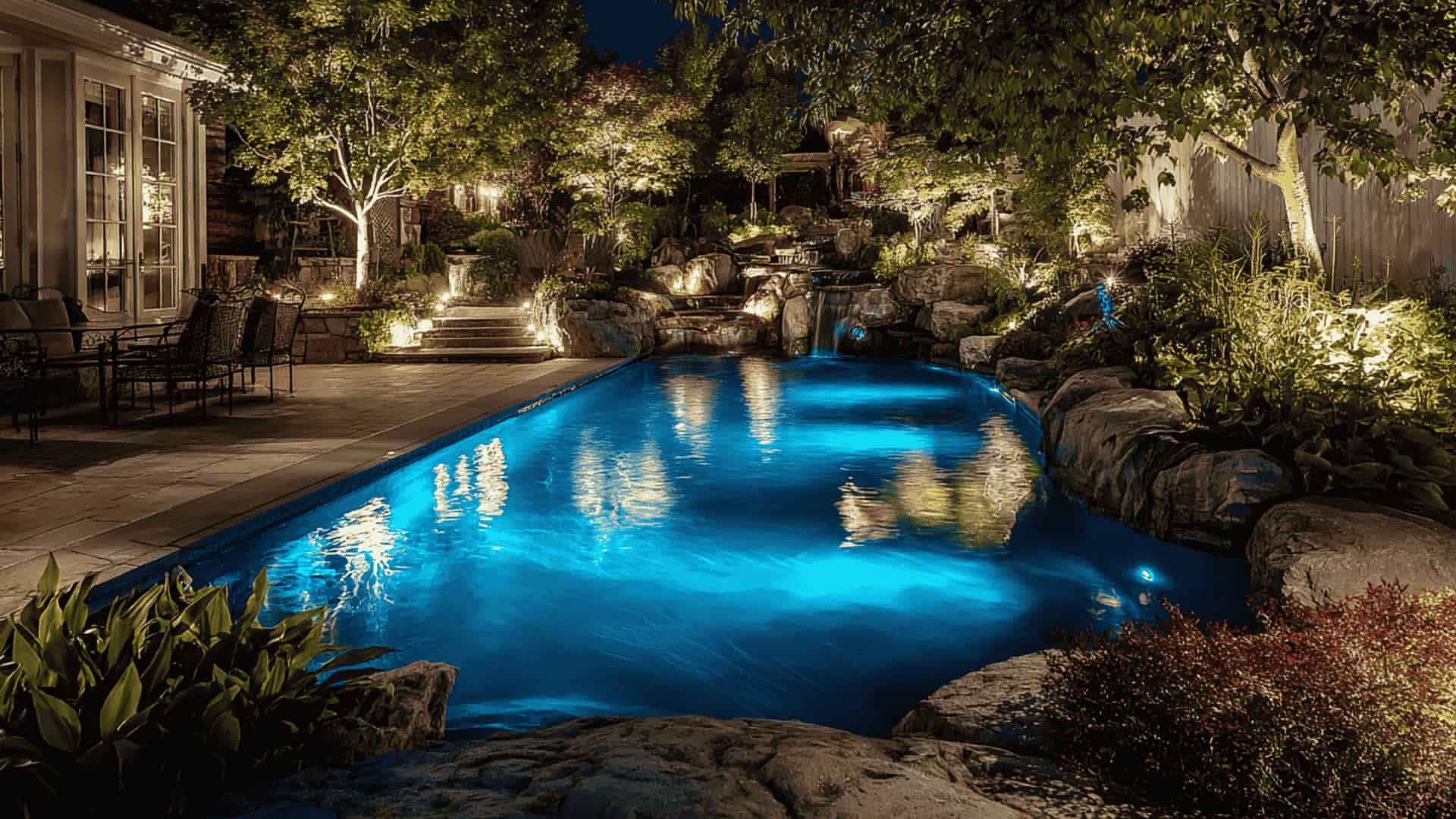
Alt Text: Backyard pool with underwater landscape lighting at night
Underwater lights are used in pools, fountains, and ponds to highlight water features and create a dramatic nighttime effect. These lights add movement and reflection to the landscape, making water elements stand out while enhancing the overall ambiance of the outdoor space.
Pro Tip: ChooseLED waterproof fixtures for a longer lifespan and better energy efficiency in water features.
Even a well-planned landscape lighting design can fall short if a few common mistakes are overlooked. Avoiding them helps your outdoor space look more balanced, natural, and functional at night.
- Overlighting the Yard: Too many bright fixtures can make the landscape feel harsh, crowded, and unnatural, rather than warm, inviting, and visually balanced.
- Poor Fixture Placement: Lights placed at the wrong angle can create glare, uneven brightness, and awkward shadows, reducing the overall effect.
- Ignoring Layered Lighting: Using only one type of lighting can make the yard look flat and miss the depth that layered illumination adds.
- Choosing the Wrong Color Temperature: Extremely cool lighting can feel harsh outdoors, while warmer tones usually create a softer and more natural nighttime atmosphere.
- Poor Wiring and Power Planning: Bad wire placement and weak power planning can lead to visible cables, voltage issues, and an untidy installation.
Avoiding these common landscape lighting mistakes can make a major difference in the final result. A thoughtful, balanced setup will feel more polished, attractive, and enjoyable every evening.
Smart Landscape Lighting Design for Modern Outdoor Spaces
Smart landscape lighting design is becoming increasingly popular as homeowners seek more convenient, energy-efficient ways to illuminate their outdoor spaces. With smart lighting systems, you can control your landscape lights via a smartphone app, a voice assistant, or an automated schedule.
This allows you to adjust brightness levels, turn lights on or off remotely, and even create lighting scenes for different occasions. For example, you might set softer lighting for relaxing evenings on the patio or brighter lighting when hosting outdoor gatherings.
Many smart systems also include timers and motion sensors that help improve security while reducing unnecessary energy use. From my perspective, smart lighting is a practical upgrade because it combines modern technology with thoughtful outdoor design.
Instead of manually adjusting lights every night, everything works automatically in the background. When integrated into a landscape lighting design, smart systems make outdoor spaces more adaptable, efficient, and enjoyable throughout the year.
Conclusion
Landscape lighting design is more than just placing lights around your yard; it’s about creating a space that feels welcoming, safe, and visually appealing after sunset.
From planning your layout and choosing the right fixtures to avoiding common mistakes, thoughtful lighting can completely transform how your outdoor space looks and functions at night.
From my perspective, even small lighting changes, like softly illuminating a pathway or highlighting a favorite tree, can make a noticeable difference in the overall atmosphere of a yard.
With a little planning and creativity, you can design a lighting setup that enhances both beauty and usability.
If you’re thinking about upgrading your outdoor lighting, start small and build from there. What feature in your yard would you highlight first with landscape lighting? Feel free to share your thoughts or ideas in the comments.
Frequently Asked Questions
How Many Lights Do I Need for My Yard?
It depends on your yard’s size and features. Start with key areas like pathways and trees, then add lights gradually for a balanced look.
What Is the Best Color Temperature for Landscape Lighting?
Warm white tones (2700K–3000K) work best outdoors. They create a soft, natural atmosphere without harsh glare on plants or architectural features.
Is Low-Voltage Landscape Lighting Safe and Energy-Efficient?
Yes. Low-voltage systems use a transformer to reduce power consumption, making them safer to install, cost-effective to run, and ideal for most residential yards.
How Do I Prevent Wiring from Looking Messy?
Run wires through flower beds, along edges, or in shallow trenches. Keeping cables hidden ensures a clean, professional installation that blends with your landscape.