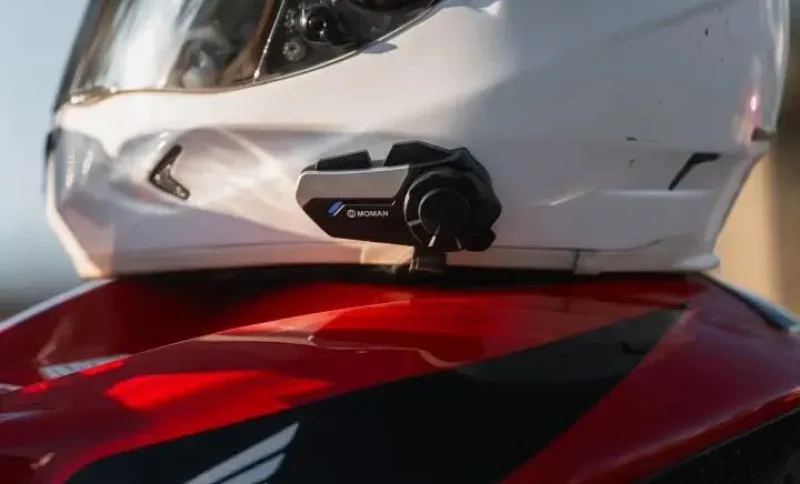
An intercom system for motorcycle is a communication device designed for riders who want to stay connected while riding. It allows clear voice communication without using hands, which improves safety and convenience on the road. As more riders use motorcycles for commuting, touring, and group travel, this system has become an essential part of modern riding equipment. This article explains what it is, why it is used, how it works, and how to choose the right one for different riding needs.
What Is an Intercom System for Motorcycle?
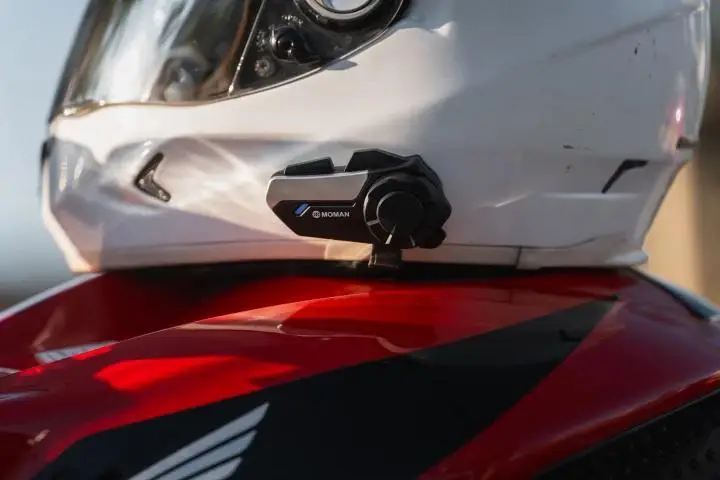
Source: Moman
An intercom system for motorcycle is a wireless communication device used by riders wearing helmets. It enables voice communication between rider and passenger or between multiple riders without physical interaction.
A motorcycle helmet intercom is usually mounted on the side of a helmet and connects through Bluetooth or mesh networking. It converts voice into wireless signals and transmits them in real time, even while riding at higher speeds.
These systems are widely used in daily commuting, touring, and group riding because they help riders stay connected without stopping or using hand signals. They are designed to work in noisy environments where wind and engine sound are present.
Most modern systems also integrate with smartphones and GPS devices, allowing riders to receive navigation instructions, answer calls, and control music while riding.
Why Do Riders Use It?
The main reason riders use a motorcycle helmet intercom is safety. Communication becomes much easier when riders do not need to use phones or gestures while riding. This helps reduce distractions and improves focus on the road.
Another important reason is coordination. In group riding, riders need to share real-time information such as turns, road conditions, and speed adjustments. Clear communication helps the entire group stay organized and move smoothly.
A hands free motorcycle helmet intercom system also improves comfort during long rides. Riders can communicate naturally without pressing buttons or stopping the motorcycle.
In addition, modern systems provide extra functions such as GPS voice guidance and phone connectivity. This makes riding more efficient because riders can receive directions and manage calls without interrupting their ride.
As a result, intercom systems are no longer just communication tools but also practical riding assistants.
How Motorcycle Intercom Systems Work?

Most intercom systems for motorcycle devices work using Bluetooth or wireless mesh technology. Riders first pair the device with a smartphone, GPS unit, or another helmet system.
This is why bluetooth motorcycle intercom systems are widely used. They are easy to connect, compatible with most devices, and suitable for everyday riding situations.
Once connected, the system converts voice signals into wireless audio transmission. Riders can communicate in real time even when separated by distance.
Some advanced systems use mesh networking, which allows multiple riders to stay connected in a dynamic group. Unlike traditional pairing, mesh systems can automatically maintain connection even when riders change positions in the group.
This makes communication more stable during long-distance touring or group travel, where riders may not always stay in fixed positions.
How to Choose the Right Intercom System for Motorcycle Helmets?
After understanding how the system works, the next step is selecting the right model based on real riding needs and usage conditions.
One of the most important factors is communication range. Riders who mainly ride in cities may not need long-range systems, while touring riders require stable communication over greater distances.
Battery life is another key factor. Long rides require a system that can last several hours continuously without needing frequent charging. A stable battery ensures uninterrupted communication throughout the journey.
Sound quality is also essential. Wind noise, engine sound, and road conditions can affect communication clarity. A good system should include noise reduction technology to ensure clear voice transmission at different speeds.
Durability is another consideration. Riders often face different weather conditions, so the system should be resistant to rain, dust, and temperature changes.
Ease of use is equally important. A system that is simple to install and operate allows riders to focus more on riding instead of adjusting equipment.
Many users also compare a motorcycle intercom system comparison before purchasing. This helps them evaluate differences in features such as range, battery performance, and audio quality across different models.
Choosing the right system is not only about price but about matching the device to actual riding habits and communication needs.
Conclusion
An intercom system for motorcycles is a practical tool that improves safety, communication, and overall riding experience. It allows riders to stay connected without distraction and helps improve coordination in both solo and group riding.
Whether for daily commuting or long-distance touring, it provides a more convenient and efficient way to communicate on the road.
As wireless communication technology continues to improve, motorcycle intercom systems are becoming more reliable, more stable, and more widely used among modern riders.