Walk into a modern Indian restaurant in New York City and the first thing you may notice is the aroma: charred spices, freshly baked naan, roasted meats, and smoke rising from an intensely hot oven. Behind many of those flavors is a piece of equipment with centuries of culinary history—the clay tandoor.
For chefs, a tandoor is more than an oven. It is a cooking system that combines intense heat, traditional technique, and the distinctive flavor of food cooked against hot clay walls. In today’s Indian restaurant kitchen, choosing the right equipment can influence everything from preparation and workflow to the final texture of naan and kebabs.
That makes Indian restaurant kitchen equipment an interesting subject in its own right. The ovens, burners, preparation stations, and cooking tools behind the scenes help determine what eventually reaches the dining room.
Why the Tandoor Still Matters in a Modern Kitchen
The tandoor has survived generations of culinary change because it does something ordinary ovens struggle to reproduce. Its cylindrical cooking chamber creates a concentrated environment where food can cook quickly at extremely high temperatures.
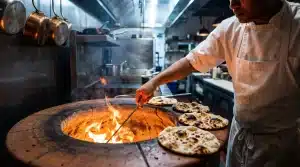
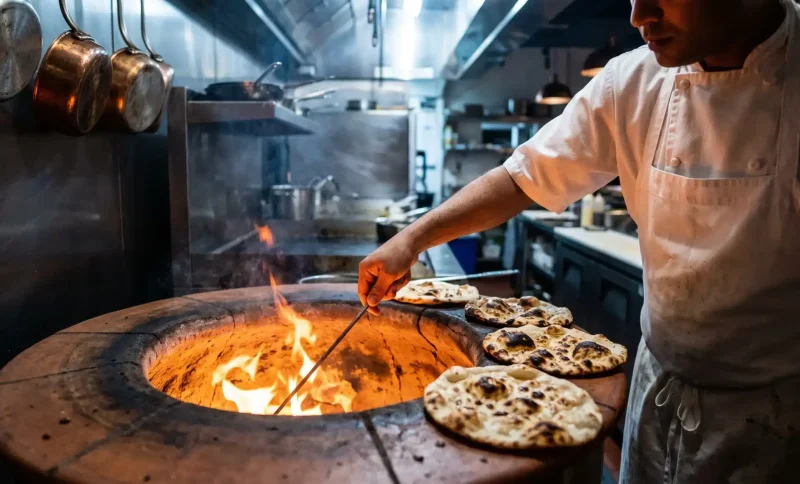
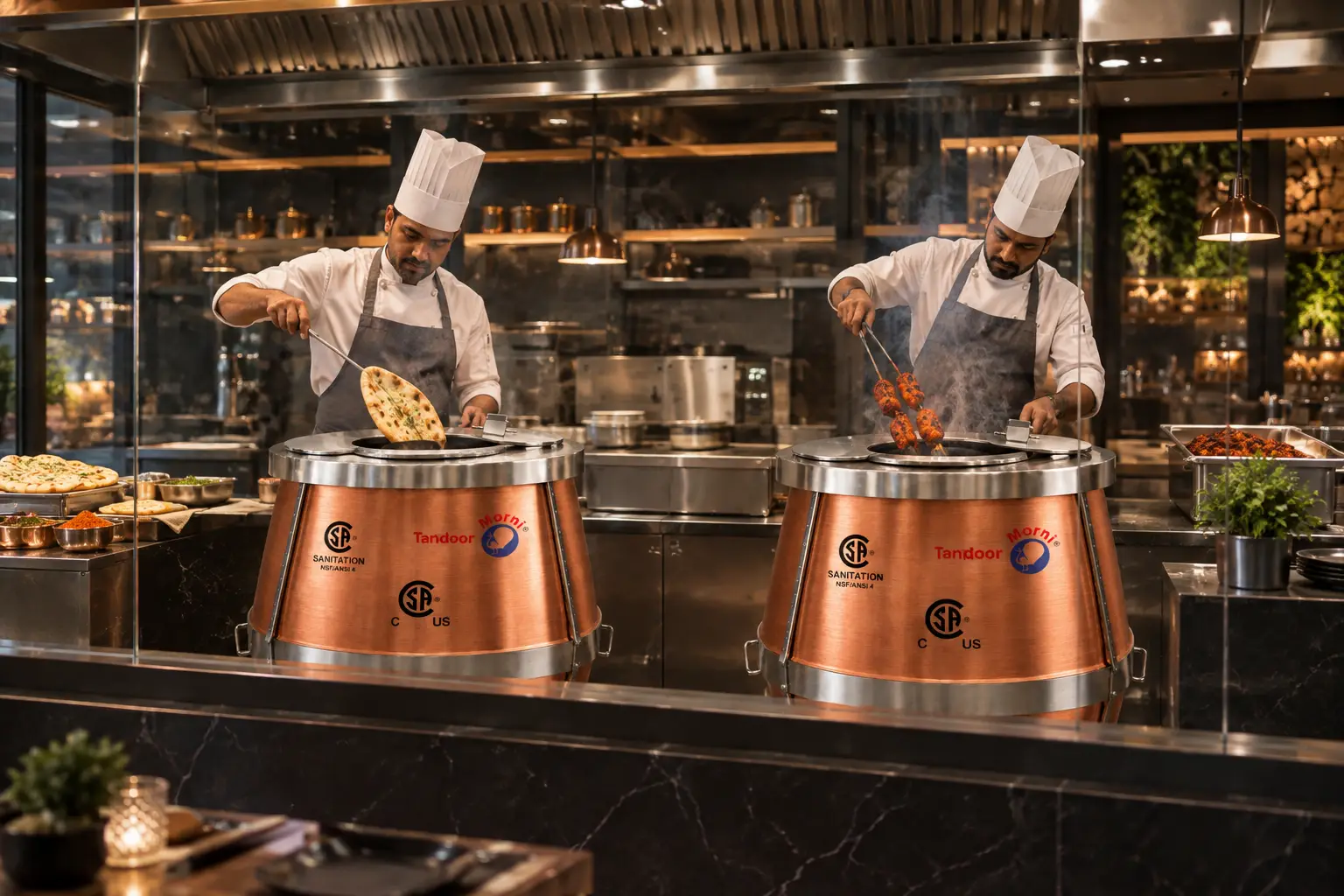
Naan is a classic example. A chef stretches the dough by hand, carefully places it against the interior wall, and watches as it puffs, browns, and develops characteristic char. Skewered meats and vegetables can be cooked in the same chamber, allowing a restaurant to produce several styles of dishes from one cooking station.
Modern restaurant kitchens may be filled with stainless-steel equipment, digital controls, refrigeration systems, and specialized preparation tools, but the tandoor remains remarkably tactile. The chef still relies on timing, experience, heat management, and visual judgment.
That combination of traditional craftsmanship and modern restaurant operation is part of what makes tandoor cooking so fascinating.
The Equipment Behind the Flame
Running a busy Indian kitchen requires more than simply installing an oven. Restaurant operators have to consider available space, fuel type, ventilation, cooking volume, staff workflow, and the dishes they plan to serve.
For a kitchen with a large menu, the oven needs to fit naturally into the working environment. Chefs may move constantly between preparation counters, refrigeration, cooking stations, and plating areas. Equipment that interrupts that movement can slow down service.
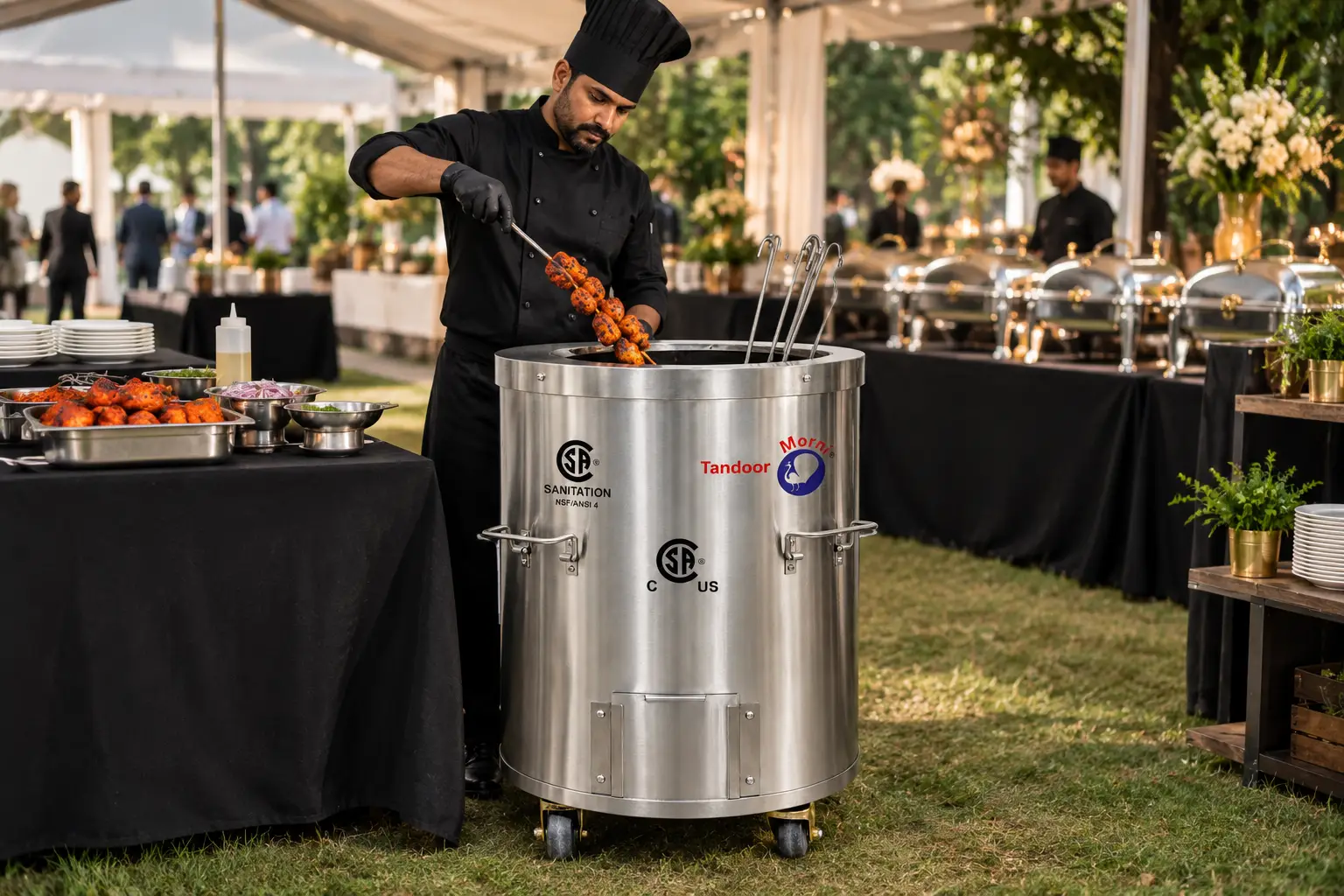
This is where purpose-built commercial tandoor ovens can become part of a restaurant’s larger equipment strategy. Instead of treating the tandoor as an isolated traditional appliance, operators can consider how its capacity, construction, fuel system, and placement work alongside the rest of the kitchen.
The goal is not simply maximum heat. It is reliable performance during service.
Clay, Heat, and the Character of Tandoor Cooking
The clay interior plays an important role in the cooking experience. Once heated, the thick walls retain and radiate heat, creating the environment necessary for high-temperature cooking.
This is especially useful for breads. Naan can develop a blistered surface while remaining soft inside. Tandoori chicken can acquire browned edges while cooking rapidly. Seekh kebabs can develop roasted exterior notes without requiring a long cooking time.
There is also a sensory element that modern diners recognize immediately. The combination of roasted spices, charred edges, and the aroma produced by high-temperature cooking creates a flavor profile associated with restaurant-style Indian food.
For chefs, mastering that environment takes practice. Heat is not simply switched on and forgotten. The cooking surface, food position, timing, and preparation all matter.
Gas Tandoors and the Modern Restaurant
Traditional cooking methods do not necessarily mean outdated restaurant technology. Many modern kitchens use gas-fired systems because they offer practical control and can fit the operational requirements of a professional food-service environment.
A Natural Gas Tandoor Oven can be particularly relevant for restaurant operators planning a dedicated tandoor station around an existing natural-gas setup. Fuel availability, installation requirements, ventilation, and local regulations all need to be considered before selecting equipment.
The important point is that the tandoor remains a working part of the kitchen rather than simply a decorative symbol of Indian cooking.
For a chef, the best equipment is the equipment that supports consistency. During a busy dinner service, dozens of naan, kebabs, and other dishes may need to leave the kitchen in a short period. Reliable heat and an efficient workflow can make a significant difference.
What Chefs Look for in a Tandoor
Choosing a tandoor involves several practical questions.
Capacity is one of the first. A small restaurant with a limited tandoori menu may have different requirements from a busy Indian restaurant serving large numbers of naan and grilled dishes.
Fuel type is another consideration. Operators may compare gas configurations and other options based on their kitchen infrastructure and operating preferences.
Construction matters as well. A tandoor is exposed to intense heat repeatedly, so durability is an important part of equipment selection.
Placement can be just as important as the oven itself. Chefs need enough room to work safely around the cooking station while keeping ingredients and tools within easy reach.
Finally, restaurant owners need to consider maintenance and long-term operation. A tandoor is a specialized piece of cooking equipment, and understanding how it should be used and maintained can help protect the investment.
The Chef’s Relationship With the Tandoor
Perhaps the most interesting part of a tandoor kitchen is that technology never completely replaces the person operating it.
A chef learns how dough behaves against the hot wall. They learn how long a particular skewer needs to cook. They recognize subtle differences in color, aroma, texture, and heat.
Two restaurants can use similar ovens and produce noticeably different results because technique matters.
This is why tandoor cooking is often described as a craft. The equipment creates the conditions, but the chef turns those conditions into food.
In New York, that relationship between equipment and cooking is especially relevant. The city’s Indian food scene continues to reflect different regional traditions, restaurant concepts, and approaches to dining. A tandoor can be used in a highly traditional kitchen, a contemporary restaurant, or a neighborhood establishment adapting Indian cooking to a new generation of diners.
From Traditional Technique to New York Dining
New York’s restaurant culture has always been shaped by migration and culinary exchange. Food traditions travel with people, adapt to new surroundings, and become part of the city’s evolving dining landscape.
Indian cooking is a strong example of this process.
The tandoor itself may have ancient roots, but the way it appears in a New York restaurant can be distinctly modern. Chefs may pair traditional tandoori techniques with contemporary presentation, local ingredients, or menus designed for diners who are discovering these flavors for the first time.
That evolution does not necessarily diminish tradition. In many cases, it keeps traditional techniques relevant.
A clay oven becomes a bridge between generations: the same basic cooking principle can be understood by a chef trained in an old family kitchen and by a diner encountering tandoori cooking for the first time in Brooklyn or Manhattan.
Why the Kitchen Story Matters
Restaurant dining is often presented through the finished plate, but much of the story happens behind the kitchen doors.
The preparation of dough, marination of meat, selection of spices, management of heat, and operation of specialized equipment all contribute to what diners eventually experience.
The tandoor makes that connection particularly visible because the cooking process is so distinctive. The moment naan is pulled from the oven or a skewer emerges with charred edges, the equipment has left its signature on the dish.
For food lovers, understanding that process can make a familiar meal more interesting. A plate of naan is no longer simply bread. It represents a combination of ingredients, fermentation or resting time, hand technique, intense heat, and years of culinary knowledge.
The same is true of tandoori dishes. Their flavor comes not from one ingredient but from a sequence of decisions made before and during cooking.
Keeping the Flame Alive
The modern Indian restaurant kitchen is constantly evolving, but some traditions remain because they continue to work.
The tandoor is one of them.
Its combination of clay, intense heat, direct cooking, and chef-driven technique gives Indian restaurants a distinctive tool that can support both traditional dishes and contemporary menus. As New York diners continue exploring regional cuisines and the people behind them, the equipment responsible for those flavors deserves attention too.
Behind every beautifully blistered naan and every smoky skewer is a kitchen where heat is carefully managed and technique matters. The clay tandoor may be an old invention, but in New York’s modern Indian kitchens, its story is still being written.