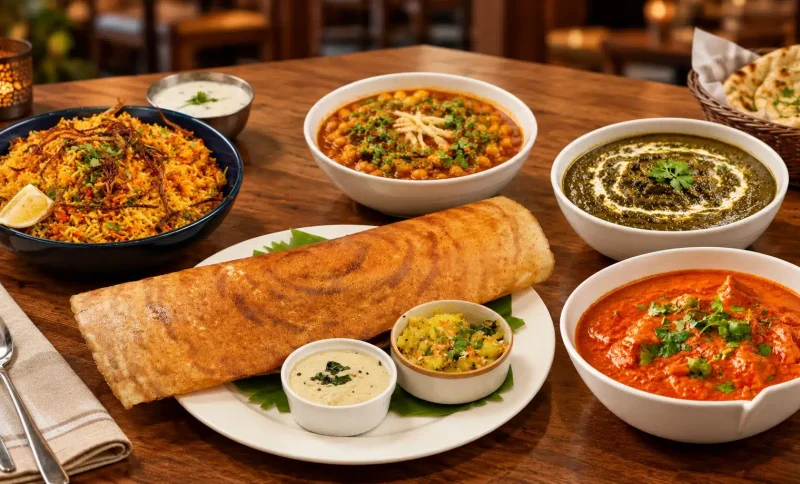
Indian food is becoming an increasingly visible part of the US dining landscape, from butter chicken and biryani to dosa, samosas, and Indo-Chinese favorites. As more diners explore these flavors, Indian cuisine is creating opportunities for restaurant concepts that go beyond traditional full-service dining. Fast-casual restaurants, quick-service counters, and delivery-focused kitchens offer different ways to serve customers based on their dining preferences and location.
For entrepreneurs exploring restaurant franchise opportunities, these changing food trends raise an important question: which restaurant format best fits the target market, available investment, and local demand? Understanding these trends can help investors compare franchise models, evaluate operating requirements, and make more informed decisions before choosing a concept.
How Indian Food Trends Are Influencing the US Restaurant Market
Growing Interest in Indian Cuisine
The demand has a measurable base. Census Bureau estimates reported by Pew Research Center put 5.2 million people identifying as Indian in the United States in 2023, the second-largest Asian origin population in the country.
Interest reaches well beyond that community. Datassential reports that 30% of US consumers love or like Indian food, and places the cuisine in Adoption, the second of the four stages in its Menu Adoption Cycle. Adoption is the stage where a food spreads through lower price points and simpler preparations at independents and food trucks, ahead of the mainstream-chain presence that arrives later.
Supply is still catching up. Datassential’s Firefly database counted 5,661 Indian restaurants nationally, a modest number for a country this size.
Changing Dining Preferences and Food Choices
Three shifts in how Americans eat suit this cuisine well.
- Plant-forward ordering. A large share of Indian dishes were built without meat from the start, not adapted later.
- Adjustable heat. Spice level is set per order in most Indian kitchens, so one dish serves a cautious eater and an enthusiast at the same table.
- Delivery as a default. Gravies, rice and breads travel well. Datassential counted 2,222 Indian ghost kitchens nationally, roughly two for every five storefronts.
That last figure matters: the cuisine proved itself in a delivery bag before it did on main streets.
The Role of Indo Chinese Food in the U.S. Market
Indo Chinese food is the part of the category most American diners have not met yet. It developed over the last century among the Chinese community in Kolkata, applying Indian spice logic to Chinese technique, and has been mainstream in India for decades.
It matters on a menu because it cooks fast. Where a North Indian gravy needs a base built in stages, most of these dishes are wok-finished to order.
Popular Indian Dishes Influencing Restaurant Menu Trends
Popular Indian Dishes and Traditional Favorites
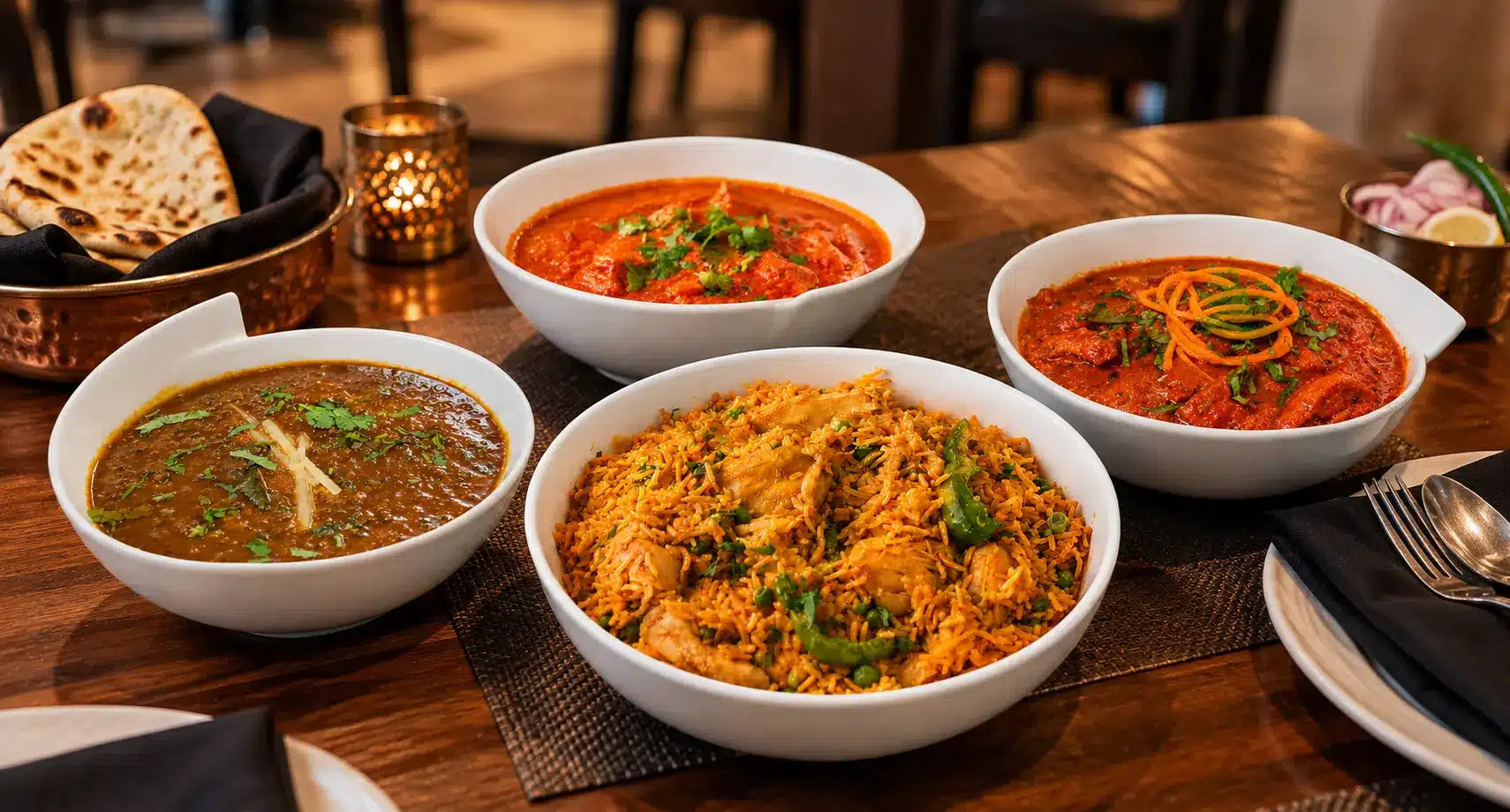
A handful of dishes carry most of the category’s recognition in the US and anchor any menu built for a mixed audience.
- Butter chicken. Tandoor-cooked chicken in a tomato gravy enriched with butter and cream, from Delhi. The mildest entry point on most menus.
- Chicken tikka masala. Also tandoor-cooked chicken in tomato and cream, with more onion, ginger and ground spice, so it reads sharper.
- Biryani. In the dum style, rice and marinated meat are layered in a pot sealed with dough and cooked in the trapped steam.
- Dal makhani. Black lentils and kidney beans simmered for hours with butter and cream.
- Samosa. Fried pastry filled with spiced potato and peas, and a fixture on almost every Indian menu in the country.
Much of the repertoire is still unfamiliar, which matters when writing menu descriptions. Datassential found only 13% of US consumers recognise ras malai by name.
Vegetarian Indian Dishes and Diverse Menu Options
Vegetarian Indian dishes are not substitutions. They were never built around meat, which is why Indian menus satisfy mixed groups without special requests.
- Chana masala. Chickpeas in an onion and tomato base with cumin, coriander and dried mango powder.
- Palak paneer. Spinach cooked down with fresh cheese.
- Aloo gobi. Potato and cauliflower with turmeric and cumin, cooked dry rather than in gravy.
- Dosa. A fermented rice and lentil crepe from South India. The batter contains no dairy, though many kitchens griddle dosas in ghee, so a vegan diner should ask for oil.
For an operator, this part of the Indian cuisine food category widens the table without a separate kitchen line.
Indo Chinese Dishes That Expand Menu Variety
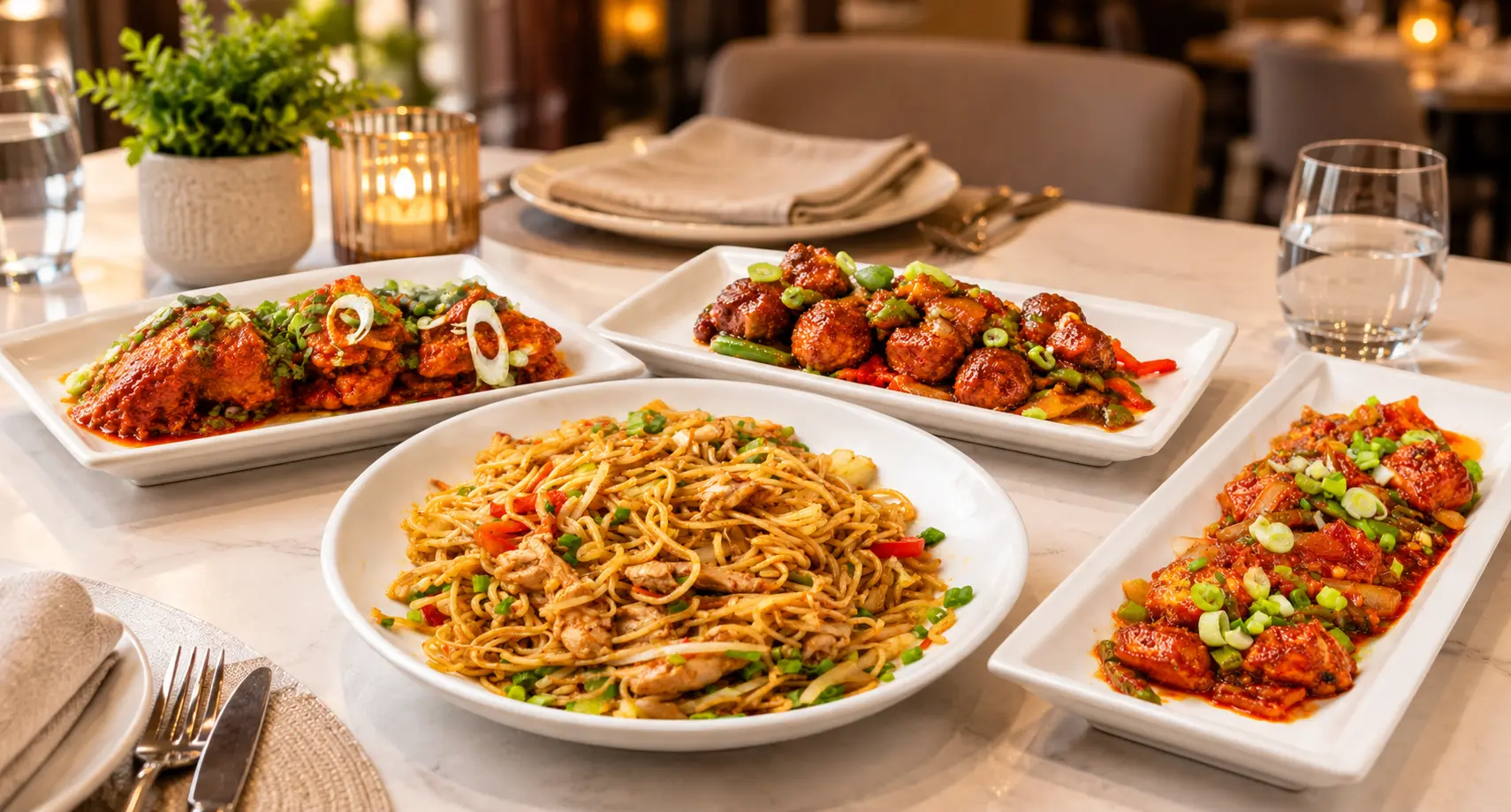
Indo Chinese dishes give a menu a second register, familiar to anyone who has eaten Chinese takeout but seasoned on Indian terms.
- Chilli paneer. Fresh cheese tossed with peppers, onion, soy and green chilli.
- Gobi Manchurian. Battered cauliflower in garlic, ginger and soy, sweet and sharp at once.
- Hakka noodles. Stir-fried noodles with vegetables, cooked hot and fast.
- Chilli chicken. The same treatment applied to chicken.
Those short cooking times slot into counter-service formats that a full North Indian menu would slow down.
How Indian Food Trends Are Creating Restaurant Franchise Opportunities
Matching Restaurant Formats With Customer Needs
These trends point at different buildings depending on who is nearby and how they want to eat.
A trade area with evening traffic and higher household incomes suits a sit-down room with a bar. A lifestyle centre with lunch and dinner footfall suits counter ordering. An airport terminal or university food hall needs a short menu and fast tickets. This is why growth in restaurant franchise opportunities across Indian cuisine has arrived as several formats rather than one.
Evaluating a Restaurant Franchise Opportunity
A restaurant franchise opportunity is worth judging on whether the format suits the site you can get, not on the cuisine’s appeal in the abstract. Two questions sharpen that:
- What does the site allow? A tandoor needs serious ventilation, and a gas model needs a dedicated line. Some otherwise attractive units cannot take one, which rules out part of the menu before anything else is decided.
- Who is within a ten-minute drive? A South Indian menu runs on dosa griddles and steamers; a North Indian one runs on a tandoor. The local base decides which kitchen you are building.
Comparing Restaurant Franchise Models for Indian Cuisine
Indian brands that franchise often offer more than one format. How the three differ:
|
Model |
Service Style |
Typical Setting |
|
Fine Dining |
Full table service, bar programme, multi-course menu |
Destination dining in higher-income suburbs |
|
Fast Casual |
Order at the counter, food brought to the table |
Lifestyle centres and mixed-use developments |
|
QSR / Express |
Counter or grab-and-go, compact menu, fastest tickets |
Food halls, airports, campuses, high-footfall retail |
Fine Dining Concept
A fine dining concept carries the full menu, a bar and front-of-house staff, making it the most capital-intensive and training-intensive of the three. It is also the format that presents regional cooking at full range, because nothing is simplified for speed. It needs a trade area with higher average spend and evening-weighted traffic.
Fast Casual Concept
A fast casual concept keeps the kitchen’s cooking methods while moving service to counter ordering. The menu stays broad while the service model gets simpler. It suits sites with both daytime and evening traffic, which is why these formats cluster in lifestyle centres.
QSR/Express Concept
A QSR/Express concept runs a compact menu of best-selling dishes, with counter or grab-and-go service and the fastest tickets of the three. The shorter menu is the point, making the format viable where kitchen space and dwell time are limited. It depends on footfall rather than destination appeal.
What to Consider When Choosing the Best Restaurant Franchises to Own
Comparing the best restaurant franchises to own comes down to four areas, in order.
Initial Investment and Ongoing Costs
Look at the total investment range, not the franchise fee alone, since the fee is usually a small share of what it takes to open. Ongoing costs typically include a royalty, a brand fund, a local advertising requirement and a technology fee.
In the Franchise Disclosure Document, Item 5 covers the initial fee, Item 6 every recurring charge, and Item 7 the estimated initial investment, including funds for the first months of trading.
One point worth stating plainly: a franchisor may only make a financial performance representation in Item 19, and making one is voluntary. If a brand chooses not to, Item 19 must say so in those terms, and nobody there can tell you what a location will earn.
Brand Support, Training, and Restaurant Operations
Support is where franchise systems differ most. Ask what is delivered in each:
- Site selection and trade-area analysis before a lease is signed
- Training length and format, and who it covers besides the owner
- Brand-level marketing, and what the franchisee must spend locally
- Point-of-sale and back-office technology
- Pre-opening support through build-out and hiring, and operational support after
Item 20 lists current franchisees with outlet address and phone number, plus former franchisees who left during the last financial year. Calling several is the most useful free hour of research available.
Location, Target Customers, and Menu Strategy
Local customer preferences are important when choosing an Indian cuisine and Indo Chinese food menu for a restaurant franchise. Food preferences can vary by neighborhood, so a restaurant format that works well in one area may not work as well in another. Franchise investors should research local tastes and popular dishes to decide which menu items customers are likely to order regularly and whether the kitchen can prepare them consistently.
Business Planning and Long-Term Suitability
Several states require a franchisor to register before offering franchises there, so timing can depend on a filing rather than readiness.
Beyond the numbers sits a fit question with no document answers. Fine dining is an evening and weekend business with a large team; a QSR unit is early-start and high-volume. Neither suits everyone.
Frequently Asked Questions
Q: Why Is Indian Food Gaining Visibility in the US Restaurant Market?
Demand has both a demographic and a mainstream base. Census Bureau estimates reported by Pew Research Center put 5.2 million people identifying as Indian in the US in 2023, while Datassential found 30% of consumers love or like Indian food.
Q: How Can Indian Food Trends Influence Restaurant Franchise Opportunities?
They determine which formats make sense in which locations. Plant-forward ordering, adjustable spice levels and strong delivery performance widen where the cuisine can work.
Q; What Is the Difference Between Fine Dining, Fast Casual, and QSR Franchise?
Fine dining offers full table service with the widest menu and the highest investment and training requirement. Fast casual uses counter ordering with food brought to the table. QSR or Express runs a compact grab-and-go menu.
Q: What Should Investors Consider Before Choosing an Indian Food Franchise?
Start with the Franchise Disclosure Document: Item 7 for the estimated initial investment, Item 6 for recurring fees, Item 19 for any financial performance representation, Item 20 for franchisee contacts. Then check the format that suits your available site.
Conclusion
Indian food has become a category that can be built in more than one shape, and that is the practical result of the last decade of growth. Plant-forward menus, per-order spice control and strong delivery performance have made the cuisine workable at three service speeds instead of one, so menu development and format selection now inform each other.
For anyone evaluating a franchise, the sequence matters. Establish which format your site supports, read the Franchise Disclosure Document for the investment range and every recurring fee, and speak to existing franchisees before signing. The cuisine’s popularity is a reason to look at the category, not a substitute for that work.
Tabla has operated since 2008, when its first restaurant opened in Orlando, Florida, and now has locations across Florida, Texas, Illinois, Kentucky, Minnesota and Massachusetts.