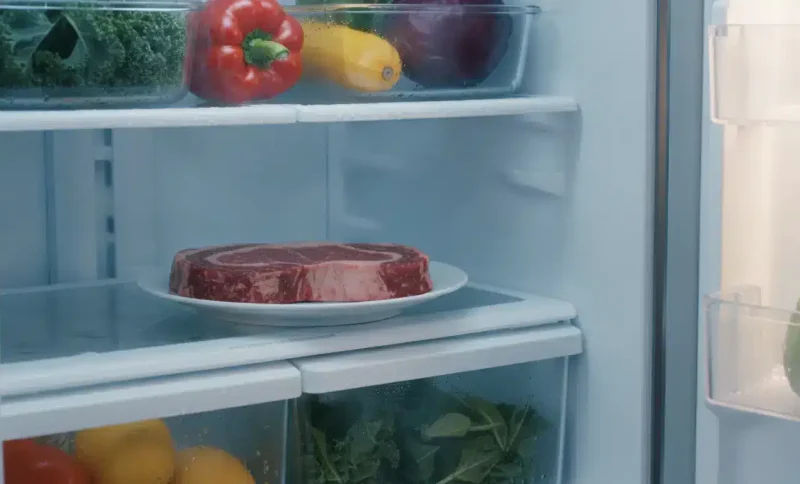
There is nothing quite like looking forward to a juicy, perfectly seared steak for dinner. But if life gets in the way and your dinner plans shift, that thawed ribeye or sirloin sitting in your refrigerator might start ticking like a clock.
Steak is a high-protein food, which means it provides the ideal environment for bacteria to thrive once it warms up. While refrigeration slows this bacterial growth down significantly, it doesn’t stop it completely. Understanding your safe storage windows isn’t just about protecting the quality of your meat—it’s about avoiding foodborne illness.
Here is exactly how long you have before that thawed steak goes from a gourmet meal to a health hazard.
Safe Time for Thawed Steak
If you are looking for the quick numbers to see if tonight’s dinner is still safe, here is the baseline:
Raw Thawed Steak in the Fridge
- 3 to 5 Days: Raw steak can typically stay in the refrigerator for 3 to 5 days after it has completely thawed, provided your fridge is set at or below 40°F (4°C).
Cooked Steak After Thawing
- 3 to 4 Days: If you thawed already-cooked steak leftovers, you have a slightly shorter window of 3 to 4 days in the fridge.
Why the timeline matters: Bacterial growth accelerates the moment meat rises above freezing temperatures. Even if the meat remains safe to eat up to day five, the quality, juiciness, and flavor will start declining well before safety becomes an actual issue.
What Happens When Steak Thaws in the Fridge?
To understand these timelines, it helps to understand the science of your fridge.
The Temperature Danger Zone
Food safety experts frequently warn about the Temperature Danger Zone, which lies between 40°F and 140°F (4°C–60°C). In this range, bacteria can double in number in as little as 20 minutes. A properly functioning refrigerator keeps the meat just below this danger zone, putting the bacteria into a sluggish, slow-motion state.
Moisture and Texture Changes
Even at safe temperatures, changes are happening at a cellular level. As steak thaws, ice crystals that formed during freezing melt, causing the protein fibers to break down and release moisture (known as “purge”). Over time, this loss of moisture alters the texture and can cause slight, natural changes in color and smell.
How Your Thawing Method Affects Shelf Life
Not all thawing methods are created equal. The 3-to-5-day rule only applies if you thawed your steak the right way.
- Refrigerator Thawing (Safest): Because the steak remains at a constant, controlled temperature below 40°F throughout the entire process, the full 3–5 day storage window applies.
- Cold Water Thawing: If you thawed your steak in a sealed bag under cold water, pockets of the meat may have drifted into the Temperature Danger Zone. You must cook it immediately; do not let it sit in the fridge.
- Microwave Thawing: Microwave waves thaw unevenly and often start partially cooking the edges of the meat. This creates warm spots perfect for rapid bacteria growth. Cook it right away.
Signs Your Thawed Steak Has Gone Bad

Before you throw that steak on the grill, do a quick sensory check. If you notice any of the following signs, it’s time to throw it out:
- Visual Indicators: A healthy steak is typically bright red or a slightly duller purplish-red. If it has taken on a distinct gray or green discoloration, or if there is an excessive slime or surface film, it’s gone bad.
- Smell Changes: Fresh steak smells metallic or like nothing at all. Spoiled steak will emit a distinct, pungent sour or ammonia-like odor.
- Texture Changes: If the surface of the meat feels sticky, tacky, or overly soft and mushy rather than firm, bacteria have taken over.
Food Safety Guidelines You Should Follow
To maximize your steak’s shelf life and keep your kitchen safe, practice standard USDA-style storage rules:
- Check the Temp: Ensure your refrigerator is consistently running at or below 40°F (4°C).
- Seal it Tight: Store steak in its original vacuum packaging, an airtight container, or tightly wrapped in plastic wrap to minimize exposure to oxygen.
- Avoid Cross-Contamination: Keep raw steak away from ready-to-eat foods like vegetables or cheese. Always use separate cutting boards and utensils for raw meat, and wash your hands thoroughly after handling.
Can You Refreeze Thawed Steak?
Yes, but under one strict condition: It must have been thawed exclusively in the refrigerator.
If it remained below 40°F the entire time, you can safely put it back in the freezer within that 3-to-5-day window. However, keep in mind that refreezing causes a decline in quality. The secondary freezing process breaks down cell walls further, meaning the steak will lose more moisture and may turn out drier when cooked.
Tip: If you must refreeze thawed steak, consider saving it for marinated recipes or slow-cooked dishes where moisture loss is less noticeable.
Best Practices for Storing Thawed Steak
- Proper Fridge Placement: Always store raw meat on the bottom shelf of your refrigerator. This prevents any accidental drips from contaminating food below it.
- Label Your Dates: Use a piece of masking tape and a marker to write the date you started thawing the steak so you don’t have to rely on guesswork.
- Maintain Temperature Consistency: Avoid storing meat in the refrigerator door, which experiences frequent temperature fluctuations. Keep it in the back or bottom where it is coldest.
Here is an additional section tailored for commercial environments, written to seamlessly integrate into your blog outline before the “Best Practices” or “Food Safety Guidelines” section.
How the Rules Shift in Professional Kitchens
While the 3-to-5-day rule is a safe baseline for home cooks, handling thawed steak in a commercial kitchen—such as a restaurant, catering operation, or butcher shop—comes with much stricter protocols. In a professional setting, food safety regulations and highly efficient equipment naturally change how thawed meat is managed.
The Power of Commercial Cooling
Unlike residential refrigerators, which fluctuate in temperature every time the door is opened, commercial walk-ins and reach-ins are designed for rapid pull-down times and heavy use.
Because a commercial grade refrigerator holds a rock-solid, uniform temperature—often strictly calibrated between 34°F and 38°F (1°C to 3°C)—bacterial growth is suppressed much more effectively than in a home kitchen. This precise environment ensures that steak stays at peak quality right up to its maximum safety limit.
Regulatory Standards vs. Home Cooking
In a commercial environment, you can’t just rely on a visual check. Chefs and kitchen managers must adhere to strict local health department codes, usually modeled after the FDA Food Code.
- The 7-Day Rule: According to the FDA, ready-to-eat, TCS (Time/Temperature Control for Safety) foods can be held for a maximum of 7 days at 41°F (5°C) or lower. However, for optimum culinary quality, most high-end kitchens still aim to turn over raw, thawed steaks within 3 to 5 days.
- Strict Date Labeling: Commercial kitchens utilize a strict “First In, First Out” (FIFO) rotation system. Every thawed steak must be clearly labeled with a “prep date” (the day it began thawing) and a hard “discard date.”
- Advanced Packaging: Restaurants frequently use commercial vacuum-sealers (cryovac). Vacuum-sealed thawed steak can sometimes safely stretch past the standard home timeline due to the complete absence of oxygen, which prevents aerobic bacteria from growing. However, this requires careful monitoring to mitigate the risk of anaerobic bacteria like Clostridium botulinum.
Common Mistakes
- Leaving steak on the counter to thaw: This is a recipe for food poisoning. The outside of the steak hits room temperature while the inside is still frozen solid.
- Assuming all thawing methods have the same shelf life: As noted above, water and microwave thawing require immediate cooking.
- Relying on smell alone: Pathogenic bacteria (the kind that cause food poisoning) can be present without changing the smell, taste, or look of the meat. Trust the calendar just as much as your nose.
Final Takeaway
When it comes to refrigerator-thawed raw steak, 3 to 5 days is your golden window. Your safety depends entirely on consistent temperature control and your chosen thawing method.
If you realize you won’t get around to cooking it by day five, either cook it up immediately to extend its life as a leftover, or put it back in the freezer. When in doubt, it is always better to discard the meat rather than risk a severe foodborne illness.