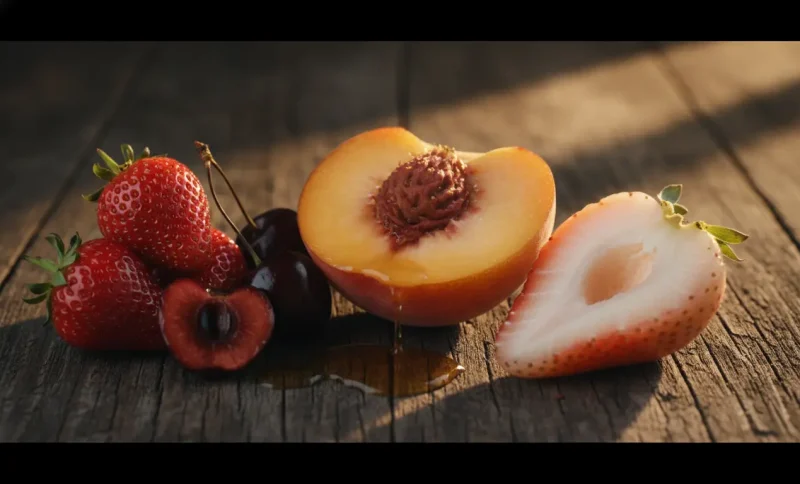
The biggest strawberry in the box is often a bad bet.
I still check it, of course. Everyone does. It’s bright red, shaped as it belongs on a cereal package, and usually sitting right on top. But turn the box over, and the smaller berries underneath are often the ones leaving red juice on the cardboard. Those are the berries I want to smell.
Good fruit usually gives itself away.
A ripe peach has a scent before it has a perfect texture. A decent cantaloupe smells gently sweet near the stem. A bag of good cherries disappears on the drive home because one becomes three, then six, and suddenly all that’s left is a fistful of stems.
Start With the Fruit, Not the Sugar
People tend to talk about fruit sweetness as though it were a single number. More sugar means sweeter fruit. End of story.
It would make shopping much easier if that were true.
Variety matters before anything else. A Granny Smith apple is supposed to be sharp. Leaving it on the counter won’t turn it into a Fuji. One nectarine variety may taste floral and honeyed, while another stays brighter and more acidic even when both are fully ripe.
Figs are a good example because their flavors move all over the place. Some are mild and almost melon-like. Others taste of berries, molasses, or jam. Suzie’s guide to what figs taste like gets at something nutrition charts usually miss: two pieces of fruit can have similar nutrients and still offer completely different eating experiences.
Sugar is part of sweetness, but so is acid. So is smell. Texture sneaks in, too.
A crisp grape can seem sweeter than a soft grape from the same bunch. A fragrant strawberry often tastes richer than a larger one with very little scent. A cold peach straight from the refrigerator may seem flat, then suddenly taste fuller after 20 minutes on the counter.
Nothing magical happened during those 20 minutes. The peach didn’t produce more sugar. It simply warmed enough for its aroma to become easier to notice.
That’s the part people underestimate. We taste with our noses as much as our tongues, especially with fruit. The USDA’s research on fruit flavor describes flavor as a mix of sugars, acids, and volatile aroma compounds. In ordinary kitchen terms, that means a sweet fruit with no smell can still be boring.
Food researchers and growers sometimes measure Brix, which gives an estimate of the soluble solids in fruit juice. Because sugar makes up much of those solids, a higher Brix reading can suggest greater sweetness.
Useful? Yes.
A final verdict? Not really.
I’ve watched people taste fruit after seeing the Brix reading and immediately start searching for the sweetness they were told should be there. Without the number, they might have called the same melon bland. Measurements can sharpen judgment, but they can also bully it.
A high-Brix melon can still have a disappointing texture. A strawberry with a lower reading may taste better because its acidity and aroma are more lively. People in food and agriculture like measurements because they make comparisons possible, but a number can’t tell you whether juice will run down your wrist or whether the fruit smells good enough to eat over the sink.
That’s why I’m wary of articles ranking fruit by sugar content and calling the sweetest one the winner. Nutritionally, the difference between varieties is often less important than the fact that one tastes good enough for you to eat it regularly.
Nobody benefits from buying the “best” fruit and leaving it to wrinkle in the crisper drawer.
The Growing Season Leaves Fingerprints
Fruit flavor begins long before ripening.
Leaves collect sunlight and use it to make carbohydrates. Roots pull in water and nutrients. The plant then has to divide those resources among leaves, stems, roots, and whatever crop it’s carrying.
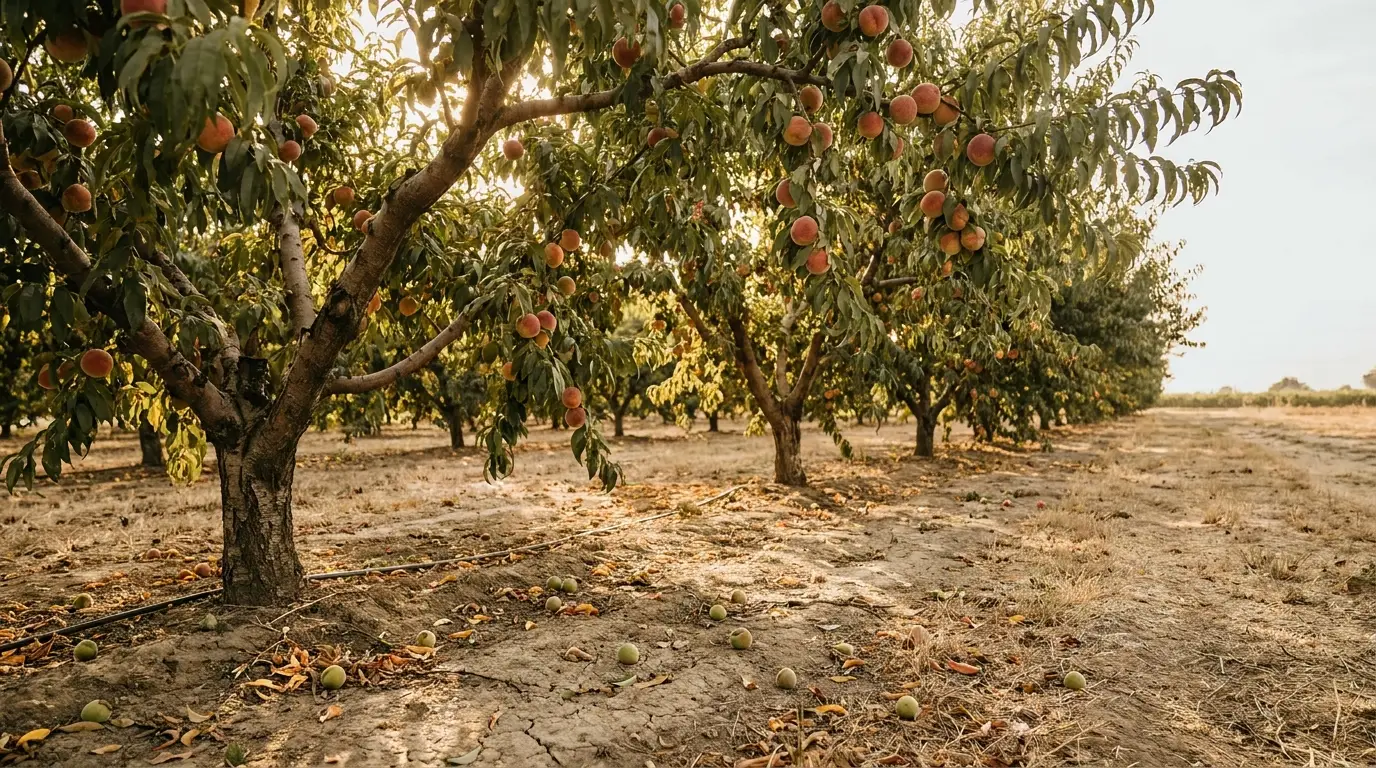
That division matters. A peach tree overloaded with fruit may produce plenty of peaches, but each one is competing with dozens of others. Growers often remove young fruit early in the season so the remaining peaches have a better chance to develop properly.
It looks brutal. Tiny peaches cover the ground while perfectly healthy branches are deliberately thinned.
Then harvest arrives, and the reason becomes obvious.
Potassium is part of that growing picture. It helps plants manage water and move carbohydrates through their tissues, and understanding what potash is explains why potassium sources matter to growers managing fruit quality. It supports the plant’s work, but it doesn’t act like sugar sprinkled onto the roots.
A stretch of sunny weather can help fruit build flavor, but scorching heat may stress the plant and slow photosynthesis. Water is essential, yet heavy rain close to harvest can leave some fruit tasting less concentrated. The result varies by crop, but berry shoppers have probably noticed it without knowing the cause.
Some weeks, strawberries are small, soft, and intensely scented. Other weeks, they’re enormous and nearly flavorless.
The larger berries aren’t fake or bad. They may simply contain more water relative to the sugars, acids, and aroma compounds that give them character.
Temperature swings matter too. Warm days can push ripening along, while cooler nights may help certain fruits hold onto acidity and develop color. Grapes grown for wine make this especially obvious, but table fruit responds to its surroundings as well.
A hot spell can speed things up faster than flavor develops. The fruit looks ready, the calendar says harvest, and the grower has to decide whether to pick or risk damage. Farming offers very few perfect decisions. Most are compromises made while watching a weather forecast that changes by lunchtime.
Soil matters too, though not in the poetic “healthy soil equals perfect food” way it’s sometimes presented. Roots need access to the right nutrients, but they also need oxygen, moisture, and room to function. A field can contain plenty of potassium while holding some of it in forms the plant can’t immediately use.
Farmers test soil because guessing is expensive.
They also test leaves and fruit during the season, especially in commercial orchards where a small quality problem repeated across thousands of trees becomes a very large problem.
Some fruit can wait. Some can’t.
The kitchen counter gets blamed for failures that happened weeks earlier.
Bananas can become sweeter after picking because stored starch turns into sugar. Pears can soften beautifully at home.
That last part causes trouble.
A peach picked too early may soften without ever tasting properly ripe. It sits in a paper bag for three days, gives slightly under your thumb, and smells faintly promising. Then the first bite reveals pale flesh and plenty of juice but almost no peach flavor.
The paper bag didn’t fail. The fruit had too little to work with.
A strawberry with a white shoulder may become darker and softer, but it won’t recreate the sunny days it missed on the plant.
It may, however, grow mold.
Local fruit has an advantage when growers can pick closer to full ripeness. That doesn’t guarantee perfection. A nearby farm can still grow a bland variety or harvest too soon.
Distance simply gives the fruit a better chance.
Farmers’ markets can be useful because you can ask questions that producers never answer. Which peach is sweetest this week? Which plum is best eaten firm? Were the berries picked that morning or two days ago?
A good grower usually answers without hesitation. They know which block of trees is tasting best and which variety had a difficult week. That kind of information is more useful than a generic ripeness chart.
I also buy less fruit at once. A giant bargain package isn’t a bargain if half of it softens before anyone wants another piece. Smaller amounts are easier to watch, easier to finish, and less likely to be forgotten behind the milk.
And when the fruit disappoints, I stop treating it like a snack.
Bland peaches go into a hot pan with butter and brown sugar. Sharp berries become sauce. Watery melon gets lime, salt, and chili. Slightly tired grapes can be roasted until they collapse and become sticky around the edges.
Cooking can’t replace what was never developed in the field, but it can make an underwhelming purchase worth eating.
That’s a better outcome than letting it die slowly behind the yogurt.
Wrap-Up Takeaway
Good fruit is a little unpredictable, and that’s part of the appeal. The prettiest peach may be bland, while the bruised one beside it smells incredible and disappears over the sink. I’ve learned to trust variety, season, and aroma more than size or perfect color. Some fruit will improve at home, but plenty of it has already shown you what it can do by the time you buy it. Smell the peaches, check the bottom of the berry box, and don’t automatically reach for the biggest piece.