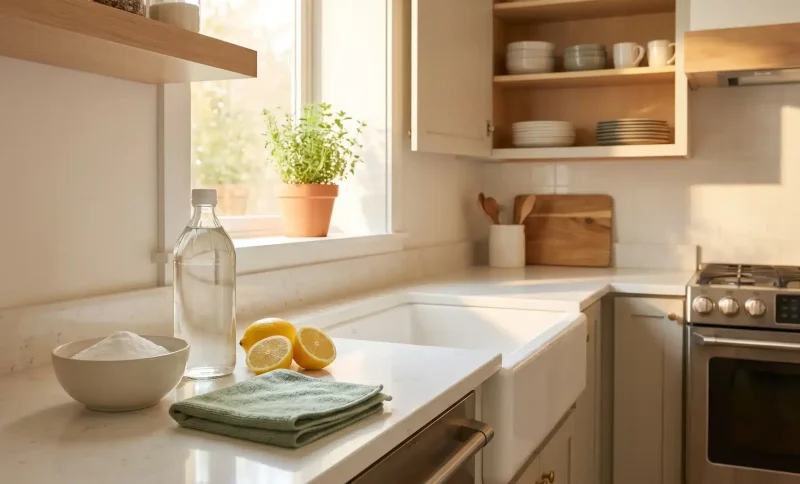
Kitchens get used hard. Grease builds up in places you forget to check, crumbs collect in corners you never see, and before long, everything feels a little off even if it looks fine at a glance. A deep clean does not have to mean blasting everything with harsh chemicals or turning your home into a sterile lab. There is a way to reset your kitchen so it feels fresh, works better, and does not leave you wondering what you just sprayed on your counters.
A healthier approach leans on simple ingredients, better habits, and a bit of strategy. It also helps to stop thinking of deep cleaning as an all day punishment and start treating it like a controlled reset you can move through with purpose.
Start With a Reset
Before you touch a sponge, clear the space. That means counters, stovetop, and anything sitting out that does not need to be there. You cannot clean around clutter without missing half the mess, and you will waste energy moving things twice. Put everything back where it belongs or group it in one spot so you can deal with it after.
Once the surfaces are open, take a second to assess what actually needs attention. Not everything is equally dirty. The stovetop and sink usually need the most work, followed by cabinet fronts and handles. Knowing where to focus keeps you from scrubbing areas that are already fine while ignoring the ones that are not.
Make It Feel Manageable
There is a reason people avoid deep cleaning. It feels endless. The easiest way around that is to break it into a sequence you can follow without overthinking. Start high and work your way down. Wipe cabinet tops, then doors, then counters, then appliances, then the floor. It keeps dirt from falling onto places you already cleaned.
This is also where mindset matters. Getting motivated to clean is less about waiting for a burst of energy and more about lowering the barrier to starting. Put on something you like in the background, set a loose timer, and begin with one surface. Once you get moving, the resistance usually drops. The key is not making it a dramatic event.
Use Simple, Safer Cleaners
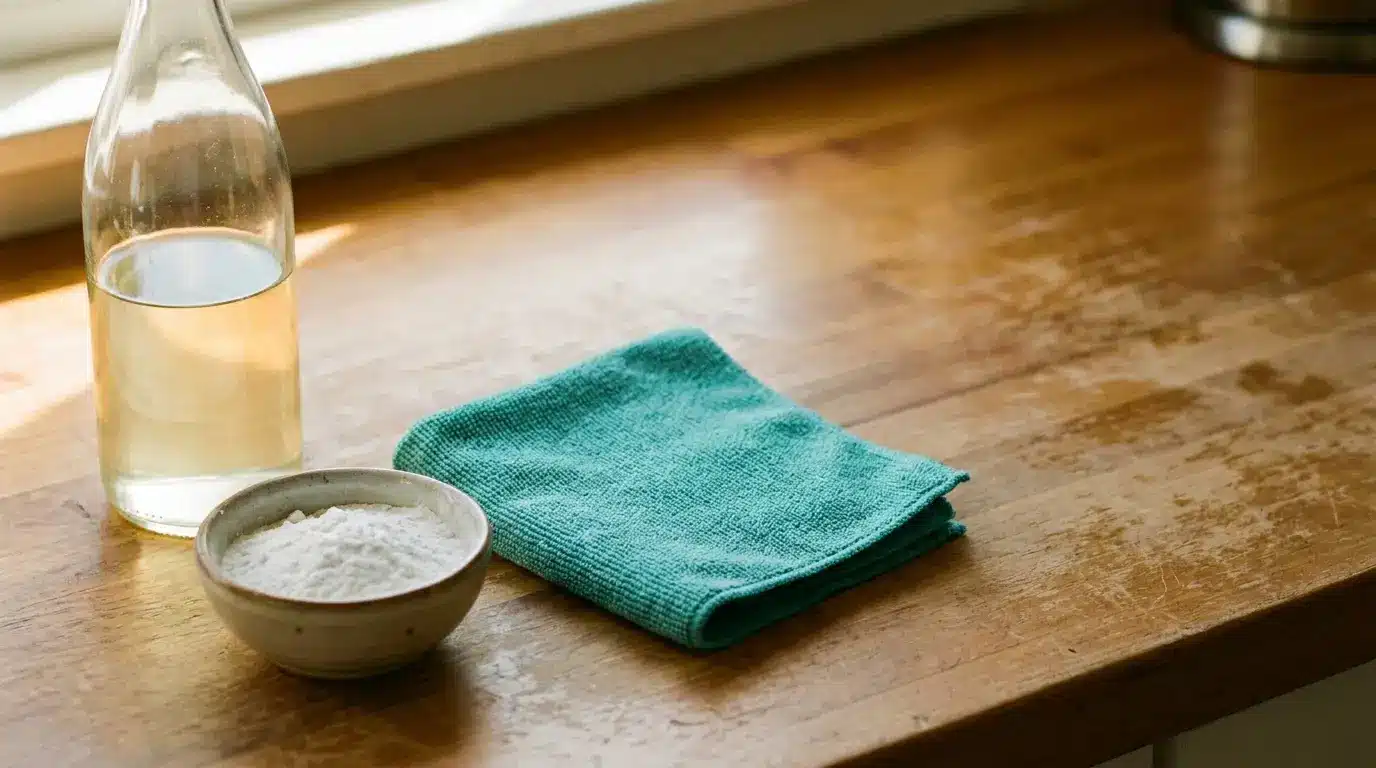
You do not need a shelf full of specialty sprays. A mix of warm water, a little dish soap, and white vinegar handles most kitchen grime. Baking soda helps with tougher spots like baked-on residue in the oven or stubborn stains in the sink. These combinations work because they break down grease and lift debris without leaving behind heavy chemical residue.
For surfaces like stone countertops, skip the vinegar and stick with a mild soap solution. It is effective without risking damage. Microfiber cloths are worth using here. They grab more dirt than standard paper towels and reduce the need to go over the same spot multiple times.
Cabinet fronts deserve more attention than they usually get. Oils from hands build up slowly, especially around handles. A damp cloth with a small amount of soap cuts through that layer without stripping the finish. Take your time here. It makes the whole kitchen look newer once those surfaces are clean.
Rethink the Dishwasher Routine
The dishwasher is supposed to clean, but it can get surprisingly dirty itself. Food particles, soap residue, and hard water buildup all collect over time. Start by removing and rinsing the filter. It is usually at the bottom and easy to lift out. If you have never done it, you might be surprised at what is sitting there.
Run an empty cycle with a cup of vinegar on the top rack to break down buildup. Follow that with a light sprinkle of baking soda across the bottom and a short hot cycle. It helps with odors and leaves the interior looking brighter.
When you go back to normal use, consider switching to eco-friendly dishwasher detergent tablets. They tend to rinse cleaner and avoid the heavy chemical smell some traditional pods leave behind. It is a small change, but it aligns with the overall goal of keeping the kitchen cleaner without adding unnecessary residue.
Deep Clean the Sink and Stove
The sink and stove are where most of the visible wear shows up. For the sink, sprinkle baking soda across the surface and scrub with a damp sponge. It lifts stains and neutralizes odors without scratching. Rinse thoroughly, then finish with a quick wipe of vinegar if the material allows it.
The stovetop depends on what you are working with. For gas ranges, remove grates and soak them in warm soapy water while you clean the surface underneath. For electric or glass tops, use a gentle scraper for the stuck on residue, then follow with a soft cloth and cleaner. Patience matters more than force here. Scrubbing too hard can damage the finish, which creates more problems later.
Do not forget the range hood and its filter. Grease builds up there faster than most people realize. A soak in hot water with dish soap usually loosens everything enough to rinse clean.
Finish With the Floor
By the time you reach the floor, most of the debris has already fallen there, which is exactly what you want. Sweep first, paying attention to edges and corners where crumbs collect. Then mop with a simple solution of warm water and a small amount of cleaner suited for your flooring type.
Avoid over soaking the floor. More water does not mean cleaner. It often leaves streaks and can damage certain materials. A damp mop that is regularly rinsed works better and dries faster.
Once the floor is done, take a quick look around. You will notice small things that stand out now that everything else is clean. Wipe them down and put any remaining items back in place.
A Clean Kitchen That Stays That Way
Deep cleaning is satisfying, but it works best when it sets up an easier routine going forward. Wiping counters daily, rinsing the sink at night, and running the dishwasher before it gets overloaded all keep things from sliding back into chaos. It is not about perfection. It is about keeping the baseline high enough that the next deep clean feels like a refresh instead of a full reset.
The Part That Matters
A healthier kitchen is not about perfection or strict rules. It is about making the space work better for you without adding unnecessary stress or chemicals. Once you see how manageable it can be, the idea of deep cleaning stops feeling like something to avoid and starts feeling like something you can handle when it needs to be done.