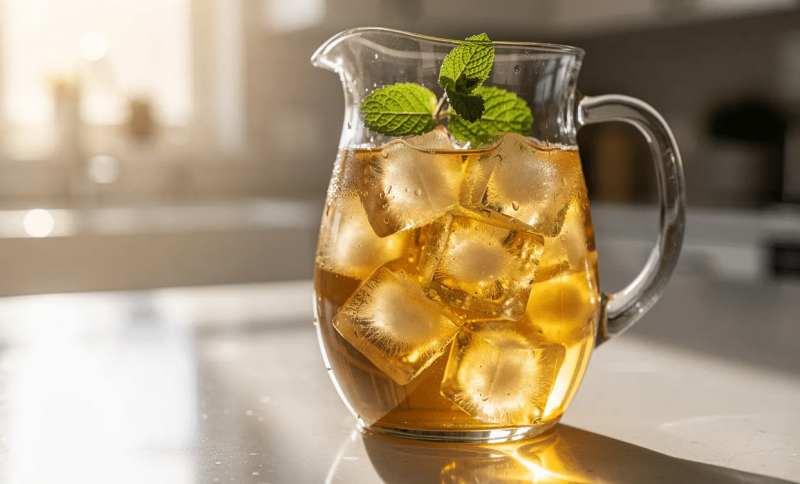
Learning how to make iced herbal tea is mostly about controlling four things: ingredient identity, brewing temperature, steeping time, and ice dilution. Once those basics are handled, whole dried leaves can produce a clear, refreshing drink with very little effort.
This guide focuses on loose tea and whole dried herbal ingredients rather than powders, bottled drinks, capsules, or concentrated extracts. Many single-herb infusions are naturally caffeine free, although blended products should always be checked for tea leaves or other added ingredients. The methods below work for many clearly labeled herbs, but the package directions for the specific product should always come first.
To make iced herbal tea, brew the selected herb according to its product-specific directions, remove or strain the plant material, refrigerate the tea promptly in a clean covered container, and serve it over ice. Because herbal ingredients vary, the correct quantity, water temperature, and steeping time depend on the particular leaf, flower, root, fruit, or blend.
Why Whole Leaves Work Well Over Ice
Whole dried leaves and loose-leaf blends behave differently from powders and finely cut ingredients. The leaves have more room to circulate in hot water, and they are usually easier to remove with a mesh strainer. That can reduce fine sediment in the finished cold tea and make it easier to adjust the flavor from one batch to the next.
Whole leaves also let you inspect the ingredient before brewing. You can check the color, size, shape, aroma, and overall condition of the plant material rather than relying on an unidentified powder. This does not mean whole leaves are automatically stronger, safer, or better than tea bags. Tea bags are convenient and can produce an excellent pitcher of iced tea when the product is clearly labeled and prepared according to its directions.
What Herbal Tea Works Best for Iced Tea?
The best herbal tea for iced tea depends mainly on flavor preference and the preparation requirements of the ingredient. Mint can taste bright and cooling, hibiscus is tart and colorful, chamomile is floral, and lemon balm has a mild citrus-like character. Clearly identified whole dried leaves can also work well when they are brewed according to their specific directions.
Choose an herb or blend with a complete label, clear brewing guidance, and a flavor that remains pleasant after chilling. Avoid assuming that all loose tea, tea bags, flowers, roots, fruit pieces, and whole leaves use the same temperature or steeping time.
Choose Clearly Identified Herbal Ingredients
Before heating water, check the package for enough information to identify what you are brewing. Useful details include:
• Common product name
• Botanical name
• Plant part used, such as leaf, flower, peel, root, or fruit
• Complete ingredient list
• Country or region of origin
• Net weight
• Storage instructions
• Organic certification, when applicable
Clearly labeled products make repeatable home brewing much easier. Dried leaves, fruit powders, herbal extracts, capsules, and concentrated supplements are different product forms and should not be treated as interchangeable.
Fresh water with a neutral taste generally produces the cleanest flavor. Filtered water can be helpful where tap water has a strong mineral or chlorine taste, but it is not required in every home.
Shoppers looking for a single-ingredient example can review clearly labeled organic dried soursop leaves for tea, including the botanical identity, origin, net weight, and preparation directions.
Follow Product-Specific Brewing Directions
There is no single water temperature, leaf quantity, or steeping time that works for every herbal tea. Flowers, leaves, roots, fruit pieces, tea bags, and loose tea can require different methods. Start with the instructions provided for the specific ingredient or product, then adjust only for taste and serving style.
For one whole-leaf example, PUREXA Organic Dried Soursop Leaves for Tea contains organic whole dried Annona muricata leaves. The 1.06 oz / 30 g pouch contains approximately 100 leaves sourced from Northeast Thailand. The product is USDA Organic and naturally caffeine free.
The preparation directions call for 3–4 whole leaves per 250 mL of water. Heat the water to 212°F / 100°C, pour the hot water over the leaves in a mug or teapot, cover the vessel, steep for 5–7 minutes, and then remove or strain the leaves. These directions apply to that specific product and should not be assumed to work for every herb.
Plan for Ice Dilution
Ice cubes gradually dilute tea as they melt. The simplest way to preserve flavor is to brew the tea according to its normal directions, cool it, chill it in the fridge, and then serve it over a moderate amount of fresh ice.
Tea-infused ice cubes are another useful option. Freeze a small portion of previously brewed tea in an ice tray and use those cubes in place of some regular ice. As they melt, they add tea rather than plain water.
Avoid trying to create strength by greatly increasing the herb quantity or extending the steeping time far beyond the recommended range. More leaves and a longer steep do not always produce better iced herbal tea. They can instead create a harsh, bitter, or unbalanced flavor.
Hot-Brew-and-Chill Method
The hot-brew-and-chill method is the most reliable starting point for whole dried leaves.
1. Measure the herb and water according to the product directions.
2. Heat fresh water to the specified temperature.
3. Pour the hot water over the leaves in a heat-safe mug, teapot, or covered jar.
4. Cover the vessel during steeping to retain aroma.
5. Remove tea bags or strain loose leaves when the recommended time is reached.
6. Add honey, sugar, or another sweetener while the tea is still warm, if desired.
7. Transfer the brewed tea to a clean, covered container and refrigerate it promptly.
8. Serve the chilled tea over fresh ice and taste before adding more water or sweetener.
This method gives the tea time to cool without relying on a large amount of ice. It is also easy to scale from one glass to a small pitcher.

Quick Pour-Over-Ice Method
The quick pour-over-ice method works when you want a cold drink sooner. Brew the herb with hot water according to its normal directions, but prepare only enough tea for the amount of ice you plan to use. After straining, pour the hot tea into a heat-safe pitcher containing ice and stir until chilled.
Because products vary, do not automatically use half the usual water or double the herb quantity. A safer approach is to keep the recommended leaf-to-water ratio and make a smaller hot batch that will be served over a measured amount of ice. Taste the first glass, then adjust the next batch if necessary.
Any leftover tea should be transferred to a clean, covered container and refrigerated promptly rather than being left on the counter.
Optional Flavor Additions
Plain herbal iced tea can be refreshing on its own, but simple additions can change the flavor without overwhelming the base. Popular options include:
• Lemon or lime slices
• Fresh mint
• Thin slices of ginger
• Orange slices
• Fresh berries or peach slices
• A small amount of honey, sugar, or maple syrup
• Cold sparkling water added just before serving
Choose additions according to taste rather than health claims. Mint can taste bright and cooling, chamomile is usually floral, hibiscus is tart, and lemon balm has a light citrus-like character. Flavor varies with the ingredient, growing conditions, processing, storage, and brewing method.
Add fruit and fresh herbs close to serving time. Sweeteners dissolve more easily while the tea is still warm.
A Practical Iced Soursop Tea Example
Soursop leaf tea has a mild, earthy, herbal flavor that can be served hot or chilled. To prepare the PUREXA whole leaves as iced tea, begin with the standard hot-brew directions rather than using an untested cold infusion.
Use 3–4 whole leaves per 250 mL of water. Heat the water to a full boil, pour it over the leaves, cover, steep for 5–7 minutes, and strain. Transfer the tea to a clean, covered container, refrigerate until chilled, and serve over ice. Optional additions can include a slice of lime, a small amount of honey, or a few fresh mint leaves.
For exact quantities, cooling guidance, and serving ideas, this iced soursop tea recipe provides a complete step-by-step example.
Can Herbal Tea Be Cold Brewed?
Some herbal ingredients can be cold brewed, but not every botanical product is intended for that method. Cold infusion may produce a softer flavor with certain herbs, yet the correct approach depends on the ingredient, plant part, and manufacturer directions.
When a product specifically calls for boiling or very hot water, use the hot-brew-and-chill method. That is the recommended approach for the PUREXA whole dried soursop leaves described above.
Refrigeration and Batch Preparation
Brewed herbal tea should be handled with clean equipment and refrigerated promptly. Use clean pitchers, jars, strainers, and spoons, and keep the finished tea covered in the refrigerator.
Prepare only the amount you expect to use within a short period. Keep the finished tea covered in the refrigerator, and discard it if its aroma, appearance, or taste changes unexpectedly. Add cut fruit, citrus, and fresh herbs close to serving time rather than storing them in the pitcher.
For faster cooling, divide a large batch among smaller heat-safe containers before refrigerating. Avoid leaving brewed tea at room temperature for hours, especially in warm weather.

Common Iced Herbal Tea Mistakes
• Using unidentified herbs. A package should state what the ingredient is and which plant part is included.
• Assuming all herbs brew the same way. Follow ingredient-specific directions instead of applying one universal method.
• Adding too much ice. A fully ice-packed glass can quickly dilute even a well-prepared tea.
• Over-steeping or overloading leaves. More herb and more time do not guarantee better flavor.
• Leaving tea uncovered. An open pitcher can absorb refrigerator odors and is harder to keep clean.
• Leaving brewed tea at room temperature. Refrigerate it promptly after brewing and straining.
• Confusing brewed tea with supplements. Whole leaves, extracts, powders, and capsules are not interchangeable.
Final Iced Herbal Tea Checklist
• Confirm the herb, botanical identity, and plant part on the label.
• Follow the product-specific quantity, water temperature, and steep time.
• Use fresh water and a clean brewing vessel.
• Cover the tea while it steeps.
• Remove tea bags or strain whole leaves at the recommended time.
• Plan for ice dilution by chilling first or using tea-infused ice cubes.
• Refrigerate the brewed tea promptly in a clean, covered container.
• Add fruit, citrus, mint, ginger, or sweetener lightly.
• Serve over fresh ice, taste, and adjust.
Once the ingredient is clearly identified and the brewing directions are followed, making iced herbal tea becomes a simple and repeatable kitchen routine. Start with a small batch, record the quantity and steep time you used, and adjust future pitchers according to taste.