


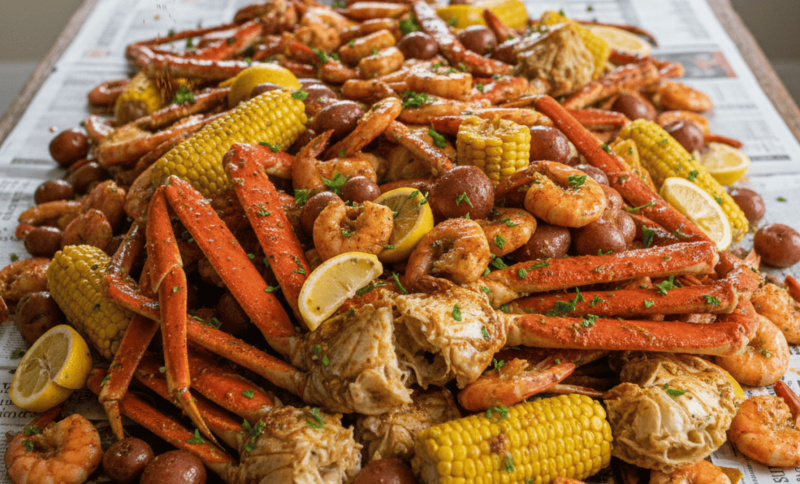
I have a serious obsession with a good Seafood Boil. The kind where I keep going back for one more shrimp, even when I’m already full. And don’t even get me started on the buttery, spicy goodness left at the bottom of the plate!
I’ve made this dish enough times to know that the little things really matter. Sometimes I add more garlic, sometimes I turn up the heat, but I never get tired of making it.
If you love seafood as much as I do, you’re going to enjoy this one!
What is a Seafood Boil?
A seafood boil is a traditional Southern meal made by cooking shrimp, crab, crawfish, potatoes, corn, and smoked sausage in a large pot of seasoned water or broth.
Seafood boils have deep roots in Southern coastal cooking. Louisiana-style boils feature bold Cajun spices, while Low Country boils in the Carolinas and Georgia often use milder seasonings.
The secret to a flavorful seafood boil lies in its broth. Cajun seasoning or Old Bay, garlic, onions, lemon, and bay leaves add flavor without overpowering the seafood’s natural sweetness.
Cooking time matters just as much as seasoning. Potatoes should be fork-tender, corn slightly firm, and shrimp juicy rather than chewy. The right fish internal temperatures will also keep seafood safe without overcooking it.
I’ve always loved how everyone gathers around a shared tray, cracking crab legs and passing garlic butter sauce. I usually add extra shrimp because it’s always the first to disappear!
IngredientsYou’ll NeedBest Seafood to Use
Veggies, Sausage & Add-Ins
Seasonings & Aromatics
|
Tip: Stick to two or three types of seafood. Different seafood has different cooking times, so keeping it simple ensures everything cooks perfectly.
Recipe Notes
|
Information |
Details |
|
Prep Time |
20 minutes |
|
Cook Time |
30–35 minutes |
|
Total Time |
50–55 minutes |
|
Servings |
4–6 people |
|
Difficulty |
Easy |
|
Course |
Main Dish |
|
Cuisine |
Cajun / Southern |
How to Make a Seafood Boil Step by Step
The magic happens in four simple steps. Master each one, and you’ll have a flavorful seafood boil that looks and tastes like a pro made it.
1. Build the Flavorful Boiling Broth
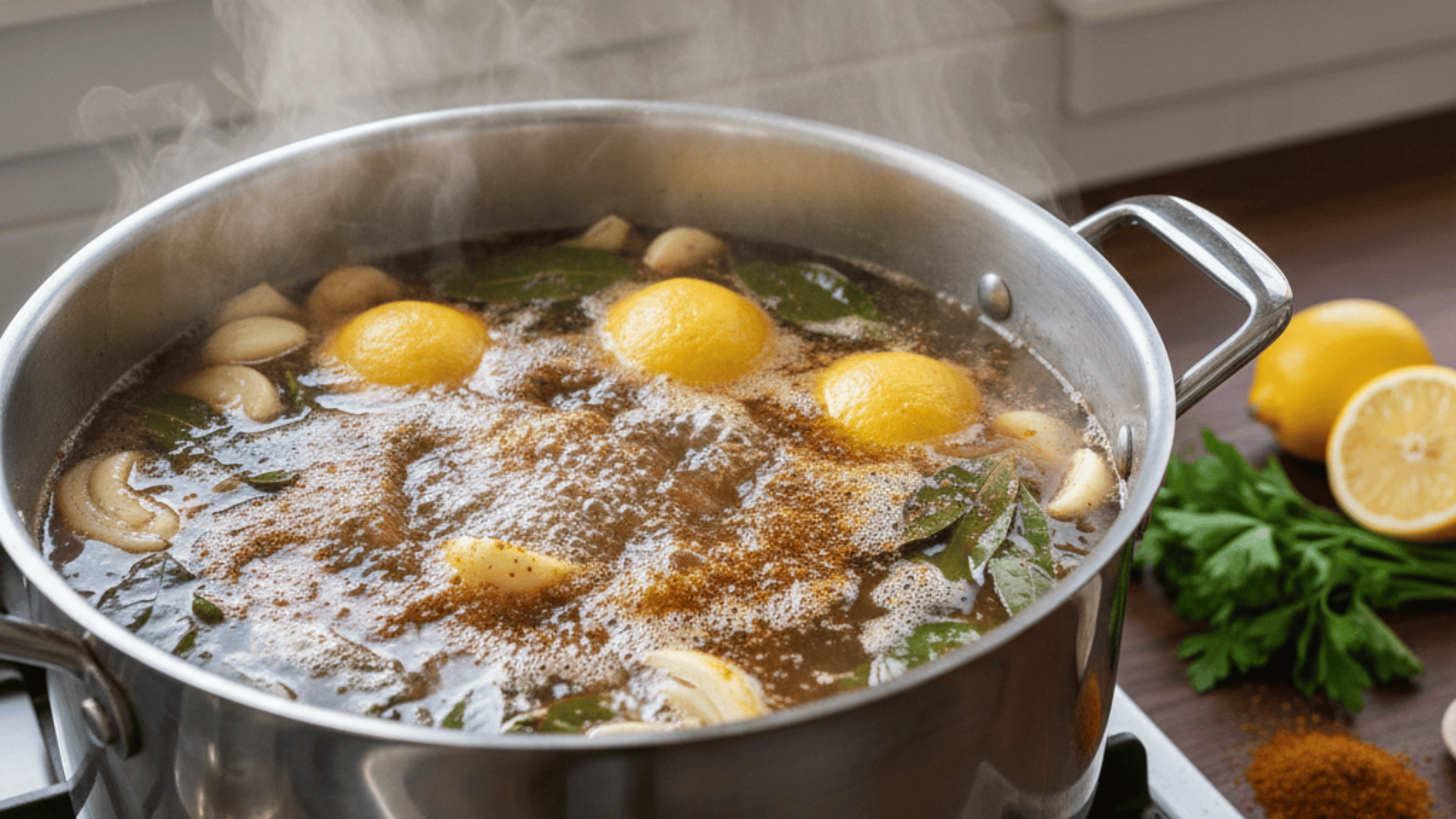
Fill a large stockpot halfway with water or seafood stock, then add seasoning, crushed garlic, onion quarters, lemon halves, and bay leaves. Bring to a vigorous boil.
I taste the broth before adding anything else. It should taste very boldly seasoned (almost excessively salty), because the food won’t absorb all that seasoning. A weak broth makes a disappointing boil.
2. Cook Potatoes, Corn & Sausage
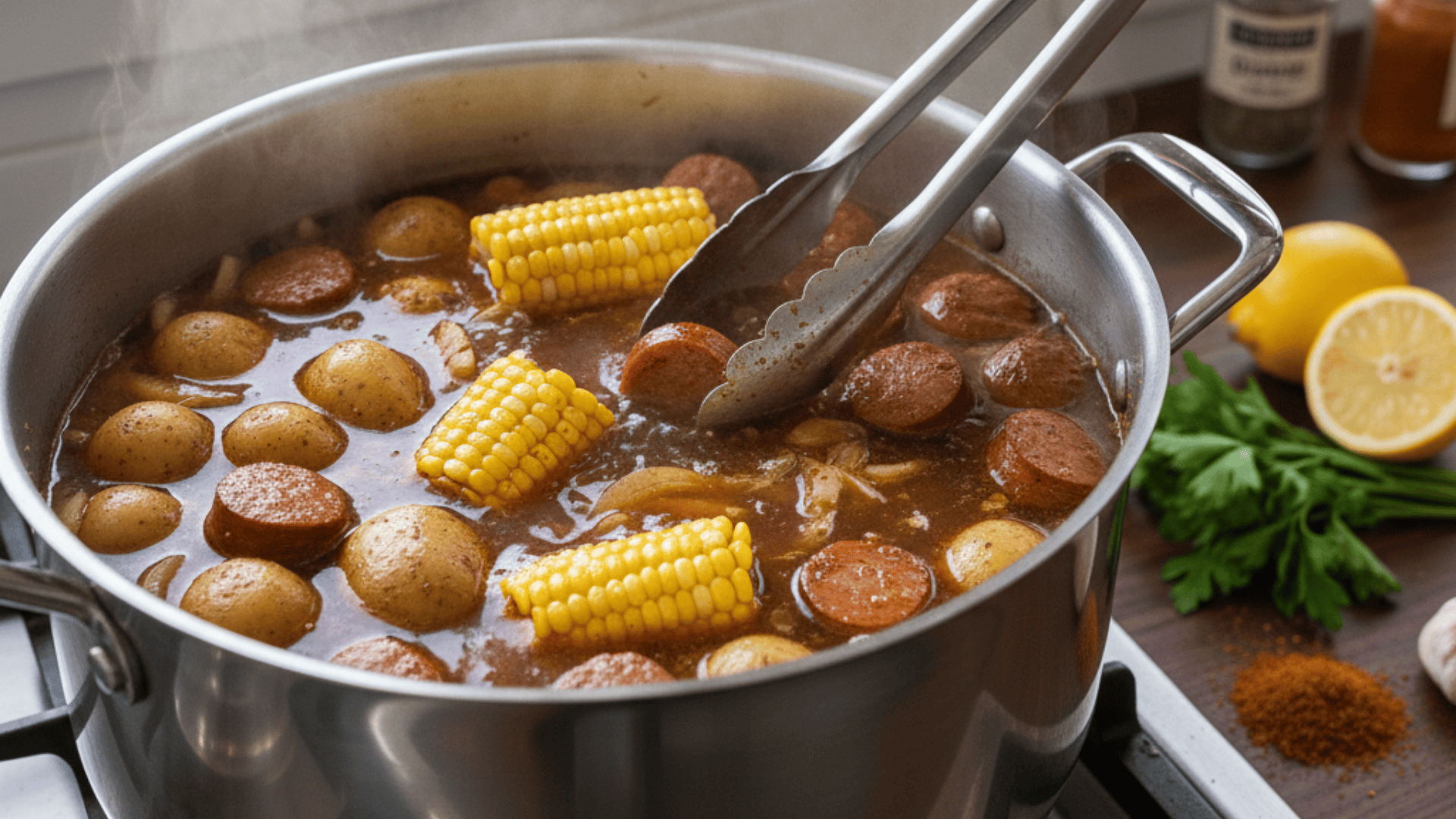
Add the baby potatoes first and cook for 10–15 minutes until just tender. The exact time needed to boil potatoes depends on their size. Then add corn pieces, sliced sausage, and peeled hard-boiled eggs if using them. Cook for another 5–7 minutes to absorb the flavors.
Pro Tip: Cut potatoes into similar sizes so they cook evenly. Smaller pieces mean faster cooking.
3. Add the Seafood at the Right Time
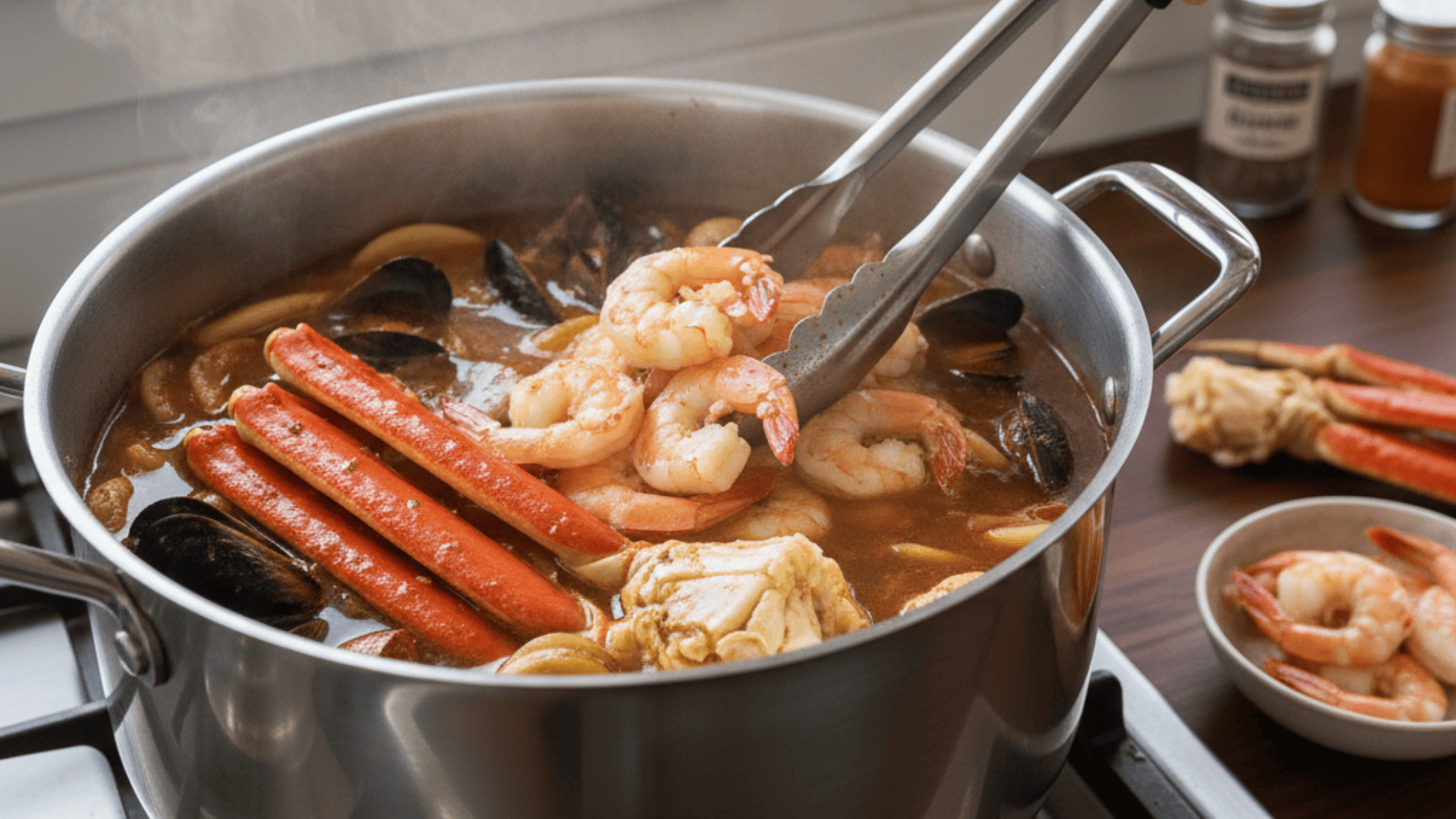
Add seafood last since it cooks fast, starting with whatever takes the longest so everything finishes together. Lobster tails need 5–10 minutes, depending on size.
Crawfish need about 7 minutes once the water returns to a boil. Clams and mussels need 5–7 minutes and are done when shells open. Crab legs need about 5 minutes. Shrimp need 2–3 minutes.
Pro Tip: Watch closely. Shrimp turn pink and opaque when done, while lobster meat becomes firm, pearly, and opaque once. Overcooking will make seafood rubbery.
4. Drain & Serve
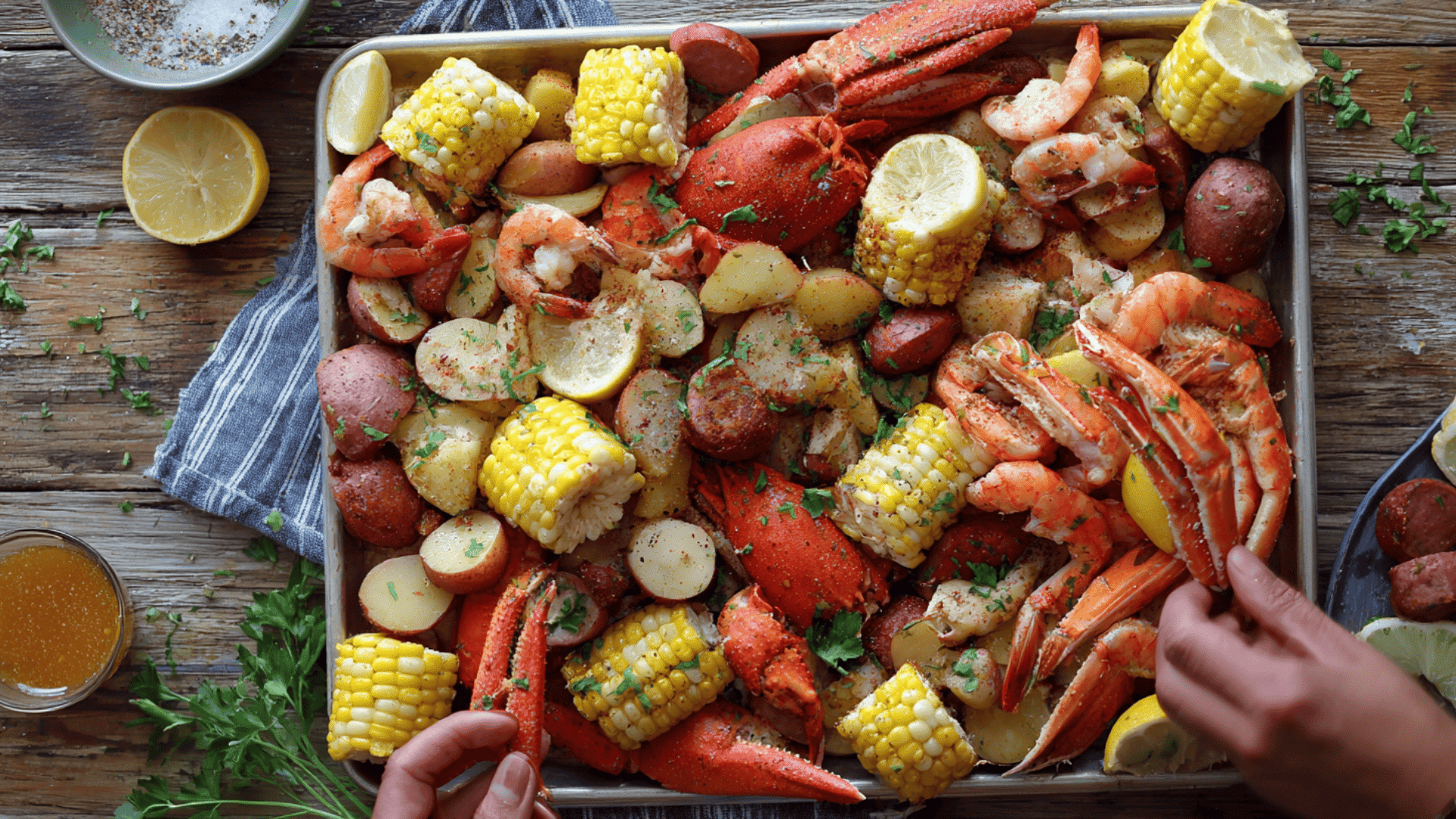
Carefully drain the pot and let everything rest for 2 minutes, then spread over a broad tray or a table protected with newspaper and a food-safe serving layer.
My finishing touches are lemon wedges, fresh parsley, additional seasoning, and a spicy ranch for dipping. And that short rest lets the flavors settle and makes everything easier to handle!
Nutrition Facts
|
Nutrient |
Per Serving |
|---|---|
|
Calories |
420–500 |
|
Protein |
35–40g |
|
Carbohydrates |
30–35g |
|
Fat |
18–22g |
|
Saturated Fat |
6–8g |
|
Cholesterol |
200–250mg |
|
Sodium |
1,200–1,500mg |
|
Fiber |
3–4g |
|
Sugar |
4–5g |
Note: Nutritional values vary based on seafood types, sausage, and the amount of butter used. Adding garlic butter sauce will increase calories and fat content.
Garlic Butter Sauce for Your Seafood Boil
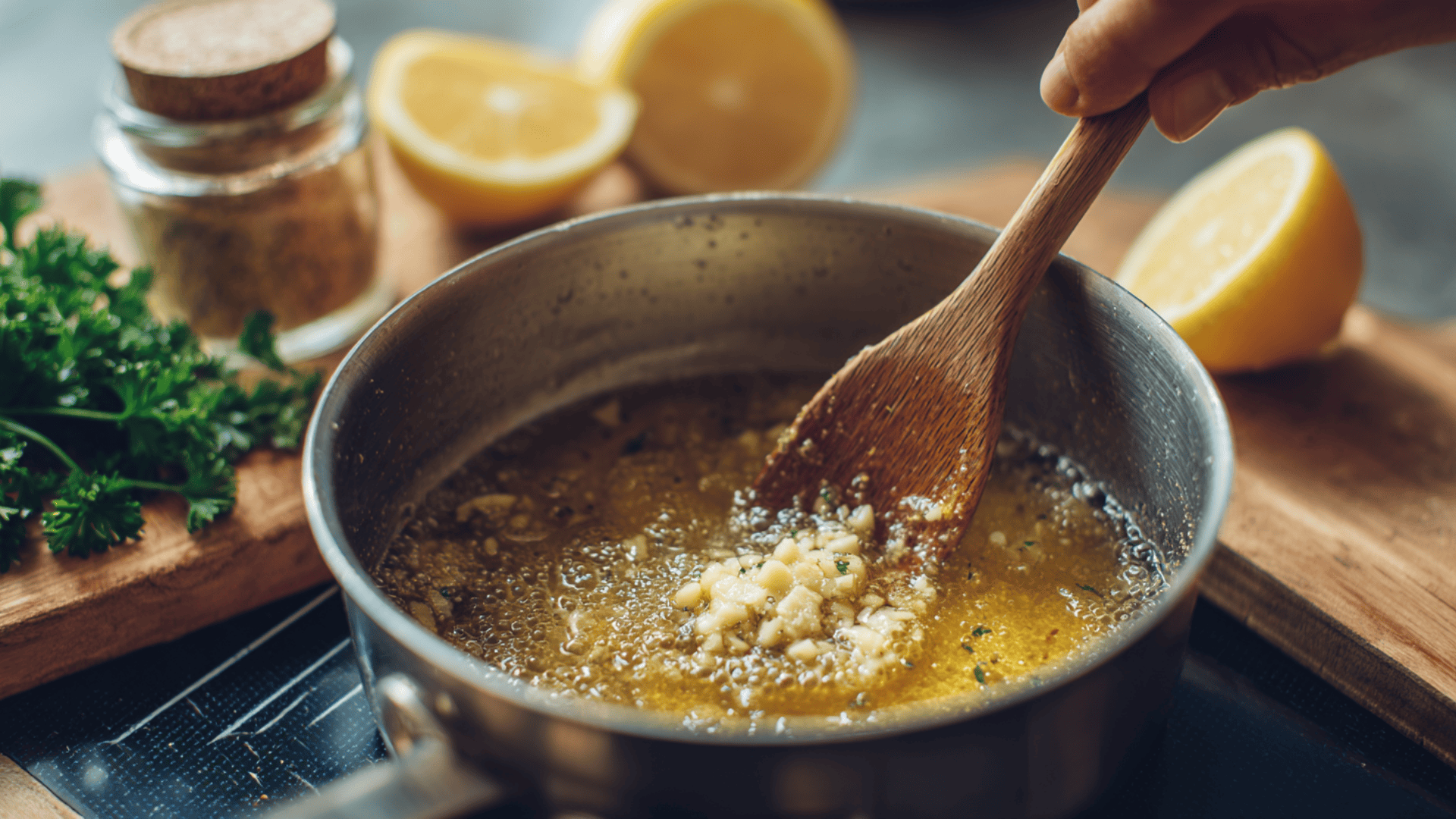
A good sauce makes all the difference. This rich garlic butter sauce brings restaurant-level flavor to your homemade feast. You can toss it with drained seafood and vegetables in a large bowl for full coverage, or drizzle it over the platter right before serving.
Ingredients You’ll Need
|
Instructions
Step 1: Melt butter in a small saucepan over medium heat.
Step 2: Add minced garlic and stir for about 30 seconds until fragrant.
Step 3: Squeeze in fresh lemon juice and stir to combine.
Step 4: Add Cajun seasoning and smoked paprika. Mix well.
Step 5: Let the sauce simmer for 2–3 minutes. This mellows the raw garlic and lets the spices bloom.
Step 6: Remove from heat and stir in fresh parsley.
Pro Tip: Always serve extra sauce on the side for dipping. Trust me, people will want more.
Cajun Seafood Boil Variation
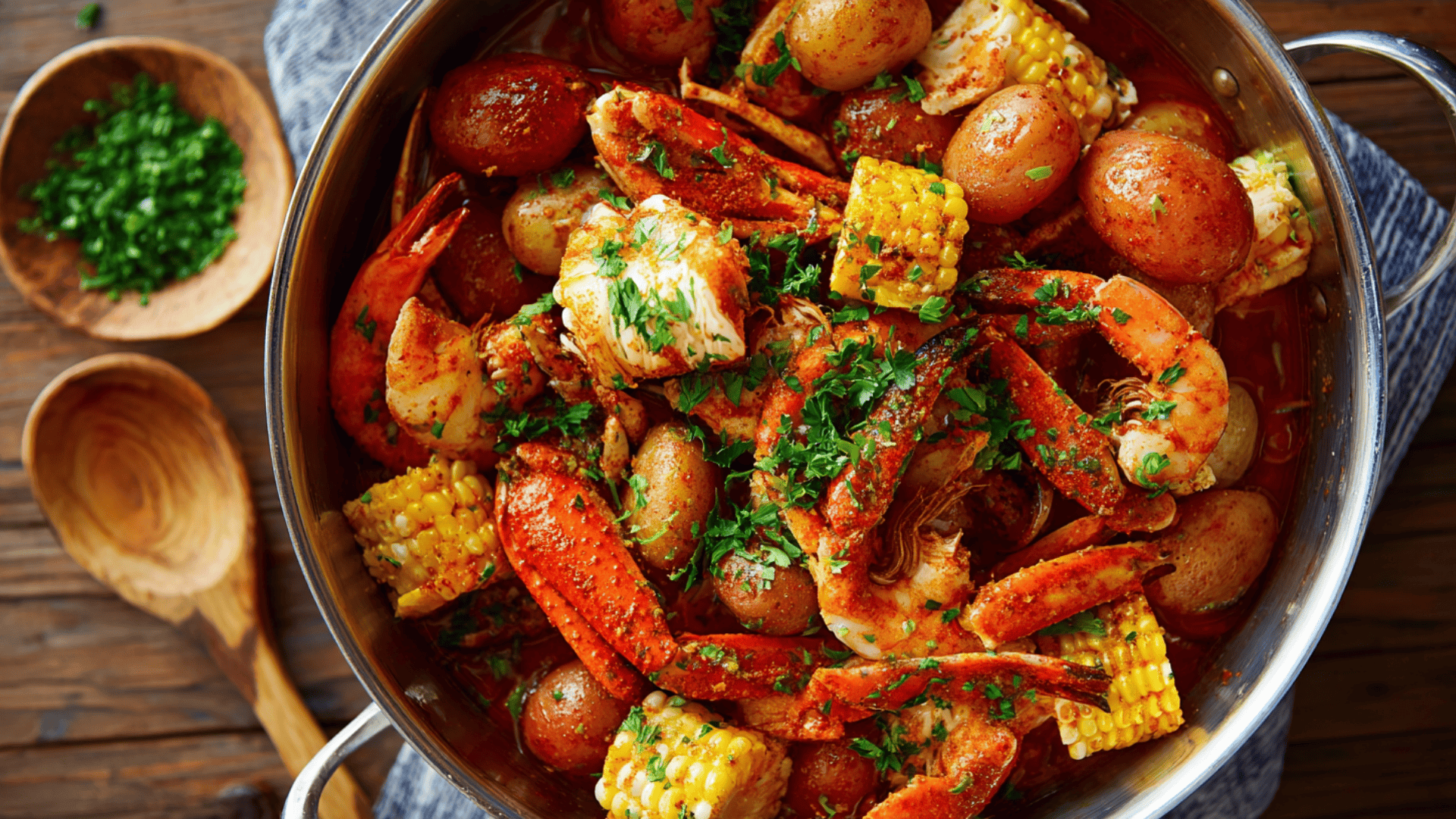
For more heat, this version adds a bold homemade seasoning blend and spicy garlic butter. It’s buttery, messy, and SO GOOD!
Once you make the sauce, you can use it three ways: toss it with drained seafood in a large bowl, serve everything in a bag and shake it up, or drizzle it over your platter with extra on the side.
Ingredients You’ll NeedCajun Seasoning Blend Ingredients
Cajun Garlic Butter Sauce Ingredients
|
Instructions
Step 1: Mix all Cajun seasoning blend ingredients in a small bowl. Set aside.
Step 2: Melt butter in a saucepan over medium heat.
Step 3: Add minced garlic and sauté for 30 seconds, until fragrant.
Step 4: Stir in Cajun seasoning blend and mix until thoroughly combined.
Step 5: Add lemon juice and hot sauce (if using). Stir well.
Step 6: Simmer for 2–3 minutes to let flavors meld together.
Step 7: Remove from heat and add fresh parsley.
Pro Tip: Many modern Cajun seafood boil recipes serve everything in a bag with this buttery sauce. It’s messy, flavorful, and absolutely delicious.
Pro Tips & Mistakes to Avoid
Want your seafood boil to turn out perfect every time? Avoid these common mistakes and follow these simple tips for the best results.
-
Season the Water Heavily:Bland broth equals bland food. Taste before cooking and adjust.
-
Use a Big Enough Pot: Overcrowding leads to uneven cooking. Cook in batches if needed.
-
Stick to 2–3 Seafood Types: Too wide a variety means different cooking times and overcooked seafood.
-
Try the “boil in A Bag” Method: Transfer everything to an oven-safe bag with garlic butter and roast for extra flavor.
-
Go Indoors or Outdoors: Use your stovetop for small batches or a propane burner for big crowds.
Serving Ideas & Pairings
Make your seafood boil a complete meal with these easy sides and drinks. Here are four perfect pairings that complement the rich, bold flavors.
1. Crusty French Bread
No seafood boil is complete without bread. Crusty French bread is perfect for soaking up all that garlic butter and seasoned juices left on the tray. Tear off a piece and mop up every last drop of flavor.
2. Creamy Coleslaw
Cool and crunchy coleslaw balances the rich, spicy seafood boil perfectly. The creamy texture and tangy flavor refresh your palate between bites. It’s a classic Southern pairing that never disappoints.
3. Light Beer or Chilled White Wine
A cold light beer, like a lager or pilsner, cuts through the richness and spice. Prefer wine? Go for a chilled Sauvignon Blanc or Pinot Grigio. Both complement seafood beautifully without overpowering it.
4. Lemony Iced Tea
For a refreshing non-alcoholic option, lemony iced tea is ideal. The citrus notes match the lemon in your boil, while the cold sweetness cools down the Cajun heat. Perfect for summer gatherings.
Storage, Reheating & Food Safety
Seafood leftovers need a little extra care to stay fresh and safe to eat. Here’s how to store, reheat, and handle them properly without losing their flavor or texture.
-
Refrigerate within 2 hours. Get leftovers into the fridge within 2 hours, or within 1 hour when it’s above 90°F. Anything left out longer goes in the trash.
-
Reheat Gently. Warm in a covered pan with a splash of broth or melted butter to keep it moist, until a food thermometer reads 165°F.
-
Avoid long microwaving. It makes seafood rubbery and tough. Use short intervals if needed.
-
Discard unopened shellfish. Clams or mussels that didn’t open during cooking aren’t safe to eat. That’s the same rule FDA gives.
-
When in doubt, throw it out. Trust your nose if it smells off; don’t risk it.
Final Thoughts
Making a seafood boil at home is easier than it looks. With one big pot, fresh seafood, and the right seasonings, you can create an impressive meal that brings everyone together.
It’s customizable, perfect for sharing, and always a crowd-pleaser. No matter if you go with the classic garlic butter version or the bold Cajun seafood boil variation, you’re in for a treat.
Don’t be afraid to experiment with different seafood, spice levels and sides until you find your perfect combination.
Now it’s your turn to get cooking! Try this recipe for your next family dinner or summer gathering. We’d love to hear how it turned out. Leave a rating below, share your photos on social media, and tag us.
Frequently Asked Questions
Can You Use Frozen Seafood for a Boil?
Yes. Frozen shrimp, crab legs, and lobster tails all work. Thaw them overnight in the refrigerator, or thaw them sealed in a plastic bag under cold water before cooking.
What is the Difference Between a Clam Bake and a Seafood Boil?
The cooking method. A clam bake steams clams, lobster, and corn over hot stones under seaweed, while a seafood boil cooks everything in one pot of seasoned water.
How Much Seafood Do You Need Per Person for a Seafood Boil?
Plan for half a pound of shrimp and half a pound of crab per person. Adjust quantities based on appetites, other seafood choices, and sides.