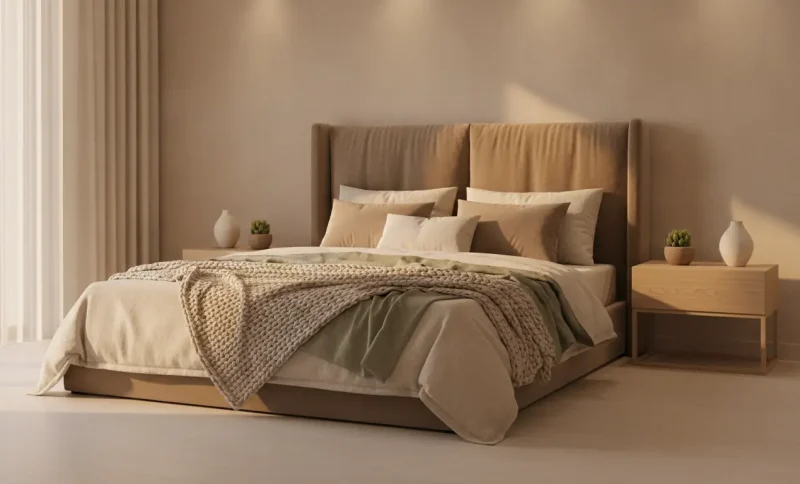
A queen bed is one of those purchases that feels simple right up until you’re standing in the doorway, watching two delivery guys try to angle a 60-inch mattress around a tight corner. On paper it’s just a rectangle. In practice it sets the rhythm of the whole bedroom: how you walk around it, where the light falls, whether you stub your toe on the frame at six in the morning for the next ten years. Get it wrong and the room never quite relaxes, however nice the bedding on top. It’s the largest thing most of us own, and the one we spend roughly a third of our lives lying on, so it’s worth a little patience.
So before you fall for a headboard, it pays to ask the dull questions first. How big is the room, really? Who’s sleeping in it, and how do they sleep? The answers quietly decide everything else, which is why it’s worth slowing down over the main queen size bed options before you commit to one. Get that central piece right, and the nightstands, lamps, and dresser arrange themselves around it. Here are seven things worth checking before you buy.
Measure the Room Before the Mattress
A queen mattress is 60 inches wide and 80 long, and the frame around it usually adds a few inches on every side — so the real footprint sits closer to 64 by 86 once you count the rails and headboard. That’s a lot of floor. As a rule, leave at least 24 to 30 inches of clear space on each side you climb in from, plus a solid 36 inches on the main walking route, or the room becomes an obstacle course every morning.
And measure the way in, not just the wall. A mattress flexes a little, but a boxed frame and a rigid headboard do not, so check the doorways, the turn at the top of the stairs, and any narrow hallway before you order. A bed that fits the room but not the staircase is a frustrating afternoon waiting to happen.
Make Sure Queen Is Actually Your Size
Queen is the default for good reason: at 60 by 80 inches it sleeps two adults without taking over an average room. But it isn’t the only option, and the step up or down matters more than people expect. A full, or double, saves six inches of width but leaves two people with barely 27 inches each, about the width of a crib. A king adds another 16 inches across for real elbow room, though it needs a noticeably larger room to breathe. So is queen genuinely your size, or are you about to crowd two people onto a mattress meant for one and a half? The table below lines up the standard sizes so you can see where queen sits.
|
Size |
Dimensions |
Best for |
Smallest comfortable room |
|
Twin |
38 × 75 in |
a child or single sleeper |
about 7 × 10 ft |
|
Full / Double |
54 × 75 in |
one adult, tight for two |
about 9 × 10 ft |
|
Queen |
60 × 80 in |
two adults |
about 10 × 10 ft |
|
King |
76 × 80 in |
two adults with space to spare |
about 12 × 12 ft |
Pick a Frame That Fits How You Live
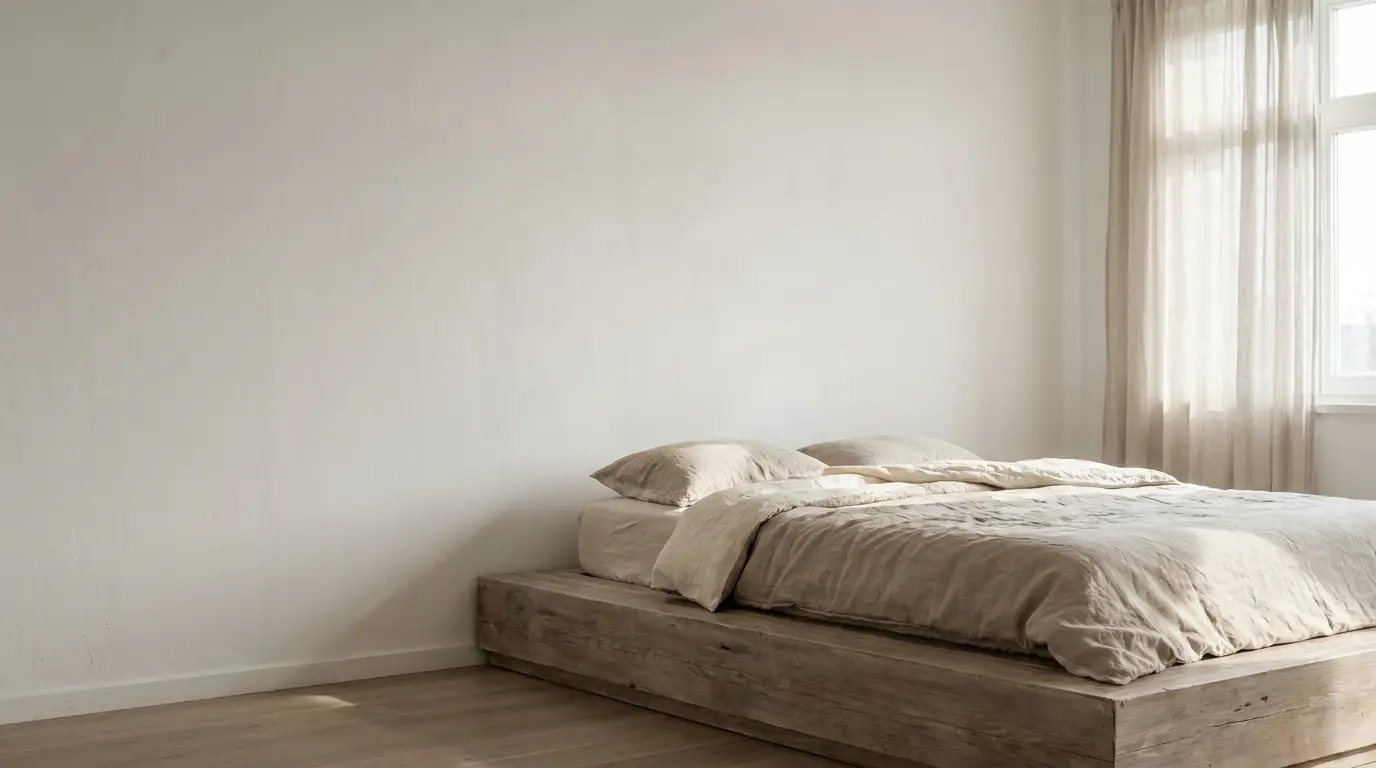
The frame is where function meets floor space. A platform bed holds the mattress on slats with no box spring, sits low and clean, and suits smaller or more modern rooms. A panel bed with a footboard reads traditional and carries more visual weight, so it wants a larger room to balance it out. If storage is tight, a frame with built-in drawers or a lift-up base reclaims the dead space underneath — a standard frame leaves roughly 8 to 12 inches of clearance there, enough for low bins of off-season bedding without buying another dresser. Upholstered frames soften a room and double as a backrest if you read in bed, though pale colours show every coffee ring. Ask yourself how you’ll use the floor under the bed before anything else — that one question tends to settle the whole frame style.
Get the Height Right
Bed height is the detail nobody thinks about until their knees start complaining. Measure from the floor to the top of the mattress: around 25 inches lets most adults sit down and stand up without dropping or climbing. Low platform styles can run nearer 18 to 20 inches, which looks sleek but feels like a haul in the morning for some people. Remember the mattress adds height of its own, most run 10 to 14 inches thick, so a tall mattress on a tall frame can stack up surprisingly high once it’s all together. If anyone older or shorter shares the room, lean toward the easy-exit height rather than the dramatic low one.
Choose a Mattress Feel You’ll Sleep On
The frame gets all the attention, but the mattress is what you lie on for a third of your life, and a good one lasts 7 to 10 years. Innerspring feels bouncy and sleeps cool. Memory foam hugs and soaks up motion, which helps when one of you tosses and turns. A hybrid splits the difference, with coils under a foam top. Firmness should follow how you sleep: side sleepers usually want it softer, to cushion hips and shoulders, while back and stomach sleepers tend to want firmer support underneath. If you can, lie on it the way you actually sleep for a few minutes in the store, not a polite perch on the edge.
Mind the Headboard and Proportion
A headboard does more than look good. It anchors the bed as the focal point of the room and sets the visual weight of the whole wall. Too short and the bed looks unfinished; too tall and it can swamp a low-ceilinged room. A safe rule of thumb is a headboard rising about 14 inches above the mattress for a low profile, or 24 inches and up for a statement piece. Keep it in scale with the wall behind it, with a little breathing room at either side rather than crowding it corner to corner.
Light the Room Around the Bed
The harsh fixture in the centre of the ceiling is rarely what you want over a bed. Go for layers instead: soft ambient light overhead, task light beside the bed for reading, and a little accent light to lift a dark corner. Bedside lamps work best when the shade sits roughly at shoulder height while you’re propped up reading, and a nightstand whose top lands within a couple of inches of the mattress keeps the lamp and your phone in easy reach. Warm 2700K bulbs signal wind-down far better than cool white, and a dimmer lets you drop the brightness without leaving the covers.
The Bed You’ll Be Glad You Bought
The right queen bed isn’t the prettiest one in the showroom — it’s the one that fits the room, the sleeper, and the way you live in the space. Measure the floor and the doorway, confirm queen is your size, pick a frame for your storage and your knees, choose a mattress for how you sleep, and light the room so the bed feels calm after dark. Do that, and you stop noticing the bed in the best possible way: it just works, every morning, for years. Everything else is only pillows.
FAQ
What size room do you need for a queen bed
A queen fits comfortably in a room of about 10 by 10 feet, with room left to walk and open a closet. You can squeeze one into a 9 by 9, but you’ll lose the clear space on at least one side and the room will feel tight.
Is a queen big enough for two adults
For most couples, yes. A queen gives each person about 30 inches of width, a little less than a twin bed each. If you’re both tall or broad, or you share with kids and pets, a king’s extra 16 inches earns its keep.
Do you need a box spring with a queen bed?
It depends on the frame. Platform beds with slats need no box spring, while many traditional frames do. Check the manufacturer’s guidance, since skipping a required foundation can void the mattress warranty.
How tall should a queen bed be?
Around 25 inches from floor to top of mattress suits most people for sitting and standing. Lower platform styles look modern but sit closer to 18 to 20 inches, which can feel low if you’re up during the night.
How much space should you leave around the bed?
Aim for at least 24 to 30 inches on each side you get in from, and about 36 inches on the main path through the room. That’s enough to walk, make the bed, and open a drawer without turning sideways.