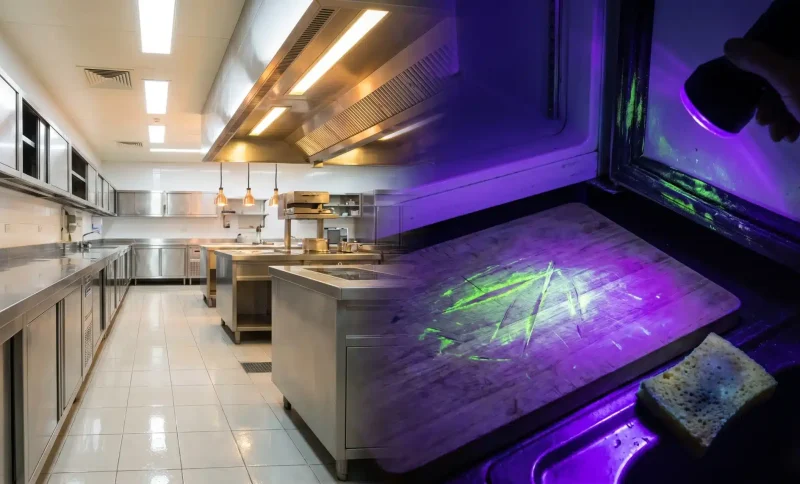
A kitchen can look spotless and still be a food safety risk. Gleaming worktops and a freshly mopped floor are a good start, but they don’t tell the whole story. Inspectors aren’t just looking at surfaces you can see, they’re checking for the things most people never think to clean.
What “Clean” Actually Means to a Food Safety Inspector
Most people clean to a visual standard. If it looks clean, it probably is clean, or so the thinking goes. Food safety inspectors work to a microbiological standard, which is a different thing entirely. A surface can look perfectly clean while still harbouring bacteria like Listeria, Salmonella or E. coli.
The difference often comes down to technique. Wiping a surface with a damp cloth can spread bacteria more effectively than removing it. Without the right cleaning products, applied correctly and left for the right contact time, you’re largely just moving contamination around.
The Areas That Catch Most Kitchens Out
Professional inspectors tend to focus on a handful of areas that home cooks and small food businesses consistently overlook. These include:
- Chopping boards. Deep knife grooves are almost impossible to sanitise by hand and are a well-known hiding place for bacteria.
- Cloth surfaces. Dish cloths and sponges are among the most contaminated items in any kitchen, often used across multiple surfaces.
- Seals and gaskets. The rubber seals on fridge doors collect food residue and mould, often invisible unless you look closely.
- Extraction canopies and filters. Grease builds up here quickly and creates both a contamination risk and a fire hazard.
- Bin areas and drain covers. Frequently touched and rarely deep-cleaned.
The Food Standards Agency’s Requirements
It’s worth noting that for small food businesses in particular, the standard expected by inspectors under the Food Standards Agency’s guidelines goes well beyond a weekly clean. Temperature control, pest proofing and documented cleaning schedules all come into play.
Inspectors score food businesses across three areas:
- How food is handled and prepared,
- The condition and cleanliness of the premises,
- How the business manages food safety through documented systems such as HACCP or Safer Food, Better Business.
The resulting score, from 0 to 5, is published publicly under the Food Hygiene Rating Scheme.
Cross-Contamination Is More Common Than People Realise
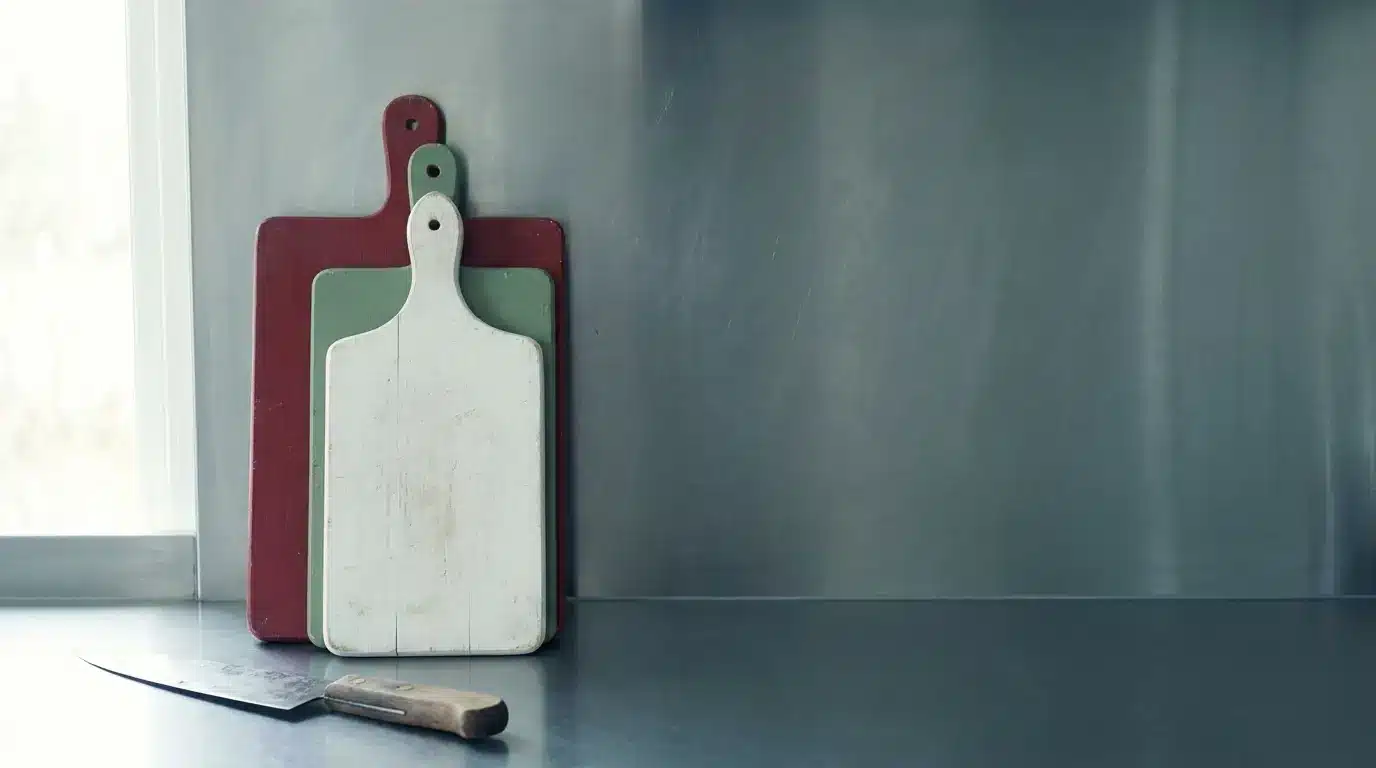
Cross-contamination is one of the most cited reasons for failed inspections and food poisoning outbreaks. It happens when bacteria from raw meat, fish or unwashed produce transfer to ready-to-eat food, either directly or via a surface or utensil.
It’s rarely a dramatic moment. More often, it’s something small: using the same knife on raw chicken and then salad vegetables, or storing raw meat on a higher fridge shelf than cooked food. These are habits that are easy to form and easy to overlook when you’re busy.
Colour-coded chopping boards exist precisely to prevent this, but only if everyone using the kitchen follows the system consistently. In professional settings, that requires training and supervision. At home, it requires deliberate effort.
When a Deep Clean Becomes Necessary
There are times when a regular cleaning routine isn’t enough. If a kitchen has had a pest sighting, a known contamination event, or simply hasn’t been professionally cleaned for an extended period, specialist intervention is the right call. Companies like ICE Cleaning offer professional kitchen deep cleaning services that go beyond what’s achievable with domestic products and effort, particularly useful for small food businesses preparing for an inspection or following an enforcement visit.
A professional deep clean will typically cover extraction systems, behind and beneath heavy appliances, tile grout, drain covers and any areas where grease or food debris has been allowed to accumulate over time. These are the areas that matter most to an inspector.
Final Takeaway
Passing a food safety inspection isn’t just about working harder at cleaning. It’s about cleaning the right things, in the right way, with the right products. Visual cleanliness and genuine food hygiene are not the same thing, and understanding that gap is the first step towards closing it.
If you run a food business, build a written cleaning schedule and stick to it. Audit your own kitchen before an inspector does. Pay attention to the areas that are easy to ignore. And when a deep clean is overdue, bring in someone who knows what they’re looking for.