Stand in front of the chocolate section at any decent grocery store and you’ll see bars ranging from $2 to $14, all claiming to be “premium,” “artisan,” or “single-origin.” Most people grab whatever’s on sale and call it a day. But once you know what you’re actually looking at – cacao percentage, bean origin, ingredient list, even how the bar snaps when you break it – you start picking better chocolate almost every time, without needing a food science degree.
The category has also gotten more interesting lately, with small-batch makers experimenting well beyond mint and sea salt. You’ll now find bars infused with everything from single-origin Peruvian beans to functional add-ins like cbd chocolate, which pairs dark chocolate with a calming cannabinoid blend for people who want their evening treat to double as a wind-down ritual. Whatever direction you’re shopping in, the fundamentals of what makes chocolate good stay the same.
Cacao Percentage Isn’t a Difficulty Setting
A lot of people treat cacao percentage like a spice level – higher number, more intense, harder to handle. That’s not quite right. The percentage tells you how much of the bar (by weight) comes from cacao solids and cacao butter combined, with the rest made up mostly of sugar.
A 70% bar isn’t automatically “better” than a 55% bar. It’s just less sweet and more cacao-forward. Some excellent chocolate sits at 60-65%, balancing rich cocoa flavor with enough sugar to let fruity or nutty notes come through. Very high percentages (85%+) can taste incredible from a well-sourced bean, or bitter and flat from a mediocre one. The percentage is a starting point for what to expect, not a scorecard.
Where the Beans Come From Actually Matters
This is the part most casual chocolate eaters skip, and it’s the single biggest factor in flavor. Cacao grown in different regions picks up genuinely different characteristics, the same way coffee beans from Ethiopia taste different from beans grown in Guatemala.
- Madagascar beans tend to bring bright, red-fruit acidity.
- Ecuador (particularly Arriba Nacional beans) leans floral and slightly nutty.
- Venezuela often produces smoother, creamier profiles with less bitterness.
- Ghana and Ivory Coast, which supply most mass-market chocolate, tend toward a straightforward, classic “chocolatey” flavor without much complexity.
A bar labeled “single-origin” is telling you the maker cared enough to source beans from one specific place and let that place’s character show through, instead of blending cheap cacao from wherever was available that quarter.
The Ingredient List Tells You Everything
You don’t need a nutrition degree to read a chocolate label – you just need to know what to look for.
|
Look for |
Watch out for |
|
Cacao beans, cacao mass, or cocoa liquor listed first |
Vegetable oil or palm oil as a filler |
|
Cocoa butter (not “cocoa butter substitute”) |
“Chocolate flavoring” instead of real cacao |
|
A short list – often 4-6 ingredients |
Long lists with multiple emulsifiers and stabilizers |
|
Real vanilla or vanilla extract |
Artificial vanillin as a primary flavor note |
Good dark chocolate typically has a short, recognizable ingredient list: cacao, sugar, cocoa butter, sunflower or soy lecithin (an emulsifier that helps everything bind smoothly), and maybe vanilla. If the label reads like a chemistry set, that’s usually a sign the maker leaned on additives instead of quality cacao to get the texture and shelf life right.
Texture and Snap: The Sensory Test
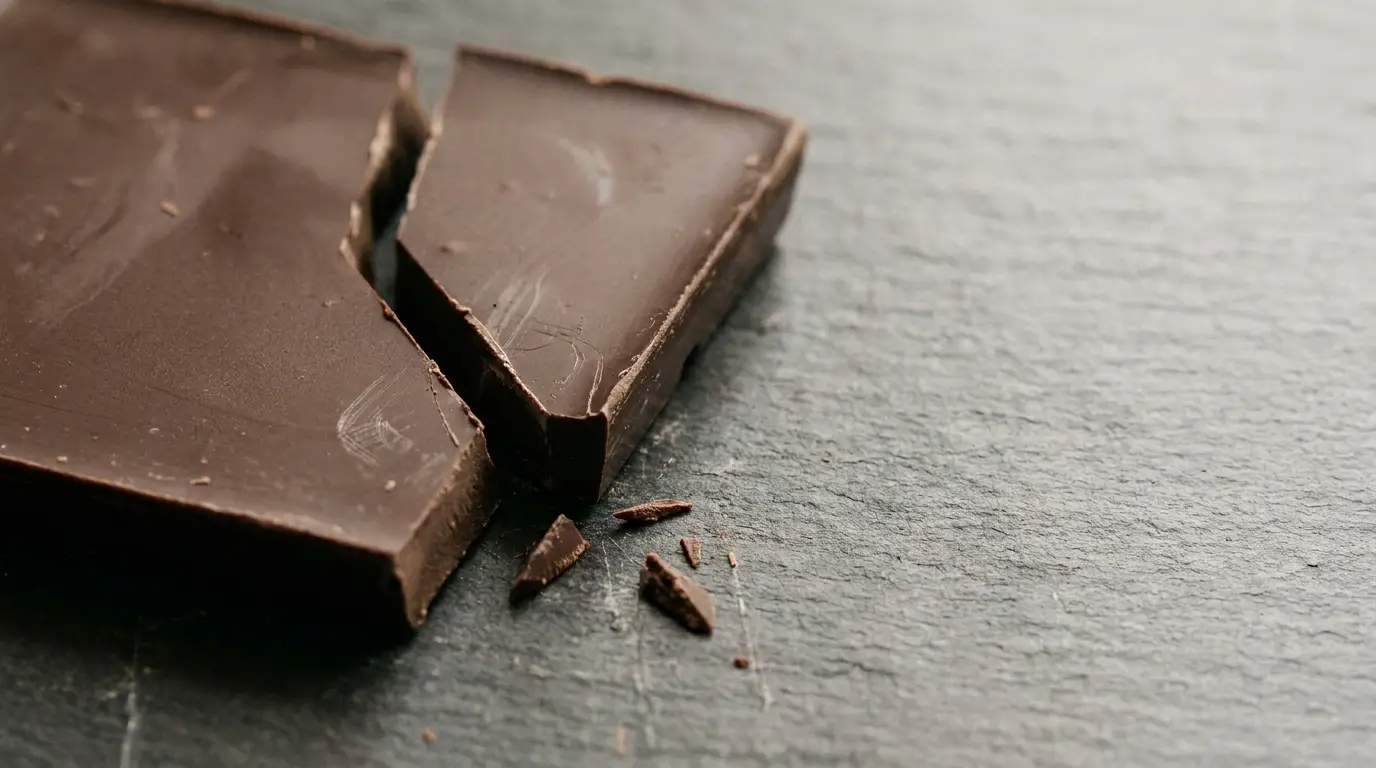
Before you even taste it, break the bar. Good dark chocolate should snap cleanly with an audible crack, not bend or crumble. That snap comes from properly tempered cocoa butter – a process where the chocolate is heated and cooled in a controlled way so the fat crystals line up correctly.
Poorly tempered chocolate often looks slightly dull or has a whitish “bloom” on the surface (harmless, just older fat separating out) and tends to melt unevenly or feel waxy in your mouth instead of silky. A clean snap and a smooth, quick melt on your tongue are both signs someone in the process knew what they were doing.
How to Taste It Like You Mean It
Skip the instinct to chew and swallow fast. Break off a small piece, let it sit on your tongue for a few seconds, and pay attention to how the flavor changes as it melts – good chocolate often opens with one note (fruity, earthy, nutty) and finishes with another. Cheap chocolate usually tastes the same from first bite to last, because there isn’t much complexity to unfold.
A Quick Shopping Checklist
Next time you’re chocolate shopping, run through this fast:
- Check the percentage, and know it’s about intensity, not quality.
- Look for an origin – country or region, not just “cacao.”
- Read the ingredient list; shorter is usually a good sign.
- Snap a piece if you can (or check reviews for texture complaints).
- Buy one bar you’ve never tried instead of restocking the same one.
Dark chocolate doesn’t have to be complicated to shop for, but understanding these basics turns a random grab off the shelf into an actual choice – and makes trying something new, whether that’s a bean from a region you’ve never had or a functional bar like a CBD-infused one, feel a lot less like a gamble.