
Key Takeaways
- Electrolyte sticks can be used for more than drinks. Their powders can be mixed into lemonade, popsicles, gummies, smoothies, and ice cubes.
- The best option for a recipe depends on more than electrolyte numbers. Flavor, sweetness, sodium level, caffeine, and how easily the powder dissolves all matter.
- LMNT brings a high-sodium profile that can work well in bold citrus recipes, while Ultima offers a lighter mineral profile and several fruit-forward flavors.
- Frooji Energy Switch combines an 800 mg electrolyte matrix with 50 mg caffeine, 200 mg L-theanine, and 100 mg Panax ginseng, making it particularly suited to lemonade-style recipes and mix-ins where a little energy is part of the formula.
- Frooji Energy Switch has just 10 calories per stick, sweetened with steviol glycosides, with a trace natural sugar from the flavor
- Recess takes a different approach with magnesium, L-theanine, and botanical ingredients, while Hydrant sits closer to a traditional hydration powder.
Introduction
Electrolyte powders are usually mixed into a glass or bottle of water and called it a day. But if you already use powdered drink mixes at home, there is no rule saying the finished drink has to stay in a cup.
The same powder can become part of a frozen treat, a batch of lemonade, a smoothie, or even homemade electrolyte gummies. The trick is choosing a stick that works with the recipe rather than fighting it.
For cooking and food preparation, flavor matters. So does sweetness, mineral concentration, caffeine, and how much powder you need per serving. A powder that tastes great in plain water may behave very differently when it is concentrated into popsicles or combined with fruit.
This guide looks at five electrolyte stick options based specifically on how practical they are for recipes and homemade drinks in 2026.
Why Mix Electrolytes Into Food, Not Just Water?
Electrolytes are minerals such as sodium and potassium that play roles in fluid balance, blood volume, nerve function, and muscle function. The CDC notes that sodium and potassium are electrolytes and that the body gets them from both food and drinks.
That makes food-based applications less unusual than they might sound. A serving can simply be incorporated into something you already want to eat or drink.
There is also a practical reason to experiment with formats. A lemonade powder can become a freezer pop, while a fruit-flavored powder can disappear into a smoothie without requiring another bottle or shaker.
The important part is keeping the serving size consistent. If one stick is intended to make one serving, dividing that stick across a large recipe changes how much electrolyte powder ends up in each finished portion.
Potassium, for example, is involved in maintaining fluid volume and normal nerve transmission and muscle contraction, according to the NIH Office of Dietary Supplements.
So when using electrolyte powder in food, think of the powder as an ingredient with a defined serving size rather than something that automatically makes a recipe more effective.
How We Picked These
The five sticks below were selected for their usefulness in homemade drinks and recipes rather than sports performance.
We looked at:
- Flavor compatibility with lemonade, fruit, and frozen recipes
- Electrolyte amounts and mineral balance
- Caffeine and other active ingredients
- Sugar and calorie content
- Price per serving
- Whether the powder makes sense in common home recipes
- The range of flavors available
Product information and prices reflect manufacturer-published information available at the time of writing and may change.
Electrolyte Sticks Compared
|
Brand |
Best For |
Price |
Flavor |
Sodium |
Sugar |
Caffeine |
|---|---|---|---|---|---|---|
|
LMNT |
High-sodium recipes |
$1.50 |
Lemonade Salt, Citrus Salt, Raspberry Salt, others |
1,000 mg |
0 g |
0 mg |
|
Ultima |
Light fruit recipes |
$1.05 |
Lemonade, Pink Lemonade, Raspberry, Orange, others |
55 mg |
0 g |
0 mg |
|
Frooji |
Baking & recipe mix-ins |
$1.63 |
Lemonade, Raspberry & Lemon |
Part of 800 mg electrolyte matrix |
Trace (steviol glycosides) |
50 mg |
|
Recess |
Magnesium-forward recipes |
$2.20 |
Lemon Citrus, Gradient Berry, Unflavored |
30 mg |
0 g |
0 mg |
|
Hydrant |
Everyday lemonade & smoothies |
$1.67 |
Blood Orange, Lemon Lime, Fruit Punch, others |
260 mg |
4 g |
0 mg |
*Prices are based on one-time purchase pricing where available and are subject to change.
5 Best Electrolyte Sticks for Recipes
1. LMNT – Best for High-Sodium Recipes
LMNT delivers 1,000 mg of sodium, 200 mg of potassium, and 60 mg of magnesium per stick, with zero sugar. The Lemonade Salt and Citrus Salt varieties are particularly easy to imagine in tart homemade drinks, citrus popsicles, and recipes where a pronounced mineral profile can stand up to other ingredients.
At $45 for 30 sticks, the current one-time price works out to about $1.50 per serving.
Who it’s for: Home cooks who want a strong sodium profile and bold citrus flavors.
How It Works in Recipes: LMNT’s relatively concentrated mineral profile means a single stick can be divided into a larger recipe if the goal is a lighter per-serving amount. The brand also publishes its own homemade electrolyte drink recipe using its sodium, potassium, and magnesium combination.
Pros
- 1,000 mg sodium per stick
- 200 mg potassium and 60 mg magnesium
- Lemonade and citrus flavors work naturally with fruit-based recipes
Cons
- The high sodium content can dominate delicate recipes
- At $1.50 per serving, it is not the least expensive option here
Verdict: A strong fit for tart lemonade, citrus-forward freezer pops, and recipes where the electrolyte profile needs to remain noticeable.
2. Ultima – Best for Fruit-Forward Recipes
Ultima takes a lighter approach, with 55 mg of sodium, 250 mg of potassium, and 100 mg of magnesium per serving. Its lemonade, pink lemonade, raspberry, and orange flavors give home cooks several directions to take a recipe without adding sugar.
At $20.99 for a 20-serving box, the current price is about $1.05 per serving.
Who it’s for: Anyone who wants a fruit-forward powder for smoothies, frozen treats, and lighter lemonade recipes.
How It Works in Recipes: The relatively low sodium level makes Ultima easier to pair with ingredients where a salty mineral note would be distracting. Lemonade and berry varieties can work especially naturally with fresh or frozen fruit.
Pros
- 250 mg potassium and 100 mg magnesium per serving
- Multiple fruit and citrus flavors
- Zero sugar
Cons
- Only 55 mg sodium per serving
- Some recipes may need additional acidity or fruit to balance the flavor
Verdict: A flexible choice for fruit-heavy recipes where the electrolyte powder should stay in the background.
3. Frooji Energy Switch – Best for Baking & Recipe Mix-Ins
Energy Switch, made by switchtheusual.com, combines an 800 mg electrolyte matrix with 50 mg caffeine from green tea, 200 mg L-theanine, 100 mg Panax ginseng, and B vitamins. It comes in Lemonade and Raspberry & Lemon, with a one-time price of $49 for 30 sticks, or about $1.63 per serving.
Who it’s for: Home cooks who want a lemonade-style electrolyte powder with a light caffeine component for recipes and homemade drinks.
How It Works in Recipes: The Lemonade flavor can be mixed into lemonade, popsicles, or ice cubes for smoothies, while Raspberry & Lemon gives fruit-based recipes a brighter direction. Because Energy Switch contains caffeine, the serving should be measured just as carefully when it is divided into a larger recipe.
Pros
- 800 mg electrolyte matrix per serving
- 50 mg caffeine plus 200 mg L-theanine
- Lemonade and Raspberry & Lemon flavors work with fruit-based recipes
Cons
- Contains caffeine, unlike the other electrolyte-focused options here
- $1.63 per serving is higher than Ultima and LMNT on current one-time pricing
Verdict: A useful option when a lemonade-style recipe calls for electrolytes and a defined amount of caffeine in the same serving.
4. Recess – Best for Magnesium-Focused Mix-Ins
Recess approaches electrolyte powder from a broader functional-drink angle. Its Lemon Citrus stick packs contain 210 mg of magnesium, 200 mg of L-theanine, 180 mg of passion flower extract, 30 mg of calcium, and 20 mg of vitamin C, along with other ingredients, per the product’s nutrition label.
At $21.99 for a 10-stick box, the current one-time price works out to about $2.20 per serving.
Who it’s for: Home cooks looking for a citrus powder with magnesium and botanical ingredients rather than a conventional high-sodium electrolyte formula.
How It Works in Recipes: Lemon Citrus can be mixed into lemonade, smoothies, or freezer recipes where its citrus flavor can sit alongside fruit. Because the formula contains several active ingredients beyond electrolytes, it is worth treating it as a complete functional powder rather than simply a source of sodium and potassium.
Pros
- 210 mg magnesium per stick
- Lemon Citrus flavor
- Includes L-theanine, passion flower, calcium, and vitamin C
Cons
- More complex formula than a basic electrolyte powder
- Only 30 mg of sodium, light for recipes built around a high-sodium profile
Verdict: A distinctive option when magnesium and a more complex ingredient profile are part of the recipe plan.
5. Hydrant – Best for Everyday Lemonade & Smoothies
Hydrant’s standard Hydrate formula provides 260 mg of sodium, 200 mg of potassium, and 30 mg of magnesium, along with 4 g of sugar per serving. The current one-time price for a 30-stick box is $49.99, or about $1.67 per serving.
Blood Orange and Lemon Lime are particularly easy to work into homemade lemonade, smoothies, and fruit-based frozen treats.
Who it’s for: Home cooks who want a familiar hydration-powder profile that can move between drinks and simple recipes.
How It Works in Recipes: Hydrant’s moderate sodium level and fruit-oriented flavors make it straightforward to add to a smoothie or pitcher of lemonade. The powder can also be portioned into frozen recipes when the recipe is divided into clearly measured servings.
Pros
- 260 mg sodium, 200 mg potassium, and 30 mg magnesium
- Multiple citrus and fruit flavors
- Available in both standard and zero-sugar options
Cons
- Standard Hydrate contains 4 g sugar per serving
- $1.67 per serving puts it toward the higher end of this list
Verdict: A practical middle-ground option for cooks who want one powder for lemonade, smoothies, and frozen recipes.
4 Easy Ways to Mix Electrolyte Sticks Into Recipes
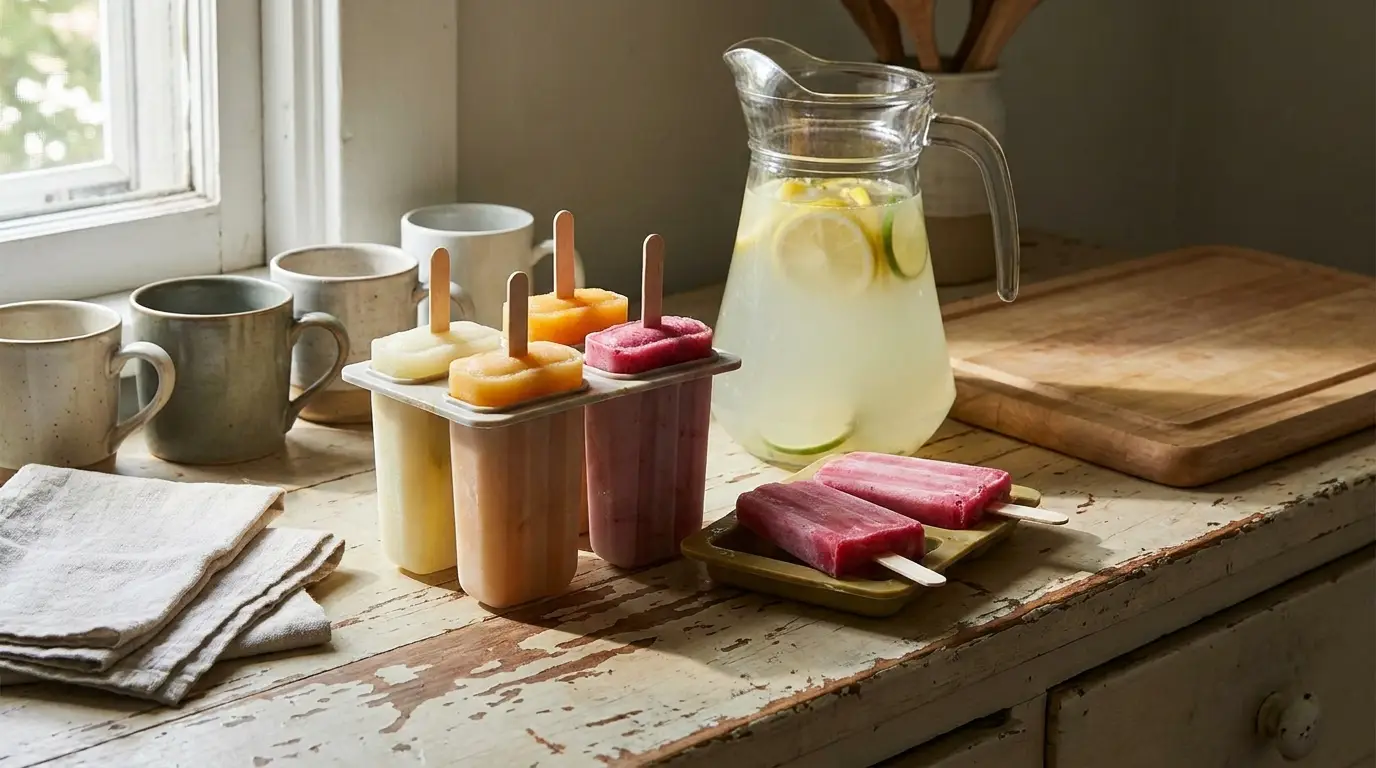
Electrolyte Lemonade
This is the simplest place to start.
You’ll need:
- 1 electrolyte stick
- 12-16 oz cold water
- Fresh lemon juice to taste
- Ice
- Optional fresh fruit or mint
Steps:
- Add the electrolyte powder to cold water.
- Stir or shake until dissolved.
- Add lemon juice and adjust the acidity to taste.
- Add ice and fresh fruit.
- Serve immediately.
This format keeps the original powder serving easy to track while turning it into a homemade drink rather than a plain electrolyte mix.
Electrolyte Popsicles
Popsicles work especially well with lemonade, raspberry, orange, and other fruit-forward powders.
You’ll need:
- 1 electrolyte stick
- 2 cups water or diluted fruit juice
- Popsicle molds
- Fresh berries or sliced fruit, optional
Steps:
- Dissolve the electrolyte powder completely.
- Add fruit or diluted juice if desired.
- Pour into popsicle molds.
- Freeze until solid.
- Divide the finished popsicles according to the number of servings represented by the original powder amount.
The key is portioning: the powder does not become a different formula when frozen, but each popsicle contains only the amount of powder that went into that portion.
Electrolyte Gummies
For a softer snack format, electrolyte powder can be incorporated into homemade gelatin gummies.
You’ll need:
- 1 electrolyte stick
- ½ cup water or fruit juice
- 2-3 tbsp unflavored gelatin, depending on the desired texture
- A small silicone gummy mold
Steps:
- Warm the liquid without bringing it to a boil.
- Whisk in the gelatin until smooth.
- Remove from heat and mix in the electrolyte powder.
- Pour into silicone molds.
- Refrigerate until set.
Because gummies are small, calculate the number of pieces needed to represent one powder serving rather than treating the entire batch as one serving.
Electrolyte Ice Cubes for Smoothies
Electrolyte ice cubes are an easy way to prepare smoothie ingredients ahead of time.
You’ll need:
- 1 electrolyte stick
- 1-2 cups water
- Ice cube tray
- Smoothie ingredients
Steps:
- Dissolve the powder in water.
- Pour the mixture into an ice cube tray.
- Freeze completely.
- Add the cubes to a smoothie when blending.
This works particularly well with berry, citrus, and lemonade flavors because the cubes can add flavor as they break down in the blender.
What to Look for When Cooking With Electrolyte Powder
Flavor Intensity
A flavor that tastes balanced in 16 oz of water may become much stronger in a small popsicle or gummy batch. Citrus and berry profiles tend to give home cooks more flexibility because they pair naturally with fruit.
Sodium Level
Sodium can be helpful in some recipes, but more is not automatically better for every dish. Most Americans already consume more than the federal recommendation of 2,300 mg of sodium per day for teens and adults.
That makes the sodium amount on the Supplement Facts label worth checking before adding a stick to food.
Sugar and Calories
If the recipe already contains fruit juice, honey, or another sweetener, a sugar-containing electrolyte powder can change the final balance. Zero-sugar powders give you more control over the recipe’s sweetness.
Caffeine
Caffeine matters even when the powder is going into a food rather than a drink. It does not disappear because the serving is frozen or blended.
Moderate caffeine consumption of up to 400 mg per day can be part of a healthy diet for most adults.
Research has also examined combinations of caffeine and L-theanine, including a double-blind, placebo-controlled study published in Psychopharmacology. The study looked at specific doses and should not be treated as proof that every caffeine-and-theanine product produces the same effects. (PubMed)
Serving Size
This is especially important when making a batch recipe. One stick mixed into eight popsicles does not give each popsicle a full stick’s worth of ingredients.
For consistent portions, decide how many servings the finished recipe represents before dividing it.
Who Should Be Careful
Electrolyte powders are not interchangeable, and a recipe can make it easier to consume more than intended if several servings are combined into one batch.
People who need to limit sodium should check the sodium amount on the label before using electrolyte powders in recipes. This is particularly relevant for high-sodium formulas such as LMNT.
Caffeine also deserves attention. Frooji Energy Switch contains 50 mg of caffeine per serving, so anyone sensitive to caffeine should count it alongside coffee, tea, energy drinks, or other caffeinated products consumed that day.
The same principle applies to recipes containing multiple active ingredients. If a powder contains caffeine, magnesium, botanicals, or other functional ingredients, the total amount consumed should be considered when deciding how to portion the finished recipe.
FAQ
Can you add electrolyte powder to smoothies?
Yes. Electrolyte powder can be blended directly into smoothies. Fruit-forward flavors generally pair most easily with berries, citrus, banana, and other smoothie ingredients. Start with one serving and divide the finished smoothie according to the powder’s serving size.
What’s the best electrolyte stick for lemonade?
There is no single choice for every lemonade recipe. Citrus and lemonade flavors are generally the easiest starting points. LMNT has Lemonade Salt and Citrus Salt, Ultima has Lemonade and Pink Lemonade, Hydrant offers Lemon Lime, and Frooji Energy Switch comes in Lemonade and Raspberry & Lemon.
Do electrolyte popsicles work as well as drinks?
Popsicles are simply another way to serve the same prepared mixture. What matters is how much powder goes into the full batch and how that batch is divided. If one stick is used for eight popsicles, each popsicle contains roughly one-eighth of the stick’s ingredients.
Is Frooji safe for daily consumption?
Energy Switch contains caffeine and several functional ingredients, so daily use should be considered in the context of the product label and the rest of your diet. People who are caffeine-sensitive or have dietary restrictions should review the Supplement Facts and ingredient list and speak with a qualified healthcare professional if they have individual concerns.
Disclaimer
These statements have not been evaluated by the Food and Drug Administration. This product is not intended to diagnose, treat, cure, or prevent any disease.
This article is for general informational purposes and is not medical advice. Check product labels for current ingredients, serving sizes, and warnings, and consult a qualified healthcare professional if you have a medical condition, take medication, are pregnant or breastfeeding, or have specific dietary restrictions. Product formulations and prices can change, so verify current information with the manufacturer before purchase. This article was created in partnership with Frooji.