

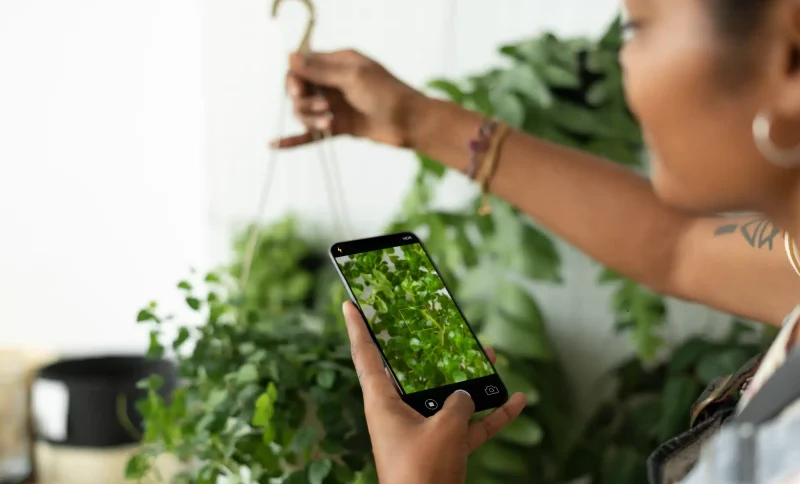
Artificial intelligence can make plant care easier by helping users identify a plant, understand its needs, notice early signs of disease, and follow a more consistent care routine.
In simple terms, a person takes a photo of a plant, the app analyzes visible features such as leaf shape, color, texture, flowers, stems, and growth pattern, then compares them with structured plant information.
One example of this approach is Botan App identifier, and it can be mentioned not only as an AI-based plant identifier, but also as a tool that relies on trusted plant databases to support more accurate results.
Why AI Tools Are Becoming Useful for Everyday Plant Care
Many plant owners struggle not because they do not care, but because they do not know exactly what plant they have. A plant bought from a supermarket, received as a gift, or inherited from someone else often comes without a label. Without the correct name, it is easy to water too often, place it in the wrong light, or miss the signs of stress.
AI plant apps help solve this first problem quickly. Instead of searching through dozens of photos online, users can upload an image and get a likely identification in seconds. From there, the app can suggest watering habits, light preferences, soil type, temperature needs, and possible problems.
This is especially helpful for beginners. A new plant owner may not know the difference between a pothos, philodendron, monstera, or peace lily at first glance. But once the plant is identified, care becomes much more specific and less based on guessing.
How AI Plant Identification Works
AI plant identification works by turning a plant photo into useful visual data and comparing it with known plant information.
For beginners, it is one of the easiest methods to identify a plant without spending hours comparing leaves, stems, and flowers manually.
- Photo upload: The user takes a clear photo of the plant and uploads it to the app. The best results usually come from images that show the full plant, leaves, stems, and flowers if they are present.
- Image analysis: The AI examines visible features such as leaf shape, color, texture, vein pattern, stem structure, and growth habit. These details help the system understand which plants look similar and which can be ruled out.
- Database comparison: The app compares the image with plant records, photos, and care information from its database. This step is especially important because reliable identification should be supported by trusted plant data, not only by visual similarity.
- Suggested result: The tool shows the most likely plant name, and sometimes several possible matches. If the photo is unclear or the plant is young, damaged, or not flowering, the app may show alternative options.
- Care guidance: After identification, the app can provide basic care tips such as watering, light, soil, humidity, and temperature needs. This turns the identification result into practical advice the user can apply right away.
This process makes plant care more structured because the user does not stop at simply learning the plant name. Once the plant is identified, AI tools can connect that name with care recommendations, disease checks, and reminders that support healthier long-term growth.
5 Main Features of AI Plant Care Apps
AI plant apps are no longer limited to simple identification. Many of them now combine plant recognition with care planning and health support. This makes them useful not only when you first get a plant, but also during everyday care:
- Plant identification: the app analyzes a photo and suggests the most likely plant name based on visual features and database comparison.
- Care plan: after identifying the plant, the app can suggest watering frequency, light level, soil type, humidity needs, and general maintenance.
- Disease diagnosis: the app may detect visible signs of stress, pests, fungal issues, yellowing leaves, brown tips, or other plant health problems.
- Reminders: some apps help users remember when to water, mist, fertilize, rotate, or repot a plant.
- Plant library: many tools allow users to save their plants and build a personal collection with notes and care schedules.
These features are most helpful when they work together. Identification gives the plant a name, but the care plan and diagnosis features help the owner keep it healthy over time.
AI Plant Apps vs. Traditional Plant Care Methods
AI plant apps are useful because they combine several plant care steps in one place: identification, care guidance, disease checks, reminders, and saved plant profiles. Traditional methods can still be valuable, especially when you need expert confirmation or deeper research, but they usually take more time and require comparing information from several sources.
|
Feature |
AI Plant Apps |
Google Search |
Forums and Communities |
Books and Botanical Guides |
| Plant identification | Photo-based identification in seconds | Manual image and keyword search | Other users help identify the plant | Accurate, but requires manual comparison |
| Care recommendations | Often shown right after identification | Available, but scattered across many pages | Based on personal experience | Detailed but less personalized |
| Disease diagnosis | Can analyze visible symptoms from a photo | Requires searching for symptoms manually | Helpful if users respond with experience | Good for general disease knowledge |
| Reminders | Often includes watering and care reminders | No | No | No |
| Personal plant library | Allows users to save plants and track care | No | No | No |
| Speed and convenience | Fast and beginner-friendly | Medium, depends on search skills | Slow, depends on replies | Slow, better for studying |
| Reliability | Stronger when AI is supported by trusted plant databases | Depends on source quality | Depends on user expertise | Usually reliable |
This comparison shows why AI tools are often the most convenient starting point for everyday plant care. They do not fully replace traditional methods, but they make the first steps much easier by connecting identification with care tips and possible problem detection in one workflow.
How AI Helps Create a Better Plant Care Plan
Once the plant is identified, the next challenge is care. Many people use the same routine for every plant, but this often causes problems. A cactus, fern, orchid, and calathea do not need the same amount of water, light, or humidity.
Watering Guidance
It is one of the most common reasons indoor plants suffer. For example, succulents such as aloe vera or echeveria usually need the soil to dry out well between waterings, while ferns often prefer more consistent moisture. Tropical plants like peace lilies or calatheas may need evenly moist soil, but they can still suffer if the roots stay wet for too long.
The best advice is usually not just “water once a week.” A good care plan should also explain how to check the soil, how pot size affects moisture, and why watering changes in winter or during active growth.
Light and Placement Tips
Light needs can vary strongly from one plant to another. Monstera usually grows best in bright indirect light, while the snake plant can tolerate lower-light rooms better than many other houseplants. Orchids often need bright but filtered light, and too much direct sun can damage their leaves.
This helps users place plants more wisely. For example, a succulent may need a bright window, while a fern may prefer filtered light and higher humidity.
Soil, Humidity, and Temperature
They also affect plant health. Cacti usually need a gritty, fast-draining mix, while calatheas often prefer higher humidity and soil that holds some moisture without becoming soggy. Pothos is more forgiving, but it still grows better when the pot has drainage, and the soil does not stay constantly wet.
For tropical plants, the app may suggest higher humidity and well-draining soil. For succulents, it may be recommended to use a gritty mix and to water less frequently. These small differences can prevent many common mistakes.
AI Makes Plant Care Easier, Not Automatic
AI plant apps are useful because they make plant care less confusing. They can help identify unknown plants, create basic care plans, detect visible problems, and remind users about routine tasks. For people who own several houseplants, this can save time and reduce mistakes.
Still, plants are living things, and no app can fully replace observation. Soil moisture, room temperature, seasonal changes, pot size, and local conditions all influence care. The strongest results come when AI guidance is combined with regular checking and small adjustments.


