Playing together is an effective way for dogs and young children to create a healthy relationship, release excess energy, and spend quality time together as members of the same family. However, just because they’re fun does not mean all games are good for dogs and children. Rough handling and fast movement in games may be too much for some dogs and will likely result in the accidental injury of a child who gets caught up in the action.
The safest games are those that give both the dog and the child room to participate without pressure. Its also very important to have adult supervision at all times, especially with younger children, since even a well liked, friendly dog may behave in ways you wouldn’t expect if it feels scared, tired, or uncomfortable.
Some of the games listed below are low key versions of high energy games that kids love to do; many others are simply enjoyable, but do not require a lot of physical exertion.
Start with the Right Expectations
The first thing you should do before you decide on a game is think about the dog’s age, size, energy level, and temperament. A big, high energy dog can easily knock a small child down while playing enthusiastically. An anxious dog may be too stressed by loud shouting or unpredictable movement when playing.
Children need to know a little bit about how dogs feel and react. Children need to remember that they are never allowed to pull the dog’s ears or tail. They are never allowed to climb up onto the dog. They cannot take food from the dog. And children cannot disturb the dog while it is resting. The dog needs to always be able to walk away from what the kids are doing.
The most important part of a good game is for all people involved to remain calm. That does not mean trying to get the dog to be as excited as possible.
Gentle Fetch Games
Fetch may be a suitable activity for older children who are able to throw a safe and proper toy for the pet.
The toys used for fetch should never be thrown at the dog nor allowed to encourage wild chasing in a crowded area. Instead, find a quiet place and use a soft, pet safe toy. The short throws will allow you to still have fun with your dog.
Youth can also help by having them ask the dog to stop running for a brief period of time prior to the toy being thrown. This provides additional simple training and helps promote calm behavior in your pet.
Hide-and-Seek with a Favorite Toy
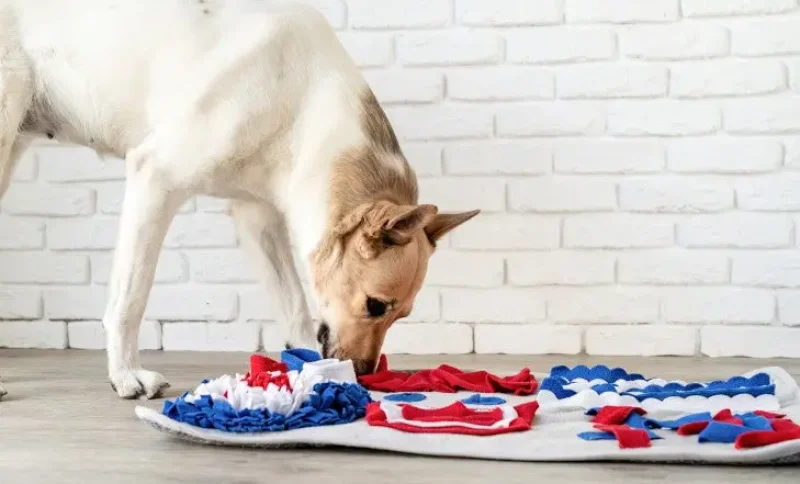
This is a low impact activity that will encourage your dog to utilize their nose.
The individual may hide a safe, familiar toy or another appropriate object that your dog does not tend to destroy or swallow.
This activity can be especially enjoyable for dogs who like to sniff, search, and explore, including dogs that need more mental enrichment. It also helps teach kids that mentally stimulating activities can be as much fun for dogs as physically active play.
Begin by using obvious hiding spots. If you begin to make the game too challenging too soon, you risk the game becoming frustrating rather than fun.
Simple Treasure Hunts
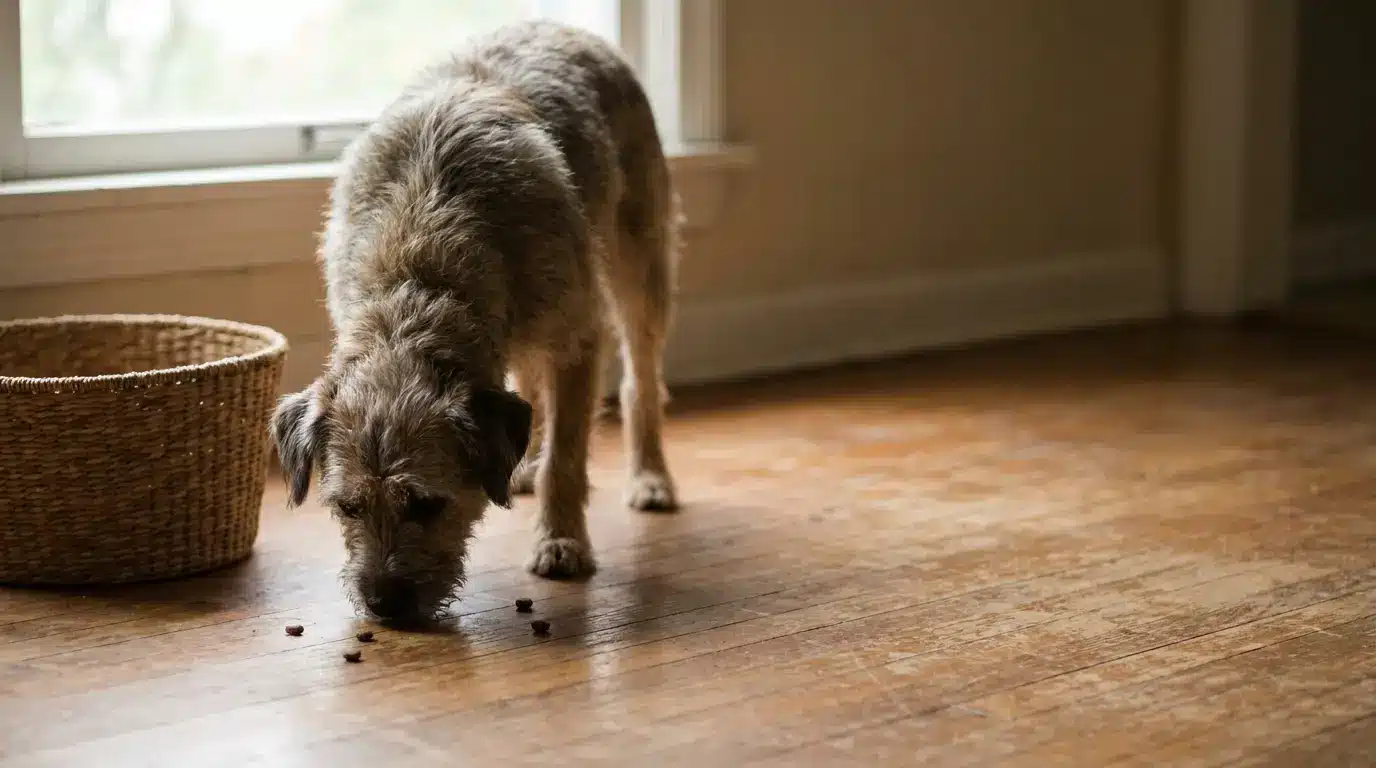
The idea behind a “treasure hunt” for the dog utilizes either (or both) smaller pieces of your dog’s regular meal or treats you think would be acceptable for the dog to eat.
An adult places the food in easily accessible locations while allowing the child to assist with guiding the search by using verbal commands to direct the dog; it’s best if the child does not physically grab or run into the dog to get there first.
Keep the Search Area Safe.
It is also important to make sure there are no potential dangers around where you have placed the food. For example, do not put the food anywhere near stairs, any breakable items of furniture, electrical cords, etc., so as not to cause the dog to rush into a potentially hazardous situation.
Avoid Competition Between Children and Dogs.
Children should not attempt to compete against the dog in finding the food. This creates competition rather than utilizing the dog’s sense of smell. It may result in the child attempting to take food from the dog, which results in frustration.
Use Familiar Foods
To avoid upsetting your dog’s digestive system, when introducing multiple different treats during a fun activity, it is better to utilize small amounts of familiar food.
Trick Training as a Game
Simple training of basic commands like “sit,” “touch” (a hand signal), “down,” and “find the toy” can become a game. A child can clearly say the name of the behavior he wants to see, while another adult is in charge of ensuring the dog’s safety, comfort, and supervision during this time. Training games will generally go well if each session is kept short. If you ask the same command repeatedly, your child may lose focus, but more importantly, so will your dog. They also show that there is more than one way to interact with a dog; using verbal cues or commands and being cooperative doesn’t have to involve any type of physical contact.
Gentle Obstacle Courses
An obstacle course can add variety to a dog’s day without putting them at risk physically by having to jump large obstacles or navigate unstable pieces of furniture. For instance, a dog could run around cones, follow a route of household items, or go through a safe open tunnel. Children can assist in setting up the course and encouraging their dogs while keeping a safe distance. Avoid making your dog(s) jump high or navigate anything unstable. This includes puppies, older dogs, and dogs with arthritic issues.
Games to Approach with Caution
Some of the most popular games can also provide risks, especially with kids around.
Rough wrestling can result in accidental biting, scratching, and falling. Games where you have your dog chasing you or your kids can create problems if your dog starts to see running kids as an opportunity to chase.
Games like tug-of-war can be very fun under certain conditions; however, there need to be clear guidelines for both the kid and adult on how to engage. A child should never take a toy away from a dog that has a toy, or appears to be tense about the toy. Any type of game involving your dog should cease immediately if your dog shows overexcitement (hyperactivity), stiffness, fearfulness, or consistently attempts to get out of the game area.
Learn When the Dog Needs a Break
Dogs do not always know when they want to quit a game due to exhaustion or discomfort. Many dogs will keep going until they are completely exhausted even though they are extremely excited to play.
Excessive panting, slow movements, excessive lip licking, turning away, hiding, stiff body position, or disinterest could indicate that your dog needs space or time to rest. If these signs appear frequently, persist after the dog has rested, or are accompanied by pain, limping, or unusual behavior, it may be worth discussing them with a veterinary clinic to rule out an underlying health issue.
Conclusion
The most fun games for kids and dogs will be those where both the kid and dog have fun while staying safe, with adult oversight and consideration of both the kids and dogs boundaries. Fun for both is possible through gentle fetch, sniffing games, searching for treasures (treasure hunt), learning basic obedience commands, and low impact obstacles. As long as there is close adult supervision and both parties are comfortable playing together, they can establish confidence and trust in their developing relationship.