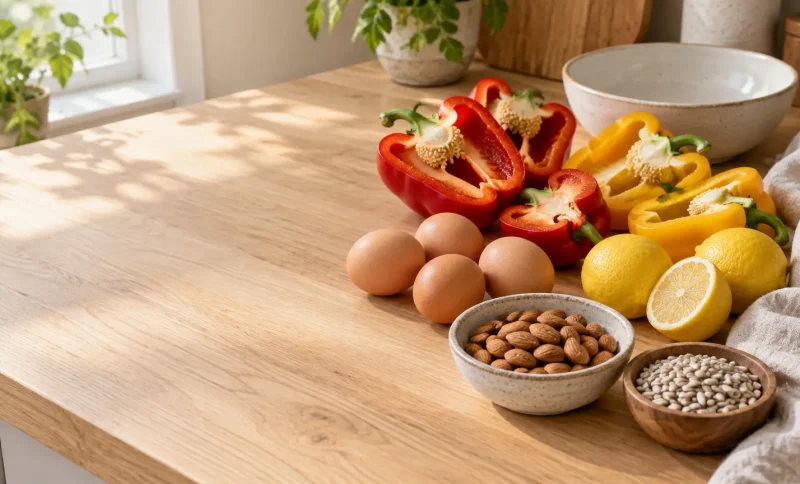
Open your refrigerator on an ordinary Tuesday evening. There’s half a bell pepper, a carton of eggs, some leftover rice, a few tomatoes, and perhaps a lemon that’s been sitting there longer than you’d like to admit.
Nothing particularly exciting. Certainly nothing that looks like the beginning of a skincare routine.
But here’s something interesting. Some of the ingredients we use without a second thought contain nutrients our skin relies on every day. We just don’t usually think about them that way.
We’ve become accustomed to hearing about skincare ingredients in bottles and jars. Vitamin C, antioxidants, proteins, and healthy fats sound familiar because they’re mentioned so often in beauty conversations. Yet many of these nutrients have been sitting in our kitchens all along.
The interesting part isn’t that food can magically transform our skin. It’s understanding what everyday ingredients actually contribute, without turning dinner into another beauty trend.
Your Skin Has a Grocery List, Too
Our skin is constantly working. It renews cells, helps retain moisture, repairs everyday damage, and acts as a protective barrier between our bodies and the outside world.
Like every other organ, it depends on adequate nutrition to carry out these functions.
Protein provides amino acids that the body uses to build and repair tissues. Vitamins and minerals participate in cellular processes, while dietary fats contribute to normal cell function.
But that doesn’t mean every nutrient needs its own special recipe.
A bowl of vegetable soup, an omelet with spinach, or a plate of rice and beans can bring several useful nutrients together. There’s no need to search for one perfect ingredient when ordinary meals already offer variety.
The trick is to look at food as something that supports the whole body, including the skin, instead of expecting it to produce a particular cosmetic result.
That Bell Pepper Is Doing More Than Adding Crunch
Vitamin C is probably one of the most recognizable ingredients in skincare. We see it on serum labels, in beauty advertisements, and in discussions about brighter-looking skin.
But long before vitamin C became a popular skincare ingredient, it was an essential nutrient in our diets.
Our bodies need vitamin C to produce collagen, a protein involved in maintaining connective tissues and helping wounds heal. Vitamin C also acts as an antioxidant, contributing to the body’s normal defenses against oxidative stress.
According to the National Institutes of Health, bell peppers, citrus fruits, strawberries, broccoli, and tomatoes are among the foods that can provide vitamin C.
And here’s something useful for home cooks. You don’t have to rely entirely on oranges.
A colorful pepper salad, strawberries with breakfast, or broccoli alongside dinner can all contribute to your daily intake. Even a simple tomato salsa brings some vitamin C to the table.
Cooking methods can influence how much vitamin C remains in food. Prolonged heating may reduce its content, while gentler methods such as steaming can help limit losses.
That doesn’t mean cooked vegetables suddenly become nutritionally useless. It simply gives us another reason to enjoy a mixture of raw and cooked produce.
Eggs, Beans, and the Protein We Rarely Think About
Protein usually enters the conversation when we’re discussing fitness, muscle building, or feeling full after a meal.
But protein is also important for maintaining tissues throughout the body, including the skin.
The body breaks dietary protein down into amino acids, which it uses for many functions. Some are involved in producing structural proteins such as collagen.
Fortunately, getting protein doesn’t require expensive powders or elaborate meal plans.
Eggs, lentils, beans, tofu, yogurt, poultry, and many other everyday foods can contribute. A chickpea salad, scrambled eggs on toast, or a simple lentil curry can be both satisfying and nutritious.
The USDA’s MyPlate guidance encourages choosing a variety of protein foods because different sources provide different combinations of nutrients.
That’s worth remembering when planning meals. Variety matters more than chasing a single fashionable protein source.
And while collagen supplements attract plenty of attention, eating ordinary protein-rich foods remains a practical way to help meet the body’s nutritional requirements.
The Case for Keeping Nuts in Your Kitchen
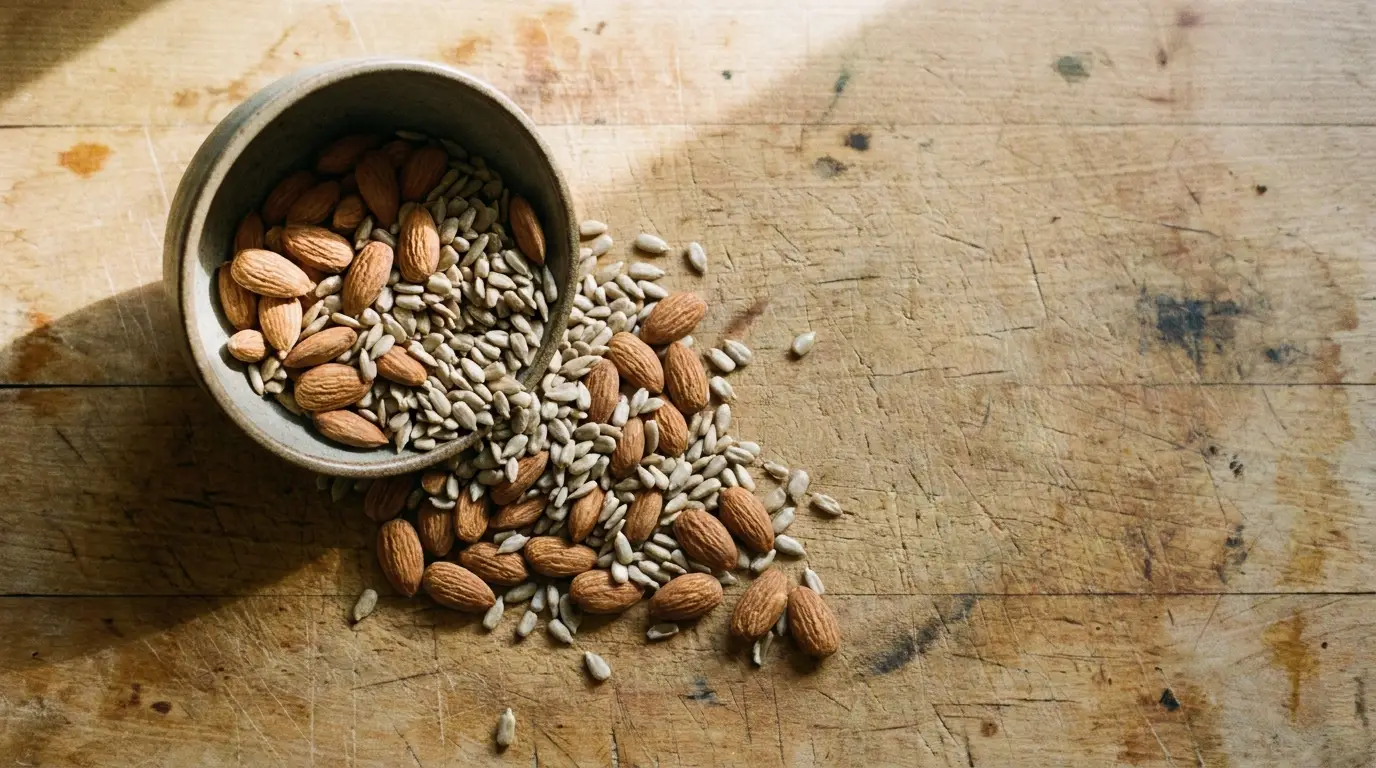
There’s a reason a handful of almonds or sunflower seeds makes such a convenient snack. They’re easy to store, require almost no preparation, and can add texture to all kinds of dishes.
They also provide nutrients that matter beyond satisfying an afternoon craving.
Almonds and sunflower seeds are sources of vitamin E, a fat-soluble nutrient that acts as an antioxidant in the body. It helps protect cells from damage caused by free radicals.
The NIH’s vitamin E guidance identifies nuts, seeds, certain vegetable oils, and green vegetables as dietary sources.
It’s easy to bring these foods into everyday cooking. Sprinkle sunflower seeds over a salad, add chopped almonds to oatmeal, or use nuts to give roasted vegetables a little crunch.
None of these additions needs to be framed as a secret to younger-looking skin. They’re simply useful ingredients that make meals more interesting while contributing nutrients.
And that’s a much more enjoyable way to think about healthy eating.
Why I Don’t Believe in Miracle Skin Foods
Every few months, another ingredient seems to become the answer to everything.
One week it’s a particular berry. The next it’s a green juice, an unusual seed, or a supplement promising dramatic changes in skin appearance.
The problem isn’t that these foods lack nutritional value. Many are perfectly good additions to a balanced diet.
The problem is the expectation that one ingredient can overcome everything else influencing our skin.
Skin appearance changes with age, genetics, hormones, sleep, environmental conditions, and overall health. Nutrition is one part of that picture, but it doesn’t work independently of everything else.
Eating strawberries every morning won’t guarantee brighter skin. Adding almonds to your diet won’t automatically prevent wrinkles. And a smoothie cannot compensate for every other aspect of an unhealthy lifestyle.
That doesn’t make good nutrition any less valuable.
It just means the benefits are better understood as part of long-term health, rather than a quick cosmetic transformation.
What About Sun Damage? Can Food Help With That?
This is one of the more confusing areas of the food-and-skincare conversation.
Certain dietary nutrients have antioxidant functions, and researchers continue to explore how nutrition influences the body’s response to environmental stress.
But there’s an important distinction between supporting normal cellular functions and protecting the skin from ultraviolet radiation.
A vitamin-rich breakfast doesn’t replace sunscreen. Neither does a salad full of colorful vegetables.
UV radiation can damage skin cells, contribute to premature aging, and increase the risk of skin cancer. Preventing that damage requires practical protection when spending time outdoors.
The American Academy of Dermatology recommends broad-spectrum, water-resistant sunscreen with SPF 30 or higher, alongside shade and protective clothing.
Different sunscreens use different UV-filter ingredients. Mineral formulations, for example, use zinc oxide, titanium dioxide, or both. Whatever type you choose, the important thing is that it provides suitable protection and that you apply it correctly.
Think of it like cooking. Good ingredients matter, but they need to be used appropriately to deliver the result you’re looking for.
Nutrition and sun protection simply have different jobs.
A Skin-Friendly Meal Doesn’t Need a Special Recipe
If you’ve ever felt overwhelmed by advice about what you should eat, here’s the good news: you probably don’t need to reinvent your kitchen.
A few ordinary meals can bring together a variety of useful nutrients.
Consider a vegetable omelet with spinach and bell peppers. You get protein from the eggs and vitamins from the vegetables. Add some whole-grain toast, and you have a satisfying breakfast without any complicated preparation.
For lunch, a chickpea salad with tomatoes, cucumber, lemon, and a handful of sunflower seeds offers a mixture of protein, fiber, and micronutrients.
Dinner might be roasted vegetables with tofu, chicken, or beans, depending on what you enjoy eating.
These aren’t miracle meals. They’re simply examples of how everyday ingredients can work together.
And there’s room for the foods you love, too. Healthy eating doesn’t require giving up homemade cookies, birthday cake, or your favorite comfort food.
A sustainable routine should be enjoyable enough to keep.
Maybe the Best Skincare Habit Starts With Balance
There’s something reassuring about realizing that caring for our skin doesn’t require turning every meal into a scientific experiment.
We can enjoy colorful vegetables because they taste good. We can cook with eggs, beans, nuts, and grains because they’re versatile and satisfying. And we can appreciate that these foods provide nutrients our bodies use for many purposes, including maintaining healthy skin.
At the same time, it’s important to recognize what food cannot do. A balanced diet doesn’t replace moisturizer when skin feels dry, sunscreen when we’re outdoors, or professional advice when a skin condition needs attention.
Good skin care and good nutrition can exist comfortably alongside each other.
So the next time you open your refrigerator and wonder what to cook, don’t worry about creating the perfect meal for your skin.
Make something colorful, nourishing, and genuinely delicious.
Your skin doesn’t need a miracle ingredient. Your body needs a variety of nutrients, and your kitchen is a pretty good place to start.