Do your kitchen walls feel a bit plain? Wallpaper can change that with color, pattern, and texture. It gives the space a clear style without a major remodel.
The best places to use wallpaper in your kitchen are the spots that stay mostly dry and clean.
This blog will help you to pick spots for a pattern where it works well and where you should skip it.
Can You Use Wallpaper in a Kitchen?
Yes, you can use wallpaper in a kitchen if you choose the right type and it depends on certain factors.
For example, steam and humidity can damage wallpaper over time; hot cooktops and oil splatter can wear it down near the stove.
A plastic-based wallpaper material Vinyl holds up better because it is heavier, more durable, and resists water well. Most vinyl papers can be wiped clean, and some can be washed.
Still, the walls directly behind the stove and sink need extra protection. Unless the paper is fully waterproof, it is safer to cover those spots with tile or glass.
Know The Best Places to Use Wallpaper in Your Kitchen
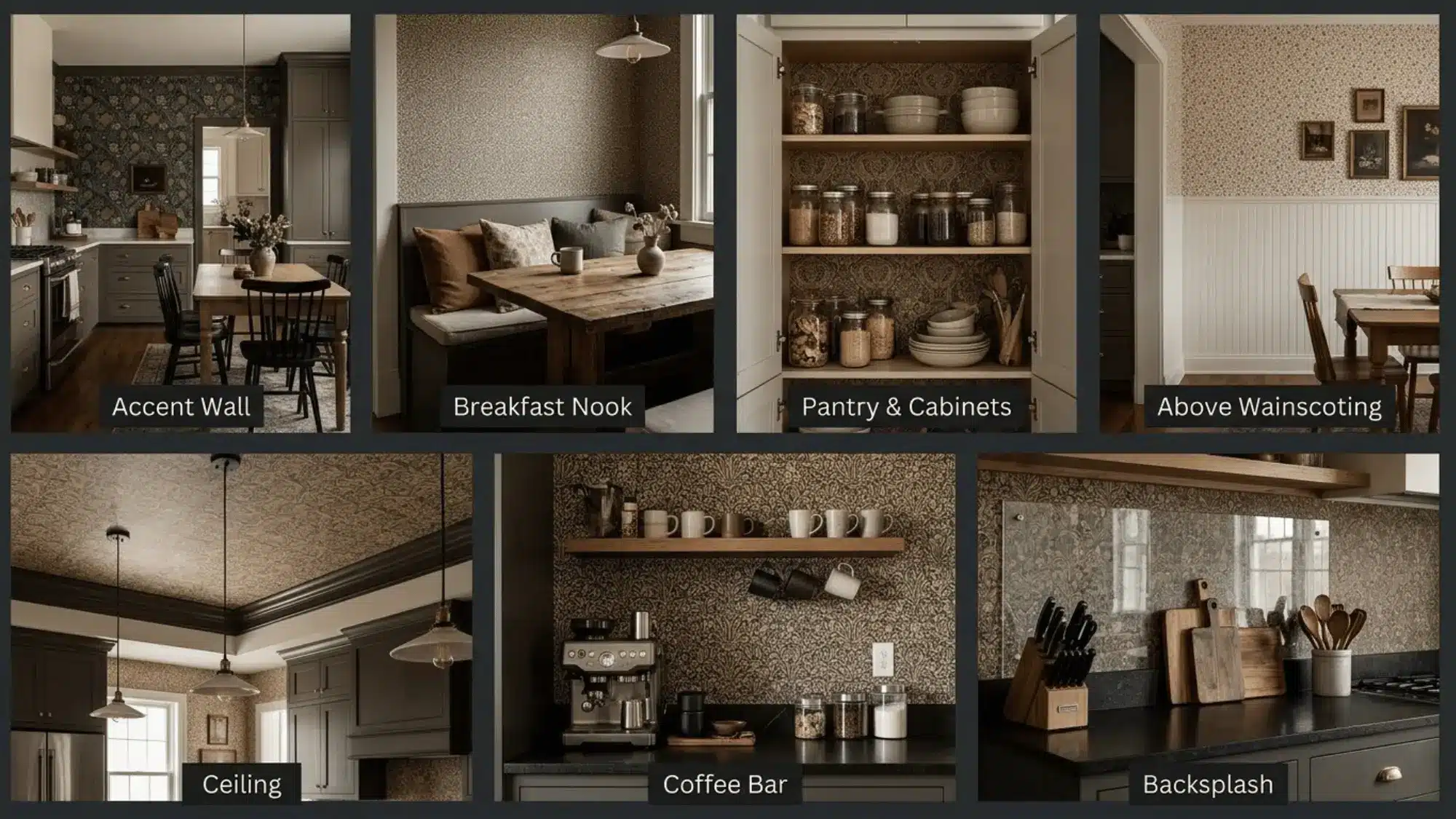
A kitchen wallpaper comes down to a few smart location choices. These ideas will help you to find those spots in your kitchen.
1. Wallpaper on Accent Wall
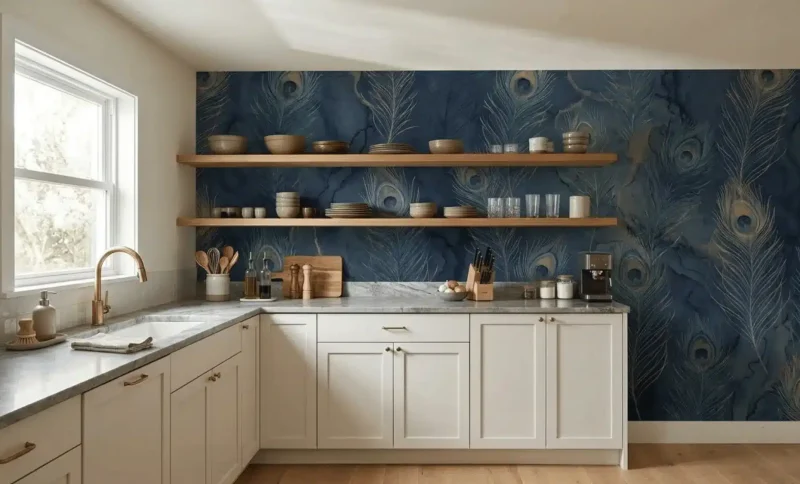
A kitchen wallpaper accent wall is a great way to add color, pattern, or texture without overwhelming the room. Pick a wall away from the cooking zone, like an empty stretch, a galley kitchen’s end wall, or the wall by the dining table.
Botanical and floral prints feel soft and natural, while geometric designs look clean and modern.
Keep the rest plain so it adds depth without crowding.
2. Wallpaper on Breakfast Nooks and Dining Areas
A breakfast nook or dining area sits away from the sink and stove, so it rarely gets splashed. Choose a pattern that picks up a color from your cabinets, chairs, or table.
Plain or wood furniture can handle a bolder print. If the cabinets already have strong color, a quieter pattern keeps the area calm.
3. Wallpaper to Pantries, Cabinets, and Drawers
Wallpaper can brighten spots you only see when you open a door. Line the back of a pantry, glass-front cabinet panels, or the wall behind open shelving so dishes and jars stand out.
Vinyl peel & stick wallpaper for kitchen drawers is easy to cut and works well in small spaces. Match it to the use.
Utensil drawers need a tough, wipeable finish, while linen drawers can take a lighter one.
4. Wallpaper Above Wainscoting or Between Cabinets
Keep wallpaper above the areas that take splashes. Wainscoting protects the lower wall, so you can start the paper higher up. The strip between or above cabinets works the same way.
It adds color, texture, or pattern where you can see it but rarely touch it. A small-scale floral or a soft stripe looks neat above paneling.
5. Use Wallpaper on the Kitchen Ceiling
Think of the ceiling as a fifth wall. It sits far from water, grease, and hands, so it gets very little mess.
An overhead pattern draws the eye up and gives a plain kitchen a pleasant surprise. A soft texture or small print works well.
6. Decorate Coffee Bars and Kitchen Islands
A small wallpapered section can mark out a coffee bar.
Cover the wall behind the machine and mugs with a small-scale print, add a floating shelf over the paper, or hang a framed square above the bar.
Pick a wipeable paper, since coffee drips happen. On an island, use durable, washable wallpaper only where it suits, such as scrubbable vinyl on the side panels.
7. Use Wallpaper as a Backsplash (With Caution)
A wallpaper backsplash is the riskiest choice.
The wall behind a stove or sink faces water, grease, and heat all at once. Washable vinyl helps, but it is not enough on its own.
Cover the paper with a clear glass or acrylic panel. Glass is easy to wipe clean, and acrylic is another option for high-use spots.
Where Should You Avoid Using Wallpaper?
Skip wallpaper directly behind the stove or range, where heat and grease build up fast.
Also leave the wall behind an unprotected sink bare, since water hits it every day.
The same goes for any surface that stays damp or gets heavily splashed. Delicate or porous papers can stain or peel in these spots, so use tile or glass instead.
What Type of Wallpaper is Best for a Kitchen?
The right kitchen wallpaper depends on where it goes and how much mess that spot gets. Four options are compared below.
- Vinyl or washable: Tough and easy to wipe clean, so it is the safest pick for most kitchen walls.
- Peel-and-stick: Simple to apply, and a good fit for small, low-risk spots like drawers or a coffee bar.
- Traditional paper: Best kept to protected areas, away from the sink, stove, and splashes.
- Grasscloth and paperweave: Avoid these in exposed spots, since natural fibers absorb liquids and stain easily.
How to Choose the Right Kitchen Wallpaper
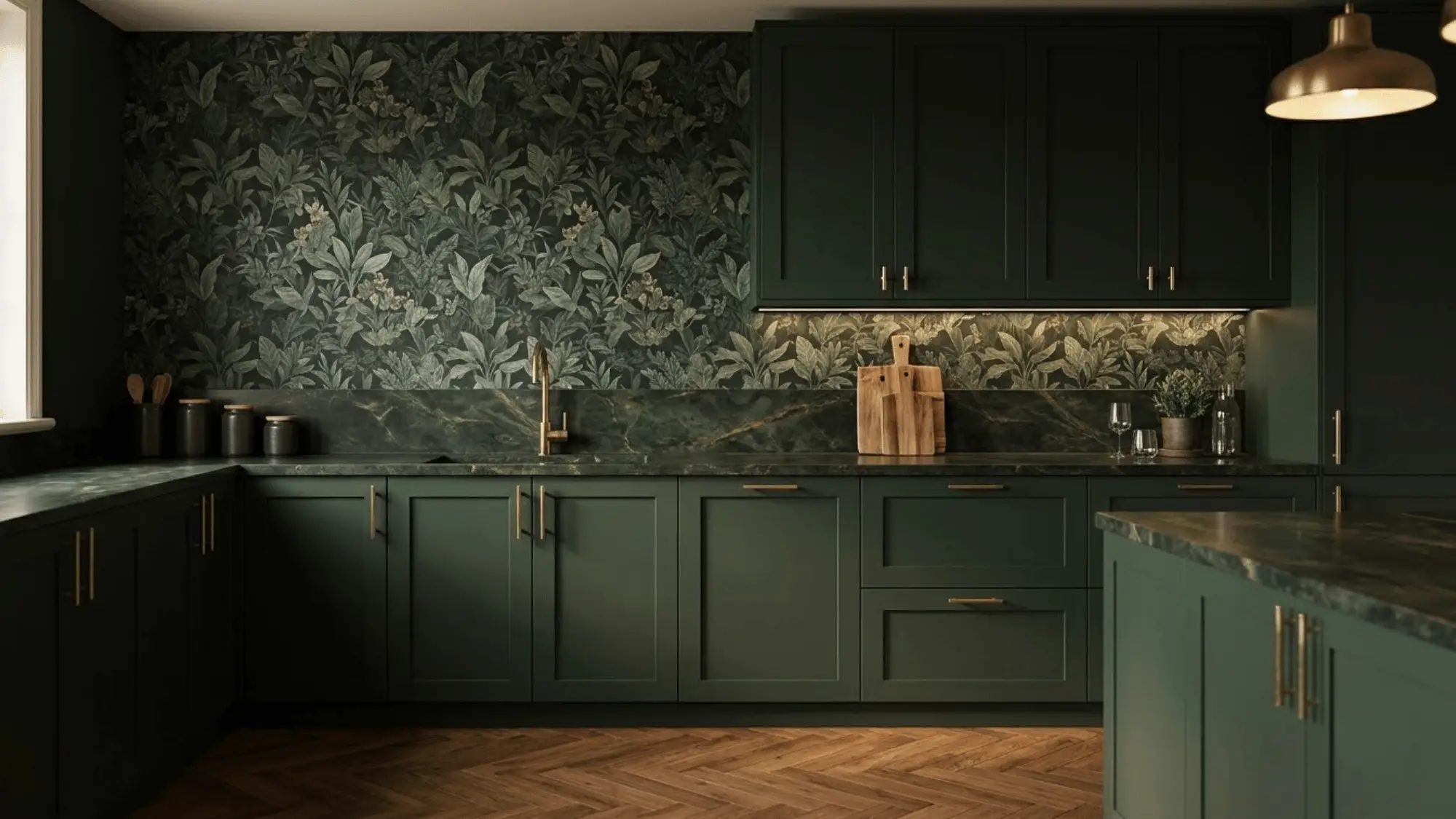
Start with colors you already have. Pull one shade from your cabinets, countertops, flooring, or hardware so the paper looks planned.
Match pattern size to the room: small prints suit compact kitchens, while large ones need open wall space.
Save bold prints for one or two spots instead of every surface.
Floral, botanical, geometric, textured, and neutral designs all work, and a neutral can calm a busy room.
How to Protect and Maintain Kitchen Wallpaper
A few simple habits help wallpaper stay in good shape.
- Heat and water: Keep paper away from direct heat and water, and wipe up spills quickly.
- Splash zones: Add a glass or acrylic panel wherever water or grease can reach the paper.
- Cleaning: Follow the manufacturer’s instructions, since wipeable and washable labels aren’t the same.
- Gentle care: Skip abrasive cleaners and soaking-wet cloths, which can wear the surface and weaken the glue.
Quick Guide to The Best Wallpaper Locations
Use this quick guide to match each kitchen spot to its risk level.
|
Location |
Risk |
Recommended Approach |
|---|---|---|
|
Pantry |
Low |
Decorative wallpaper |
|
Breakfast nook |
Low |
Washable wallpaper |
|
Accent wall |
Low |
Feature/botanical print |
|
Cabinets & drawers |
Low |
Suitable peel-and-stick |
|
Ceiling |
Low |
Decorative pattern |
|
Open shelving |
Low |
Patterned backdrop |
|
Island |
Medium |
Durable wallpaper |
|
Backsplash |
High |
Protective glass recommended |
|
Behind stove |
Very high |
Generally avoid |
|
Behind sink |
High |
Use protection |
Frequently Asked Questions
Which Colors Give a Kitchen a High-End Look?
Designers point to deep, rich shades such as matte black, dark blue, and green, along with warm neutrals and brass hardware.
Which Kitchen Colors Are Trending in 2026?
Soft, warm greens like sage, olive, and eucalyptus lead the trends, along with deep burgundy and wine tones, teal, and layered neutrals.
Is Paint or Wallpaper Better for a Kitchen?
Paint costs less and is easier to touch up. Wallpaper offers pattern and can last longer, but kitchens need vinyl and protection near water and heat.
The Bottom Line
The best kitchen wallpaper placement balances visual impact with practical protection.
Low-risk spots like nooks, ceilings, and accent walls let a pattern stand out, while the areas near the stove and sink need extra care.
Match the material to the spot and shield it from moisture, heat, grease, and daily wear. Start with one low-risk wall, and order a sample to test it.