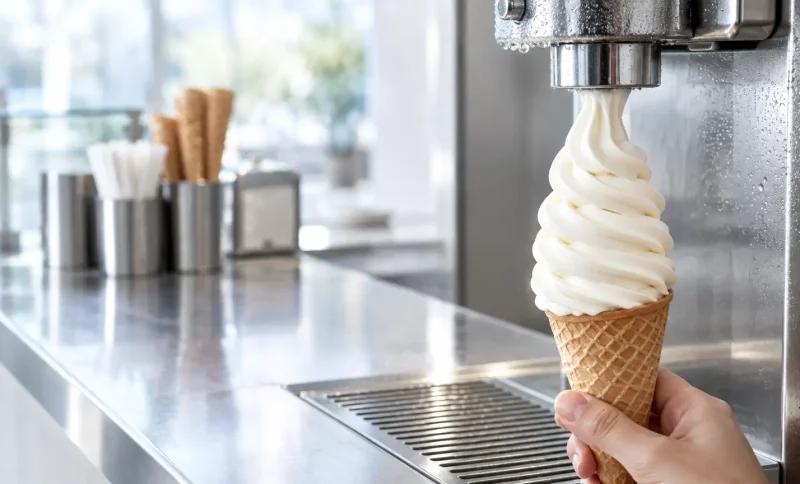
Soft serve looks like the simplest dessert there is. Yet the gap between a silky cone and an icy, flat one comes down to a handful of variables that good dessert makers watch closely. Once you understand them, you will taste soft serve differently.
Why Soft Serve Is Softer: Temperature
The single biggest difference between soft serve and the ice cream in your freezer is how cold it is. Hard ice cream is typically stored around 0°F to 5°F. Soft serve leaves the machine much warmer, usually somewhere in the low 20s Fahrenheit.
That gap changes everything. Ice cream is never completely frozen. It is a blend of ice crystals, air bubbles, fat and a thick, sugary liquid that stays unfrozen. At soft serve temperatures, a larger share of the water is still in that liquid phase, so the product flows and holds a swirl instead of standing stiff.
Warmth also helps flavor. Cold dulls the tongue, and sweetness in particular is harder to detect at very low temperatures. That is part of why soft serve can taste fuller than a hard scoop.
Air: The Ingredient Nobody Lists
Every churned frozen dessert contains air, and the amount has a name: overrun. It describes how much the volume grows as air is whipped in. At 100 percent overrun, a gallon of mix becomes two gallons of product, which means half of what you are eating is air.
Budget ice creams tend to sit near the high end of that scale, while premium pints are much denser. Soft serve usually falls somewhere in between. The right amount of air makes it light and creamy. Too little and it eats heavy and cold. Too much and it turns foamy, tastes thin and collapses quickly in the cup.
Those tiny bubbles do not hold themselves up. During freezing, the whipping action knocks fat droplets into each other until they partly clump, forming a loose network that surrounds the bubbles and keeps the swirl standing.
Fat and Sugar: Texture’s Two Levers
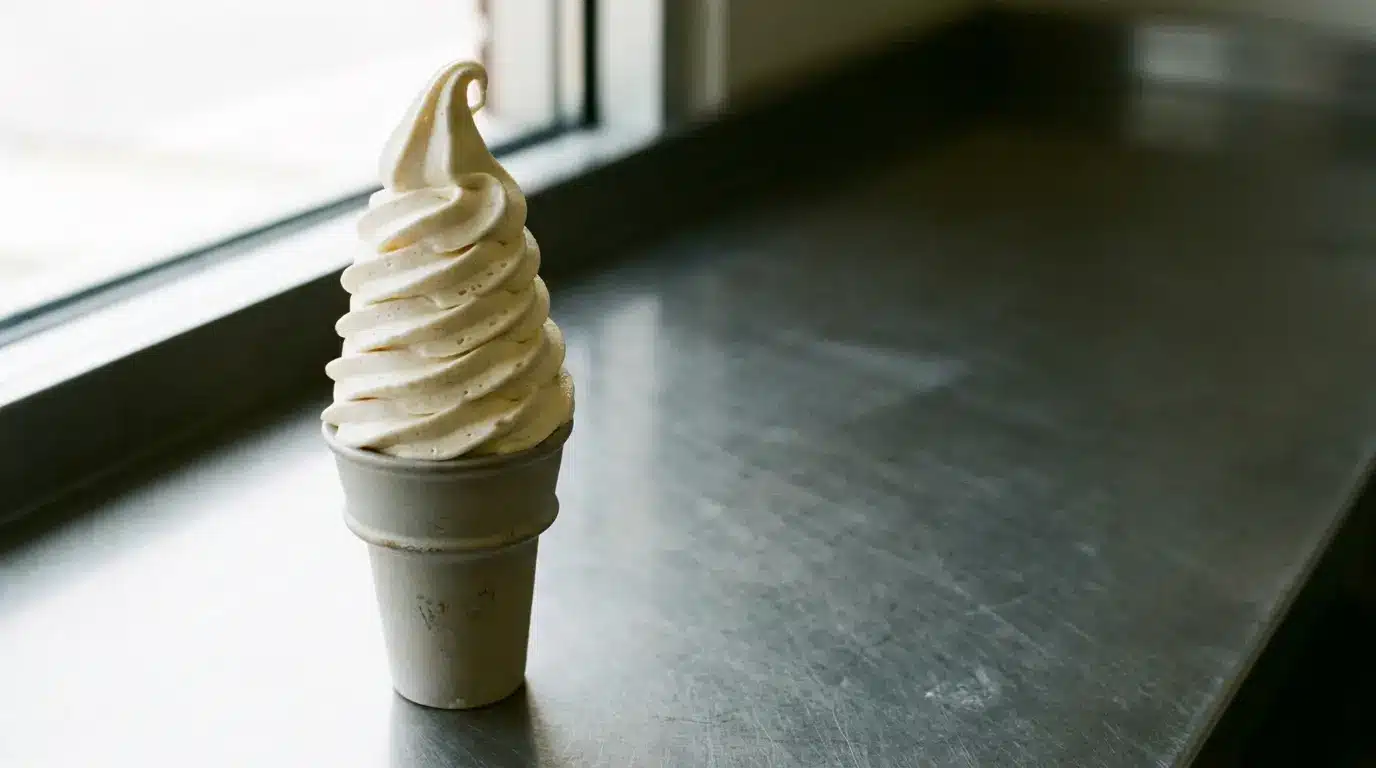
Fat carries flavor, coats the tongue and gives that rich, lingering finish. Soft serve generally runs leaner than hard ice cream, often in the range of 3 to 6 percent milkfat, compared with at least 10 percent for anything sold as ice cream in the US. The warmer serving temperature helps make up for the difference in richness.
Sugar does more than sweeten. Dissolved sugar lowers the freezing point of the mix, so the more sugar there is, the softer the product will be at any given temperature. Balance matters. Too little sugar and the texture turns icy and hard. Too much and the swirl slumps and tastes cloying.
Why Fresh Is Best
Smoothness comes down to ice crystal size. Small crystals feel creamy on the tongue, while large ones feel coarse and gritty. Soft serve is frozen quickly while it is being whipped, which keeps crystals tiny.
Time works against that. Each time a frozen dessert warms slightly and refreezes, small crystals melt and the water refreezes onto larger ones. The crystals grow, bubbles merge and the texture gets icier. A sandy feel can also come from lactose, the natural milk sugar, crystallizing in old product. This is why a cone straight from the machine is at its peak.
Consistency Is a Machine Problem
At a busy stand, the hardest part is keeping every cone the same. Pull too many in a rush and the freezing cylinder can fall behind, so the product comes out softer and wetter. Leave the mix sitting at the wrong temperature and quality slips.
Newer automated machines approach this from a different angle. A robotic ice cream machine from Sweet Robo, a U.S. company, keeps its product at a safe temperature day and night in a built-in freezer and makes each cup to order in about 35 seconds, running the same process for every customer. A programmed routine does not get tired or hurried at the end of a long shift.
How to Judge a Cone Like a Pro
A quick checklist for your next order:
- Look: a good swirl is glossy and holds its ridges. A dull, wet surface suggests it is too warm.
- Texture: it should feel smooth on the tongue. Graininess points to large ice crystals or crystallized lactose.
- Flavor: it should taste clean and full. If it seems bland, it may be too cold or too airy.
- Melt: as it softens, it should turn into a creamy liquid, not a watery foam.
The best cones make all of that physics and chemistry invisible.