

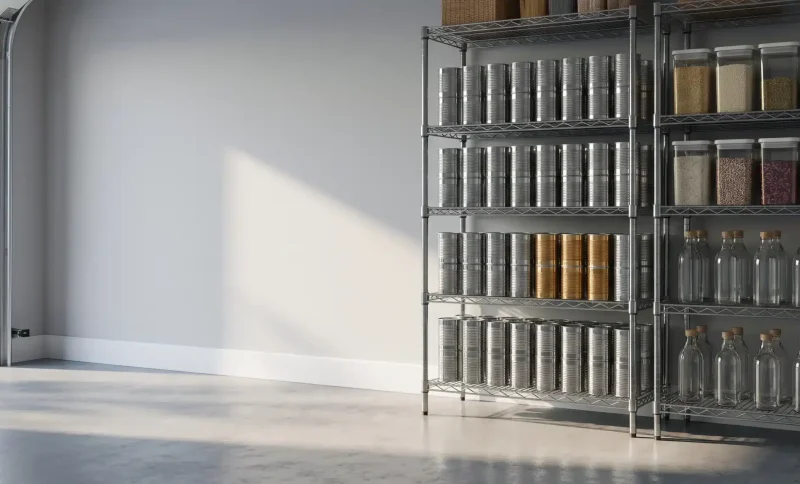
If you cook frequently and buy food in bulk or fill your own jars every summer, your kitchen pantry fills up quickly. The obvious storage location for this overflow is your garage. There is plenty of wall space, it is near the kitchen door, and that is where you bring your groceries anyway.
A garage could be an additional pantry but it does need a little more thought than a cupboard because a garage runs hotter, colder and damper than the rest of the house, and it attracts mice.
Decide What Belongs Out There
Not everything can survive the garage. The safest items are shelf stable, sealed and not fussy about temperature.
- Canned goods in their unopened cans
- Bottled water and sparkling water
- Paper goods, foil and storage bags
- Unopened cases of pasta, rice and dried beans in sealed containers
- Backup jars of oil and vinegar, if your garage stays mild
Canned goods keep best somewhere cool and dry, so a garage that gets hot in summer is no place for home-canned tomatoes. If flour, cereal, crackers or pet food in paper bags have to go out there, put them in strong, closed bins.
Don’t allow items to get too hot or too cold. The back corner of a garage can become very hot in July but very cold in February. A cheap indoor thermometer on a shelf tells you more than guessing.
Build Shelving That Works for a Cook
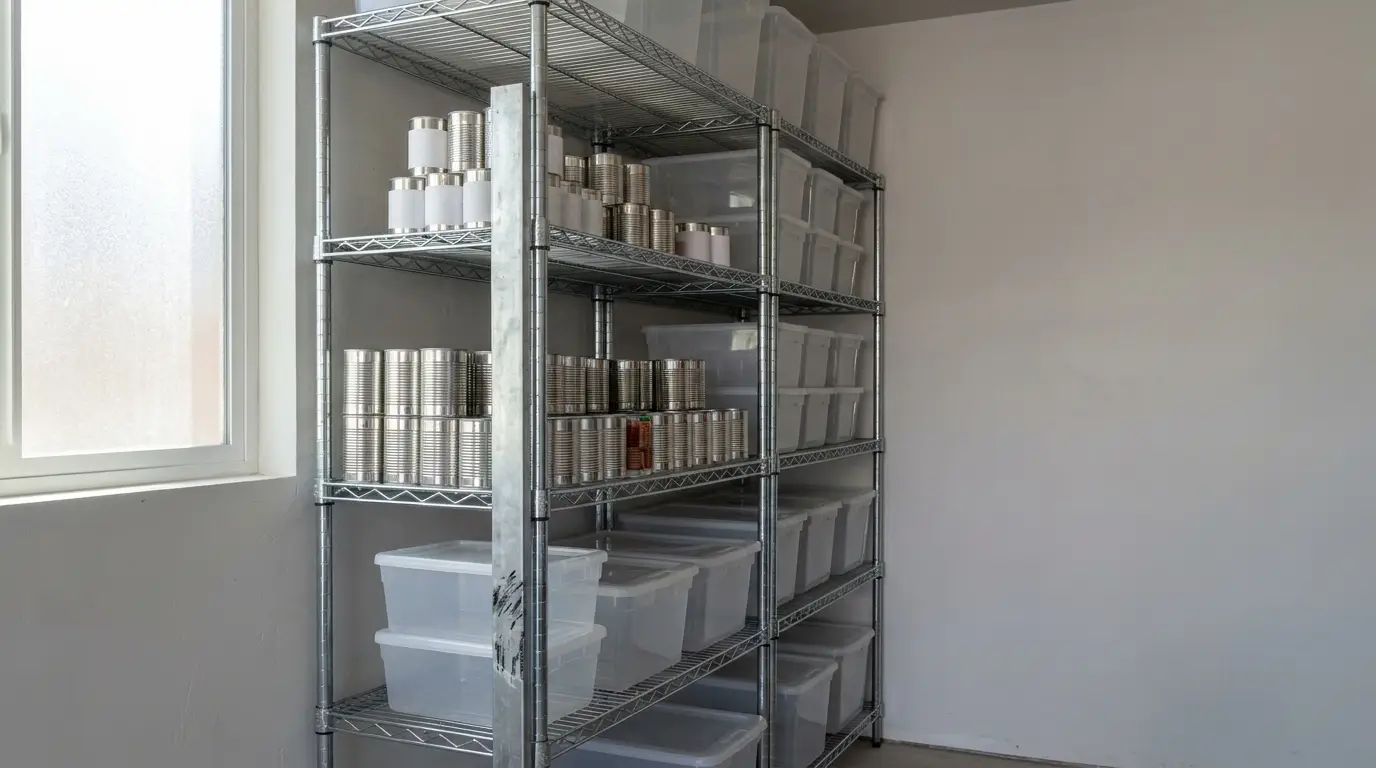
The best garage pantries look like restaurant dry storage. Open. Labeled. Easy to rotate.
- Wire or steel shelving units. They let air move, they wipe clean, and they are tough enough for cases of cans. Keep the bottom shelf at least six inches off the floor.
- Clear bins with labels. You can see at a glance what is running low, and a lid keeps out dust and crawling visitors.
- First in, first out. Load new stock at the back and pull from the front. Write the purchase month on the lid with a marker.
- A small “grab shelf” by the kitchen door. The things you reach for weekly go there, so you are not hunting at dinner time.
Mount the shelving on the wall farthest from the garage door. The area near the door takes the most heat, cold and road grime every time it opens.
Mind the Door: It Controls Temperature and Pests
Most pantry guides skip the biggest feature of the room: the garage door. It is the largest opening in the space, and it decides a lot about the temperature and the pests.
A worn bottom seal is the most common culprit. When rubber wears and cracks or even flattens, it soon creates a gap which allows water, dust, cold air and even small animals to enter. Mice need very little room to get in. Close the door and stand inside with the light switched off on a sunny day. If you can see any light at the bottom or sides of the door then the seals will need some attention.
An uninsulated door lets the weather straight into the garage. If you plan to store food in your garage then an insulated door or even an insulation kit could help to maintain a more constant temperature.
Another element of the garage door is the door itself. If a garage door will not go all the way down or reverses while closing, it leaves a gap overnight for pests to walk into the pantry. Many of the calls our team in the Tacoma area takes in the wet months come from worn seals and stiff, damp hardware on a tired door. A door that closes fully and stays closed is your best pest control.
Keep Pests Out for Good
A garage pantry is only as good as its defenses.
- Seal everything in hard containers. Thick plastic or metal, never cardboard.
- Clean up spills right away. One torn bag of rice feeds a family of mice for weeks.
- Store trash and recycling away from the shelves.
- Check the corners monthly for droppings or chewed packaging, so a problem never gets a head start.
Keep bait away from food. Snap traps belong along the walls, well away from the shelves, so you never reach past food to check them.
Keep It Running Smoothly
Once a season, empty one shelf at a time, wipe it down and check the dates. It takes about ten minutes a shelf and keeps forgotten cans from piling up.
If the door grinds, sticks or drops too fast, have it looked at soon. A garage pantry needs a balanced, sealed door to stay cool, dry and closed, and Century Garage Door Repair Servicecan sort that out.
Quick Answers
Is it safe to store canned food in the garage?
Yes, if your garage stays fairly cool and dry. Avoid spots that get very hot in summer or freeze in winter.
How do I keep mice out of my garage pantry?
Store food in hard, lidded bins, ensure the bottom shelf of your garage storage is off the floor and replace the worn garage door bottom seal to eliminate the gap through which they can slip.
What is the best shelving for garage food storage?
Open wire or steel shelving to allow for airflow, with clear, labeled, lidded bins for loose items.


