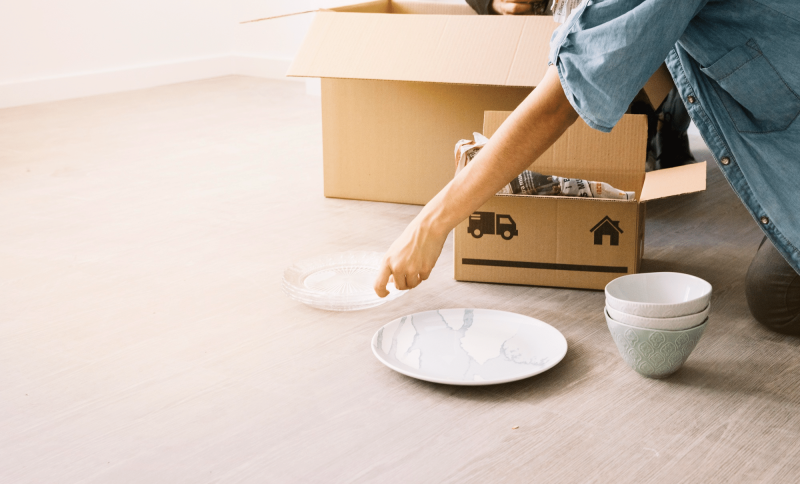
Kitchens fool people. Cabinets open, everything’s on the counter, and now you’re looking at thin-stemmed glassware, heavy plates, a blender with a glass jar, awkward baking dishes, and enough blades that careless packing gets dangerous fast.
The problem is that “fragile” means different things in a kitchen. A plate cracks under pressure. A wine glass hates impact. A coffee maker looks sturdy until its carafe starts bouncing around. Knives probably won’t break at all — they’ll cut through bad wrapping instead.
So, packing everything the same way doesn’t make much sense.
Start with the right boxes
So old delivery boxes work great for the light stuff — cereal, plastic containers, dish towels. Just keep the sturdy small and medium boxes handy — they’re what you need for anything breakable. Dish boxes are the best bet here; that thicker cardboard deals with weight and impact way better.
Kitchen boxes get heavy fast. Twelve plates look like nothing in a cabinet. Two flights of stairs change that. Tape those bottom seams well, and don’t skip the loosely crumpled packing paper — a few inches of it. And whatever you do, keep newspaper off light-colored dishes. The ink will transfer. Don’t cram a whole cabinet into one giant box. Smaller cartons lift easier, drop less.
For expensive stemware, china, or a few awkward appliances, it may be worth hiring a pro to pack — even if you’re doing the rest yourself. Movers such as https://elatemoving.com/ regularly deal with fragile kitchens and, just as importantly, know which items should never share a box.
Pack plates sideways
Most people instinctively stack plates flat because that’s how they sit in the cupboard. During a move, turn them on edge instead. So wrap each plate separately, and then put them in vertically — kind of like records on a shelf. That way you’re not piling all the weight onto the bottom plates.
Fine china can use another layer of paper or bubble wrap. Fill any gaps with crumpled paper, but don’t force extra plates into a box just because there seems to be another inch of space.
Before sealing the carton, gently rock it. If something moves or knocks, add more padding.
A dish box really only needs a few things done properly:
- a generous cushion across the bottom and top;
- each plate or bowl wrapped separately;
- empty spaces filled so dishes can’t shift;
- enough room to close the box without pressing down hard.
Give glasses some extra attention
Wine glasses get their own method. A little loosely crumpled paper inside the bowl, stem protected, then the whole glass wrapped. Don’t stuff paper tightly inside. Thin glass doesn’t need pressure from the inside as much as bumps from the outside.
Keep heavy tumblers separate from delicate stemware. A thick whiskey glass knocking against crystal for a couple of hours can undo some very careful packing.
Temperature’s part of it. Glass expands and contracts with temperature swings, and rapid changes create stress — particularly at scratches and small imperfections. Glassware that’s been in a freezing truck needs to come to room temp before it sees hot water.
Don’t treat knives like utensils
Blade guards if you’ve got them. If not: several layers of packing paper or cardboard per blade, taped, handle partly visible. The last thing anyone should do is write it off as harmless.
Then label the package clearly: SHARP KNIVES. Elate Moving, like any moving crew, can work more safely when cartons containing sharp objects are clearly identified rather than discovered halfway through unpacking.
Take appliances apart first
It’s the removable parts that always trip you up with small appliances. So take out the blender jars, coffee carafes, food processor bowls, blades, whatever loose attachments you’ve got. Wrap the fragile pieces separately. And clean and dry everything first — especially anything that holds water. Take a quick phone photo before dismantling a complicated appliance. Saves you the head-scratching later.
If the original packaging is still around somewhere — a closet, the garage — use that. Otherwise, go with a box that gives you enough room to pad every side.
One last check before the tape
Before sealing each fragile box, move it gently. Hear a click? Feel something slide? Open it and add padding. Two minutes of effort now can save a discontinued dinner plate later.
Packing a kitchen takes patience — you’re dealing with a ridiculous mix of heavy, sharp, hollow, and breakable stuff all in one room. So give that last wine glass another sheet of paper if it needs one.