The $12 tub of ceiling paint was the tip off. My neighbor Dana painted over a faint water stain above her kitchen window, and by the next rainy month the stain came back bigger and browner. The culprit sat directly overhead: a roof that had quietly failed. Nobody warned her that the rooms where you cook, store food, and sleep take the first hit when a roof gives out. So let me save you that month of denial.
Here’s the deal. A roof isn’t just curb appeal. It’s the lid on every room you actually live in, and once it stops sealing, moisture works its way down into your attic, your insulation, and eventually your walls. Below, you’ll get a plain walk through the major roof replacement options, the signs that mean you’re past patching, and the decisions that matter more than color swatches.
What Is Actually Failing When Your Roof Goes Bad?
Most homeowners picture the shingles as the whole story. They’re the visible layer, sure, but a roof is a stack: decking, underlayment, flashing, ventilation, and the outer covering on top. When you see moss or a curling edge, the damage almost always started lower down and much earlier.
Water doesn’t need a hole to get in. It needs a seam, a nail pop, or a spot where flashing pulled away from a chimney. From there it travels sideways along the deck before it ever drips onto your ceiling, which is why that stain showed up two feet from the actual breach.
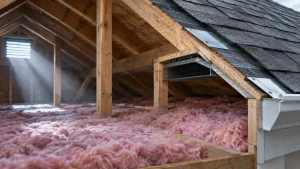
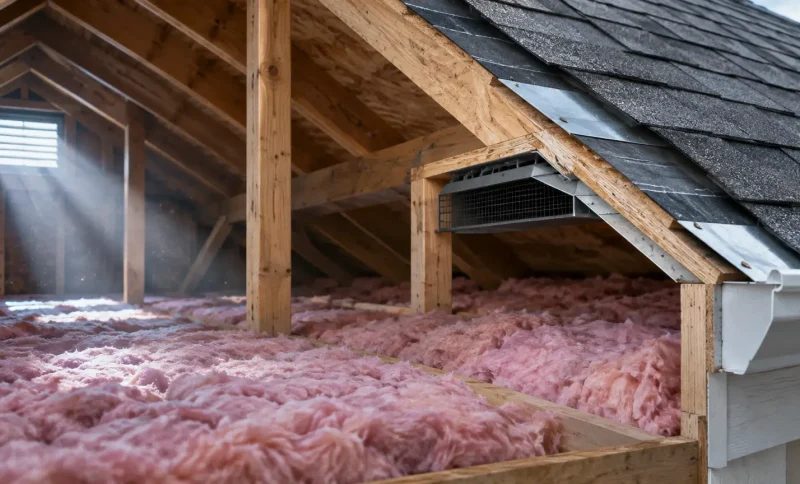
Here’s the part that catches people in older houses: attic ventilation. A hot, sealed attic traps moisture against the underside of the roof deck. According to the Department of Energy, proper attic ventilation and insulation work together to control moisture and heat in a home, and when one falls behind, the other can’t carry the load. If your attic smells musty in summer, ventilation deserves a hard look before you buy a single bundle of shingles.
A Simple Test I Call the Attic Walk-Through
Before you call anyone, spend twenty minutes up in the attic with a flashlight. This is the one inspection that doesn’t rely on anyone’s sales pitch, and it’s yours to run.
- Look for dark streaks or water rings on the underside of the roof deck.
- Check the insulation near the eaves for clumping or a damp, matted feel.
- Smell the air. Musty means moisture is hanging around somewhere.
- Find any daylight showing through the boards, which usually means a gap in flashing or a failed seal.
Write down what you find with a phone photo of each spot. When a contractor walks your roof later, you’ll be comparing notes instead of nodding along. I’d rather see five blurry photos than a homeowner guessing at what’s up there.
Roof Replacement Options, Compared Without the Sales Voice
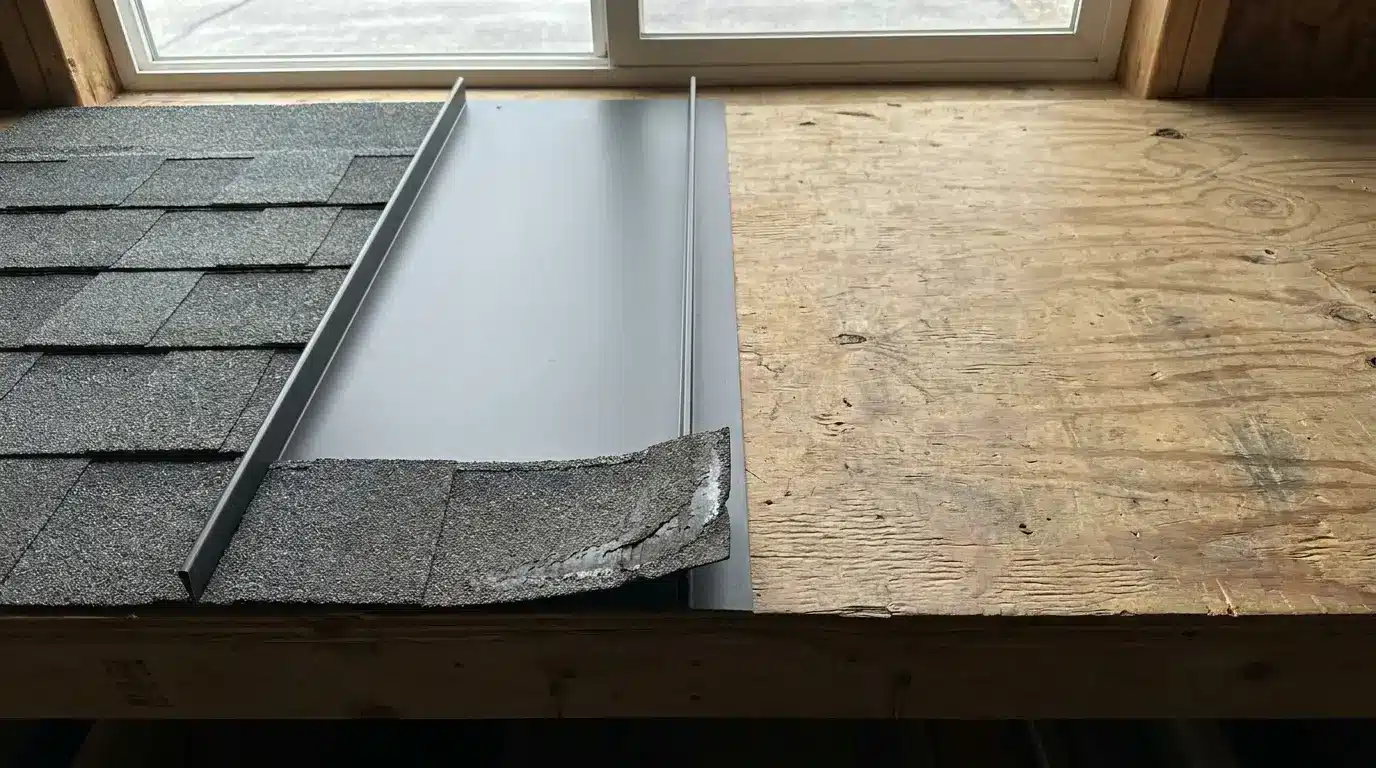
Now the fun part. Once you accept that a patch won’t cut it, here’s how the popular materials stack up.
|
Material |
Best For |
Watch Out For |
|---|---|---|
|
Asphalt shingle |
Most homes, tight budgets, easy future repairs |
Shorter lifespan than the hard stuff; moss loves a damp climate |
|
Standing seam metal |
Long hauls, rain and snow shedding, clean modern lines |
Higher upfront cost; noise if the substrate isn’t right |
|
Flat, low slope systems |
Additions, porch roofs, garages |
Needs a specialist, since shingles don’t belong on a low pitch |
|
Cedar shake and synthetic |
Character homes and specific neighborhood looks |
Cedar needs real upkeep; synthetics cost more than they look |
None of these is the “good one.” The right pick comes down to three questions: what’s under the roof, what your climate throws at it, and how long you plan to stay. On a starter house you might sell in four years, a mid range shingle makes plain sense. On a forever house at the end of a windy ridge, I’d stretch for standing seam metal every time and never think about it again.
How Much Does This Cost, Really?
Quotes swing wildly, and it’s not a scam. Pitch, height, layers to tear off, and the number of chimneys and skylights all move the number. A simple gable roof is a very different job from a steep cut up monster with three valleys.
Two habits keep you from overpaying. First, insist that every proposal itemizes tear off, underlayment, and flashing instead of lumping it into one line. Second, ask what happens if rot shows up after the old shingles are gone. Good crews price that in writing before they start, so you’re not negotiating from a wobbly ladder.
Roofing Has a Long History, and Its Oldest Rules Still Hold
People have been waterproofing their homes with overlapping layers for thousands of years, from thatch and clay tiles to the slate that still tops old churches in the Northeast. The physics hasn’t budged an inch. Water has to be directed downhill and off the edges, and every seam has to shed, not catch. The Department of Housing and Urban Development has long kept guidance on home maintenance and upkeep for owners, and its core message is the same one those medieval thatchers worked out: catch wear early, because small repairs are cheap and big ones are not.
When a contractor walks your roof, listen for how often they mention drainage, flashing, and ventilation. If the pitch is mostly about color, you’ve learned something about them.
One Step Almost Everyone Forgets
Disposal. The old roof has to come off, and that’s hundreds of pounds of material heading to a landfill. You can ask your contractor where the tear off goes and whether they recycle what’s accepted in your area. The Environmental Protection Agency tracks construction and demolition materials and how communities handle them, so it’s a reasonable question to raise without sounding like a nuisance. A crew that shrugs at the question probably isn’t thinking hard about anything else either.
The Kitchen Connection Nobody Talks About
Goodbye to the stain on the ceiling above your pantry shelves, and hello to dry flour and cereal that doesn’t go soft in three weeks. A sealed roof keeps attic humidity out of the rooms where you actually live. I’ve watched it change a kitchen practically overnight. Not with new cabinets or a fancy light fixture, just a lid that finally stopped the moisture.