A tight month at the grocery store is not a cooking problem. It is a planning problem, and planning is something every home cook can get better at. When the food budget suddenly shrinks because the car needed brakes or the hours at work got cut, the goal shifts from “what looks delicious this week” to “how do I put real meals on the table with what I can actually spend.” The good news is that the same habits that make weeknight cooking easier also make it cheaper, and a rough month can leave you with skills you will keep using long after the budget recovers.
What Should You Cook First When Money Gets Tight?
Start with an honest pantry and freezer audit before you spend a dollar. Most kitchens are hiding four or five meals already: the half bag of rice, the frozen chicken thighs bought on sale in July, two cans of tomatoes, that lonely box of pasta. Lay it all out on the counter and treat it like a puzzle. A pot of rice, a can of tomatoes, and some frozen vegetables is most of the way to a weeknight fried rice or a tomato risotto.
Once you can see what you own, write the week’s meal plan around those ingredients instead of around a recipe list. This flips the usual planning order, and it is the single biggest money saver in a lean week. The shopping list becomes short and specific: only the items that complete meals you can mostly already make.
Which Cheap Ingredients Give You the Most Meals per Dollar?
Some ingredients simply work harder than others when every dollar counts. Food costs in Canada have climbed steadily for years, a trend tracked annually by Canada’s Food Price Report from Dalhousie University and the University of Guelph, and the gap between high-cost and low-cost proteins keeps widening. These are the workhorses I lean on:
- Eggs make breakfast for dinner a legitimate strategy, and a frittata turns leftover vegetables and a bit of cheese into a full meal.
- Dried lentils and beans cost pennies per serving, and a pot of lentil soup freezes beautifully.
- A whole chicken gives you a roast dinner, a second meal from the leftovers, and a pot of stock from the bones.
- Canned fish becomes salmon patties or tuna pasta that hold their own on any weeknight table.
- Oats, rice, and potatoes form the filling base layer that makes smaller portions of protein feel like a complete plate.
Statistics Canada publishes monthly food price data if you want to see which categories are rising fastest in your province, which can genuinely change what lands in your cart.
How Does Batch Cooking Stretch a Food Budget?
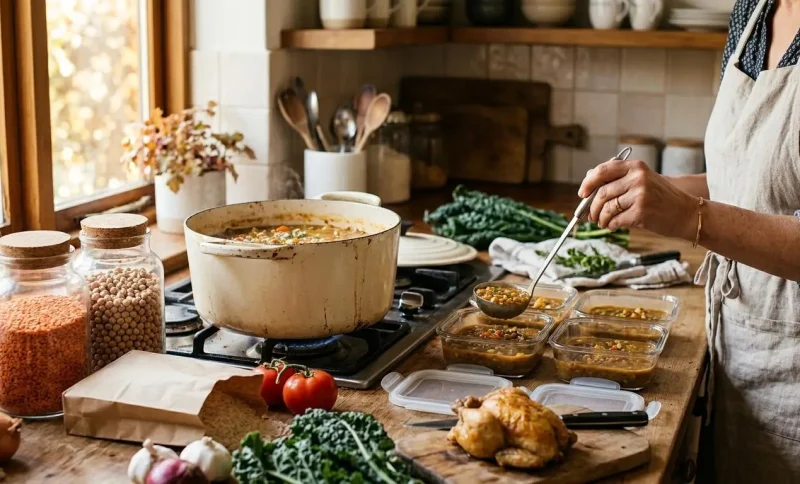
Cooking once and eating three times protects you from the most expensive food there is: the takeout you order on the night you have nothing planned. Pick one afternoon, make a double batch of something forgiving like chili, curry, or pasta sauce, and portion it into the freezer. Future you now has a “too tired to cook” plan that costs a fraction of delivery.
Batch cooking also lets you buy in smarter quantities. The larger bag of rice or the family pack of chicken costs less per serving, but only if nothing goes to waste. Freezing portions on day one is how you capture that saving instead of composting it.
What If the Shortfall Is Bigger Than the Pantry Can Fix?
Sometimes a rough month is bigger than clever meal planning. When the numbers genuinely do not reach, it helps to know the full range of options before stress makes the decision for you. Community resources exist for exactly these moments: Food Banks Canada can point you to local programs, and there is no shame in using them for a season. The free budget planner from the Financial Consumer Agency of Canada helps you see the true size of the gap, which is calmer than guessing.
For a short-term cash gap with a clear end date, like a pay cycle disrupted by a job change, some households consider regulated borrowing. Take time to understand how online loans work in Canada before deciding, including the cost, the repayment date, and whether the gap is truly temporary. Borrowing suits a bridge, not a cliff, and it belongs beside a plan rather than in place of one.
How Do You Keep Meals Feeling Generous on a Small Budget?
Frugal food fails when it feels like punishment, so spend a little effort on the parts of a meal that carry the most joy. Toasted spices bloom a plain lentil soup into something you would order at a restaurant. A squeeze of lemon and a handful of fresh herbs wake up almost any grain bowl. Warm bread beside a thin soup changes the whole meal’s mood.
Portion psychology matters just as much as the ingredients. Serve stews over a scoop of rice in a shallow bowl and the plate reads as abundant. Family-style platters in the middle of the table feel festive even when the ingredients cost very little. Eating well through a tight month is partly arithmetic and partly theatre, and the theatre is free.
Frequently Asked Questions
What Is the Cheapest Way to Plan a Week of Family Dinners?
Build the plan around what your pantry and freezer already hold, then shop only for the missing pieces. Anchor the week with low-cost proteins like eggs, lentils, and a whole chicken.
How Much Can Batch Cooking Actually Save?
The saving comes from two places: cheaper per-serving costs on larger packs, and fewer impulse takeout orders. For most families, replacing even one delivery night a week with a freezer meal makes a visible difference by month’s end.
Where Can I Get Help If I Cannot Afford Groceries This Month?
Local food banks and community food programs are set up for exactly this, and Food Banks Canada’s site can locate the ones near you. Using them during a rough stretch is what they are for.