

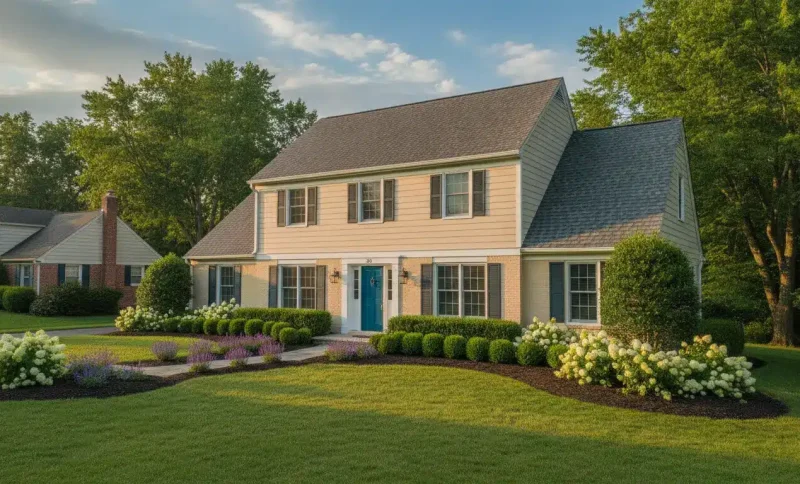
Most sellers arrive at the same fork in the road. There’s a limited pot of money, a long list of things that could be improved, and no obvious way to rank them. Spend too little and the house lingers. Spend too much on the wrong work and the money never comes back at closing.
The trouble is that owners and buyers look at the same house through different eyes. An owner sees years of small compromises they learned to live with. A buyer sees a stack of costs they’ll inherit the day they get the keys. Those two views rarely line up, and the gap between them is where seller money quietly disappears.
Start With Condition, Not Style
Before anyone picks a paint color, it helps to understand what actually moves a sale. Buyers price risk. A house that looks charming but has an unresolved question mark hanging over it will draw lower offers than a plain house with nothing hidden in it.
Repairs Are Not Upgrades
There’s a real difference between fixing what’s broken and improving what already works. Fixing broken things protects your asking price. Improving working things might raise it, but usually by less than the improvement cost. That distinction should drive the order of your spending, not the other way around.
Industry data backs this up year after year. The annual Cost vs. Value Report has consistently shown that exterior replacement projects recoup a larger share of their cost than interior remodels do. Doors, siding, windows, garage doors. The unglamorous stuff.
The Appraisal Ceiling
Your neighborhood sets a limit, whether you like it or not. If similar homes nearby have sold in a certain range, an appraiser will have a hard time justifying a number far above it, no matter how nice your new countertops are. Pouring money into a house that’s already the most expensive on the block is one of the fastest ways to lose it. Check recent comparable sales before committing to anything large.
That ceiling is exactly why the highest-return work tends to be defensive rather than ambitious. Which brings us to the single largest defensive item on most properties.
The Roof Carries More Weight Than Its Cost Suggests
Few components affect a sale as much as the roof, and few get ignored as consistently. It’s out of sight from inside the house. It doesn’t bother anyone until it does. Yet it’s usually the first thing a buyer’s inspector climbs onto and the first line item a lender flags.
A roof near the end of its life creates a specific problem: uncertainty. The buyer doesn’t know if they’re looking at a repair or a full replacement, so they assume the worse number and knock it off their offer. Sometimes they knock off more than the actual job would cost, because they’re pricing in the hassle too. Lenders can complicate things further, since some loan programs won’t close on a home with visible roof damage or a covering with little remaining life.
Sellers generally have three options. Replace it and market the new roof as a feature. Offer a credit and let the buyer handle it. Or say nothing and negotiate from a weaker position later. The first option costs the most up front and tends to produce the cleanest transaction.
Getting an honest assessment early, from a licensed contractor such as Linta Roofing, puts the information in your hands before a buyer’s inspector delivers it for you. That timing matters. Information you volunteer reads as transparency. The same information discovered by someone else reads as a problem you were hoping to hide.
Paperwork Is Part of the Product
A new roof with no documentation is worth less than a new roof with a folder. Keep the invoice, the material specifications, the workmanship warranty, and any manufacturer coverage that transfers to the next owner. Hand that folder to your agent. Buyers relax when they can see the details in writing, and relaxed buyers negotiate less aggressively.
Once the structure above the house is settled, attention naturally shifts to what buyers see when they arrive.
Curb Appeal Sets Expectations Early

People form an opinion of a house in the first few seconds, often before they’ve stepped out of the car. That first impression colors everything they notice afterward. A tidy exterior makes buyers forgiving about small interior flaws. A neglected one makes them suspicious of things they can’t even see.
Small Money, Visible Results
Pressure washing. Fresh mulch. Trimmed shrubs that don’t block windows. A front door painted a clean, current color, with hardware that isn’t pitted. Numbers on the house that are actually legible from the street. None of this is expensive, and all of it photographs well, which matters more than ever now that most buyers meet your home online first.
Lighting deserves a mention here too. Replace dead bulbs, match the color temperature across fixtures, and make sure the entry is bright after dark. Evening showings happen more often than people expect.
Kitchens and Baths Reward Restraint
These rooms sell houses. They also swallow budgets whole, and a full gut renovation right before listing rarely returns what it costs. The goal isn’t a showpiece. The goal is removing objections.
Update the Surfaces People Touch
Cabinet hardware, faucets, light fixtures, and outlet covers can be swapped in a weekend for a few hundred dollars. Painted cabinets in good structural shape look dramatically better than tired ones and cost a fraction of replacement. Regrout tile. Recaulk tubs. Replace a cracked toilet seat rather than the whole toilet.
Fix the Things That Signal Neglect
A dripping faucet, a slow drain, a wobbly cabinet door, a mystery stain on the ceiling. Individually, minor. Collectively, they tell a buyer the house wasn’t maintained, and that story is expensive to undo.
Systems and Efficiency Upgrades
Mechanical systems occupy a strange middle ground. Buyers expect them to work and rarely pay a premium when they do, but they penalize heavily when they don’t.
Service What You Have
A furnace tune-up, a new filter, a flushed water heater, and a clean HVAC service record cost very little and answer questions before they’re asked. Sealing air leaks and adding attic insulation falls into the same category. The Department of Energy notes that air sealing and insulation are among the more cost-effective efficiency measures available to homeowners, and unlike a solar array or a heat pump, they’re cheap enough to do without hoping for a return.
Know When to Disclose Instead
Some systems are simply too expensive to replace on the way out the door. An aging HVAC unit with several years left is often better disclosed honestly than replaced at a loss. Price the house accordingly and move on.
Bringing It Together
The pattern running through all of this is straightforward. Money spent removing doubt tends to come back. Money spent expressing taste usually doesn’t, because the person writing the check has taste of their own and no particular interest in yours.
Sellers who do well before listing aren’t the ones who spend the most. They’re the ones who take an honest look at their property, deal with the items a buyer would treat as a liability, tidy up everything visible, and stop there. It’s a less exciting approach than a full renovation. It also leaves more of the sale price in your pocket, which was the point all along.


