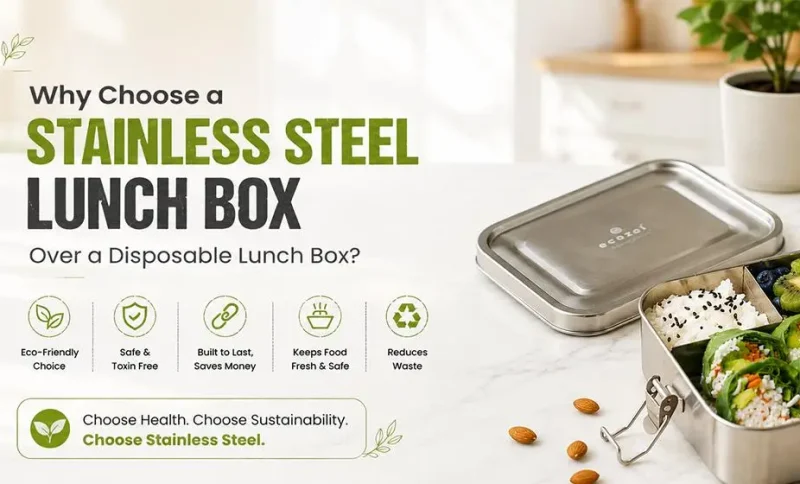
People switch to a stainless steel lunch box for different reasons, but the timing usually says a lot. Parents make the change before a new school year. Office workers make it after one too many soggy takeout containers. Meal preppers make it once they get tired of restocking plastic tubs every Sunday. Travelers make it the day a container cracks open inside a bag.
Whatever the trigger, the real choice usually comes down to three options: single-use plastic you throw away after one meal, cheap reusable plastic that warps and stains within a few months, or one stainless steel lunch box built to outlast both.
This guide breaks down what separates them, where the real costs show up, and what to look for once you’re ready to make the switch.
Key Takeaways:
- A stainless steel lunch box replaces hundreds of disposable containers over its lifespan, cutting waste and repeat buying.
- Disposable containers release millions of microplastic particles into food when heated, with links to heart disease and stroke.
- The reusable option pays for itself within months and keeps saving money every week after.
- Steel holds up for meal prep, school lunches, and travel without warping or leaking.
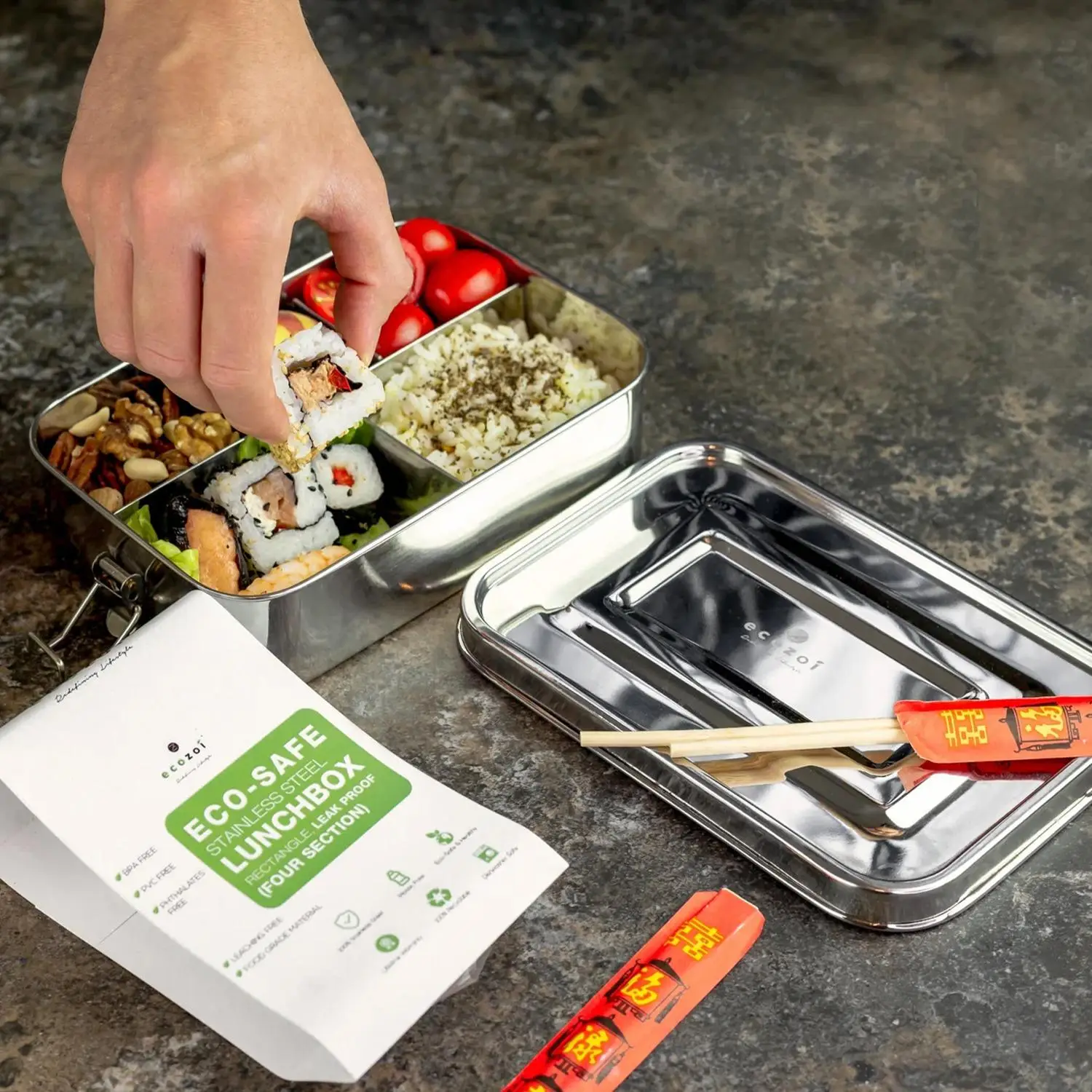
What You’re Actually Choosing Between
Disposable covers more ground than it sounds like. There’s the sandwich bag and foil that get tossed after one use. There’s the dollar-store plastic tub that survives a few washes before the lid stops sealing. And there’s the $10 box of budget reusable containers that crack in the dishwasher by month three.
None of these holds up the way a well-built stainless steel lunch box does. The steel version handles school lunches, office meals, weekend trips, and meal prep across years, not weeks.
The Problem With Disposable Lunch Containers
A disposable container bends, tears, and goes in the bin after a few meals. Most people know that. What many don’t know is what it does before it gets there.
Researchers publishing in Environmental Science & Technology found that a single square centimeter of plastic releases up to 4.22 million microplastic particles and 2.11 billion nanoplastic particles into food within three minutes of microwave heating. Refrigeration releases particles too, over months rather than minutes.
These particles travel. Researchers now find microplastics in human blood, organs, and placental tissue. A study published in the New England Journal of Medicine found microplastics in carotid artery plaque in more than half the patients tested. Those patients had more than four times the risk of heart attack, stroke, or death in the years that followed.
Waste adds up fast on top of that. In 2018, disposable containers and packaging produced around 82 million tons of waste in the US. About half got recycled. The rest went to the landfill or were burned.
What a Stainless Steel Lunch Box Gives You Instead
One container. No restocking. No warping after a few weeks of washing.
For households that pack meals every day, that simplicity matters. You stop tracking whether you have enough containers. You pack, you wash, you move on.
1. Less Waste in Your Kitchen
Disposable containers pile up both before and after use. A box of them takes up shelf space before the meal and bin space after it.
One stainless steel lunch box replaces hundreds of throwaway containers over its lifespan. That’s less clutter, less repeat buying, and far less to throw out every week.
2. Better for Meal Prep
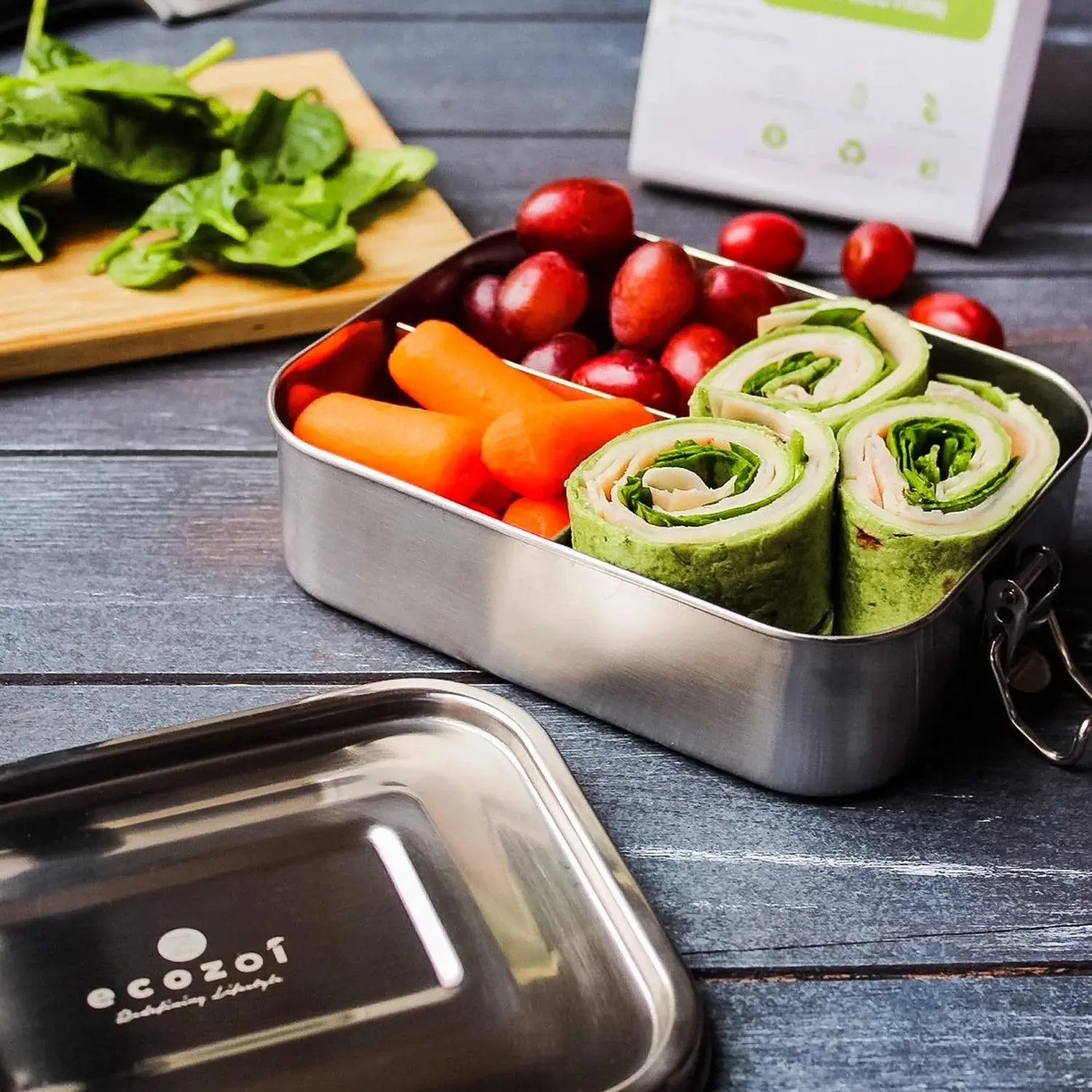
Meal prep depends on containers you trust. A stainless steel lunch box holds rice, vegetables, dry snacks, and sauced meals without warping or leaking mid-trip.
Batch-prep a week of lunches, stack the boxes neatly in the fridge, and pull one out each morning. No second-guessing whether the lid will hold.
3. A Material That Holds Its Ground
Food-grade stainless steel is a more stable material for food storage than plastic. It resists stains and odors, and it doesn’t break down the way plastic does under heat and repeated washing.
That stability is what lets one box last years instead of weeks.
Stainless Steel vs Disposable Lunch Box: A Side-by-Side Look
| Feature | Stainless Steel Lunch Box | Disposable Lunch Box |
|---|---|---|
| Lifespan | Years of daily use | One meal, then trash |
| Chemical exposure | Food-grade steel, no leaching | Microplastics released with heat and time |
| Cost per use | Drops with every use | Repeats every meal |
| Waste generated | Near zero after purchase | Adds to the landfill every time |
| Microwave and dishwasher use | Safely check the specific model | Not recommended, accelerates leaching |
| Warping or staining | Rare with proper care | Not applicable, discarded first |
Why Switch to Reusable Lunch Containers: The Cost Case
A box of disposable containers looks cheap at checkout. Buy a fresh box every week or two, for a school year or a work year, and the total adds up past what one durable stainless steel lunch box costs upfront.
The reusable option pays for itself within a few months for most households, then keeps saving money every week from there.
Restaurants and offices see the same pattern with disposable cutlery and containers: the per-use cost looks small, but it compounds.
A reusable vs. single-use food lunch box comparison almost always favors the reusable side once you count more than a handful of uses.
What to Look for Before You Buy
Not every steel lunch box is built the same. Before you buy, check for:
- Size and capacity: Around 24 oz suits kids, snacks, or light meals. 40 to 50 oz covers a standard adult lunch. 60 to 75 oz fits meal prep or bigger appetites.
- Leak resistance: A silicone-sealed lid keeps soups, dressings, and sauces contained during travel.
- Compartment design: Dividers keep sauces and sides separate, useful for picky eaters and portion control.
- Ease of cleaning: Smooth interiors and dishwasher-safe parts matter most when you’re packing lunch daily.
- Portability: Weight and shape should match your bag, not fight it.
- Lid quality: A secure clasp or locking mechanism matters more than it seems, until the box tips over in a backpack.
- Hot or dry food suitability: Standard boxes hold warm food well for a few hours. Soups and liquids that need to stay hot longer call for an insulated food jar instead.
Reusable vs Single-Use Lunch Boxes
The gap between a reusable vs. single-use food lunchbox becomes clear over time. One serves a single meal. The other serves many.
A steel lunch box gives you steady use across school days, work days, and travel days. It lowers repeat buying and supports a more organized food routine.
For households that pack meals often, a reusable lunch box fits the long view better.
Choosing the Right Reusable Lunch Box: Ecozoi
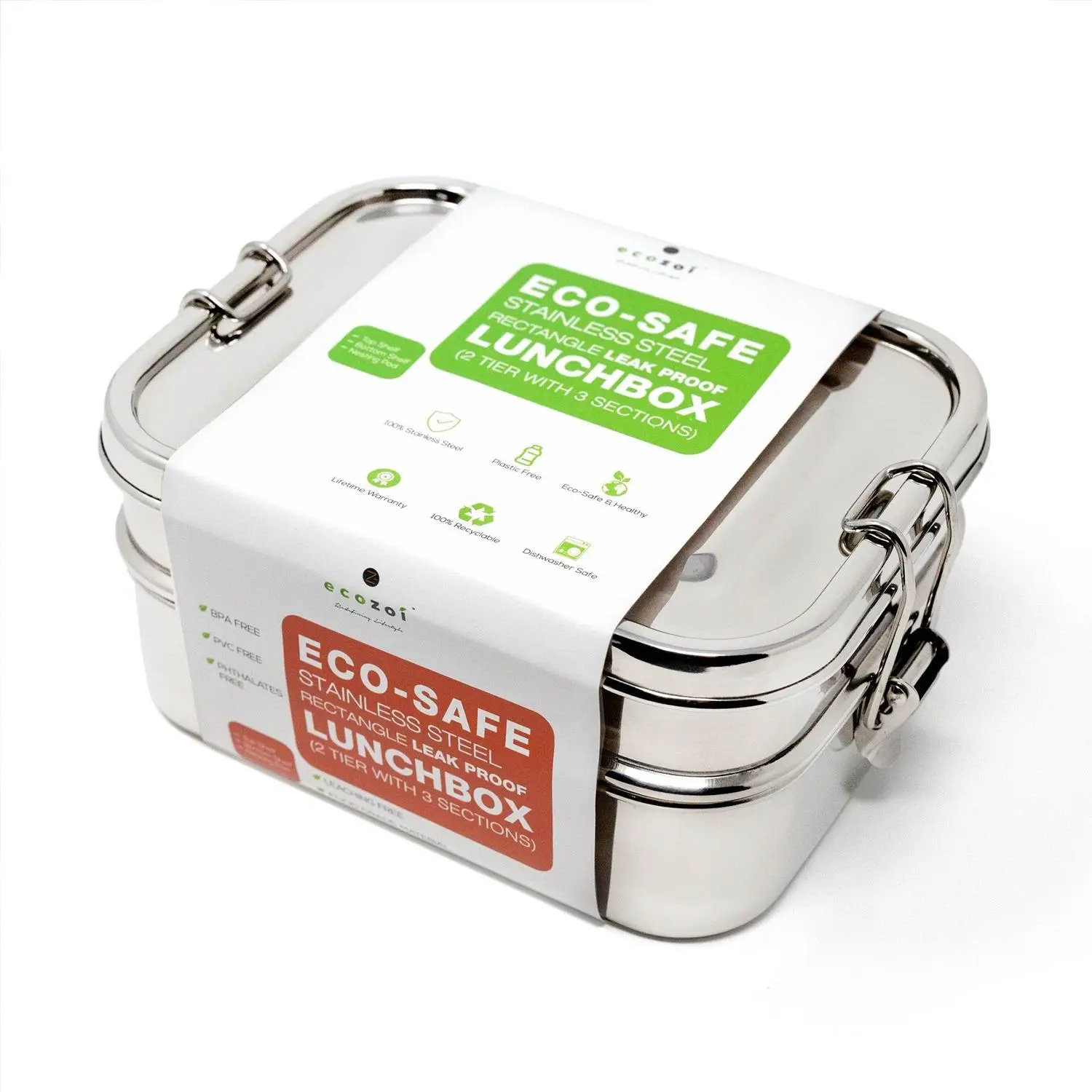
Not every routine calls for the same setup. Ecozoi’s stainless steel lunch box containers come in a few formats worth knowing:
- Solo lunches and light meals: The 1-tier 24 oz lunch box keeps things simple for school or a light office lunch.
- Family meal prep: The stackable 2- and 3-tier boxes, from 60 to 75 oz, hold full meals and stack cleanly in the fridge.
- Kids and picky eaters: The compartment boxes, with 3 to 5 dividers, keep sauces and sides from touching.
- Soups and warm meals on the go: The vacuum-insulated 17 oz food jar holds heat longer than a standard lunch box.
- Reheating at your desk: Our 3-piece stackable set is the one option in the range built and labeled for microwave use. Other boxes in the lineup should stay out of the microwave.
Every option uses the same 304 stainless steel, ships in plastic-free packaging, and comes with a silicone seal built to stop leaks before they start.
Stainless Lunch Containers for Daily Use
Steel lunch containers work well for packed lunches, meal prep, and travel snacks. They bring a neat look, a strong build, and a reusable format suited to daily life.
For anyone comparing steel lunch box choices with disposable lunch box options, the reusable option gives more value over time. It supports a cleaner routine and removes the need to keep buying weak containers.
The Bottom Line
Disposable lunch containers cost less at checkout and more everywhere else: your health, your wallet, and the landfill. A stainless steel lunch box asks for one purchase and gives back years of leak-proof, chemical-free meals.
Browse Ecozoi’s leak-proof lunch box collection and find the size and style for your routine.
FAQs
1. Is stainless steel better than plastic containers?
A steel lunch box often works better for daily food storage because it lasts longer and holds its shape well. It also fits a plastic-free routine, which many families prefer.
2. Which is better, a plastic or a stainless lunch box?
A stainless lunch box usually wins for regular use because it offers more durability and less waste over time. Plastic feels lighter, but stainless steel gives you a stronger, reusable choice.
3. What is a better alternative to disposable containers?
A reusable lunch box made from steel is a better alternative to disposable containers. It cuts repeat buying, reduces waste, and works well for school, office, and meal prep.
4. Are stainless steel lunch boxes better than plastic?
Yes, steel lunch boxes often give you a better everyday option than plastic. They suit regular packing, hold up well, and support a more reliable lunch routine.
5. What are the benefits of a stainless steel lunch box?
The main benefits are durability, reuse, simple cleaning, and less waste. It also gives you a steady choice for daily meals, travel, and meal prep.